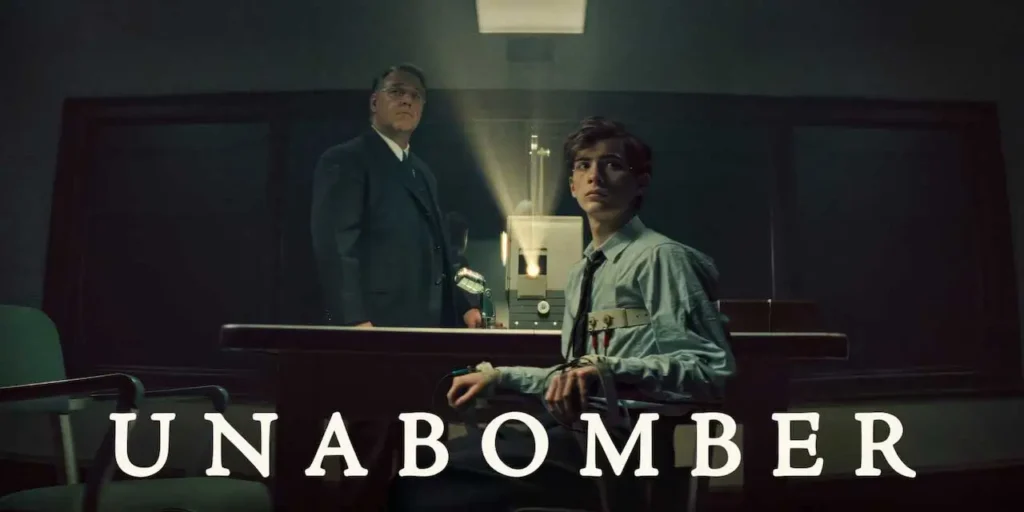
Unabomber Review Verdict: Unabomber wants to be a film that combines a manhunt thriller with a genuine psychological excavation of what turns a Harvard prodigy into a domestic terrorist. It has the pieces for that film. It never assembles them into anything that lands. Jacob Tremblay tries hard in a role that boxes him in from the start, Russell Crowe and Shailene Woodley are stuck playing tropes rather than people, and the whole thing feels thirty years too late and one draft too early.
I watched Unabomber on an advance Netflix screener ahead of its release. This review is written in English and is spoiler-light where it matters, though the broad historical outline of Ted Kaczynski’s story is, by now, public record.
Quick Verdict
I went into this one with genuine curiosity. Hollywood has told the Ted Kaczynski story before, and almost every prior version leans entirely into the manhunt, the FBI profiling work, the linguistic analysis of the manifesto, the eventual break that led investigators to a cabin in Montana. Unabomber promised something different: fold the manhunt together with a real psychological examination of the why. What experiments did he go through? What broke in him? When exactly did the switch flip?
That is a genuinely interesting premise. I want to say that clearly before I say anything else, because the disappointment I felt watching this film is directly proportional to how much I wanted it to work.
It does not work. Unabomber has the surface texture of a thoughtful, provocative psychological drama, the ominous score, the deliberate camera angles, the moody lighting choices that signal Importance, without the substance underneath any of it. It looks like it is saying something. When you actually sit with what it is saying, there is very little there.
Unabomber (2026) — Movie Info
| Detail | Info |
|---|---|
| Title | Unabomber |
| Platform | Netflix |
| Director | Janusz Metz |
| Writers | Sam Charleson, Nelson Greaves |
| Genre | Psychological Thriller, True Crime |
| Inspired By | True events — Ted Kaczynski |
| My Rating | ★★☆☆☆ (1.5/5) |
What Is Unabomber About?
The film follows Ted Kaczynski’s transformation from a sixteen-year-old Harvard prodigy into the man who would become known as the Unabomber. A central pillar of the story is his participation, as a young student, in controversial psychological experiments conducted by Professor Henry Murray, experiments that involved deliberately hostile interrogation designed to break down a subject’s sense of self. Decades later, Kaczynski’s troubled past resurfaces as FBI agent Joanne Miller leads the manhunt that will eventually bring the “chilling consequences of ambition and isolation,” as the film’s own marketing puts it, to light.
The structure alternates between two timelines: the 1990s manhunt and the 1950s Harvard experiments. On paper, this dual-timeline approach should let the film build toward genuine understanding, connecting the psychological trauma of the experiments to the radicalization that follows, while simultaneously tracking the investigation closing in on him. In execution, the film cannot make these two timelines talk to each other in a way that generates insight rather than just alternation.
Unabomber Netflix Cast
| Actor | Role |
|---|---|
| Jacob Tremblay | Ted Kaczynski |
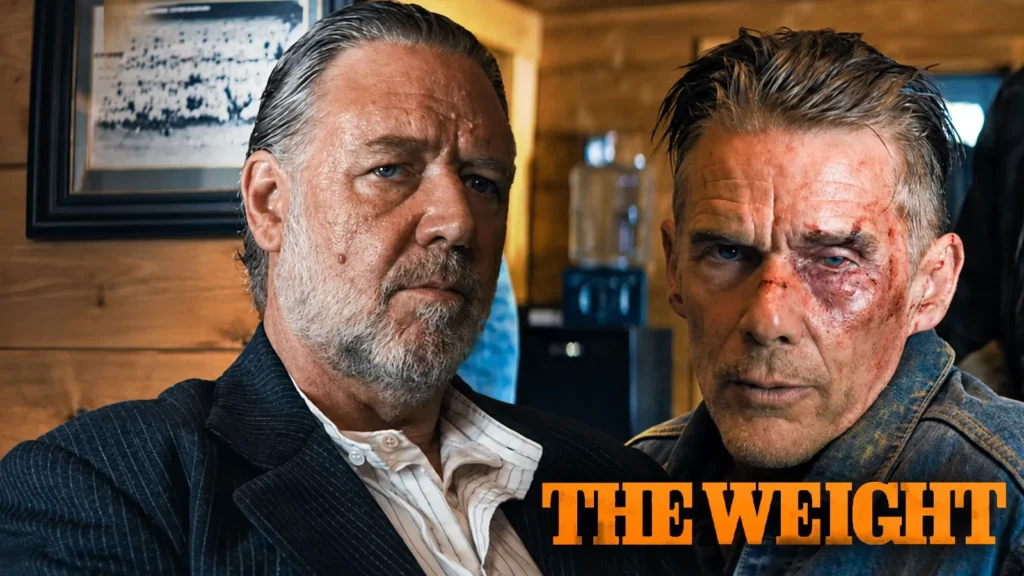
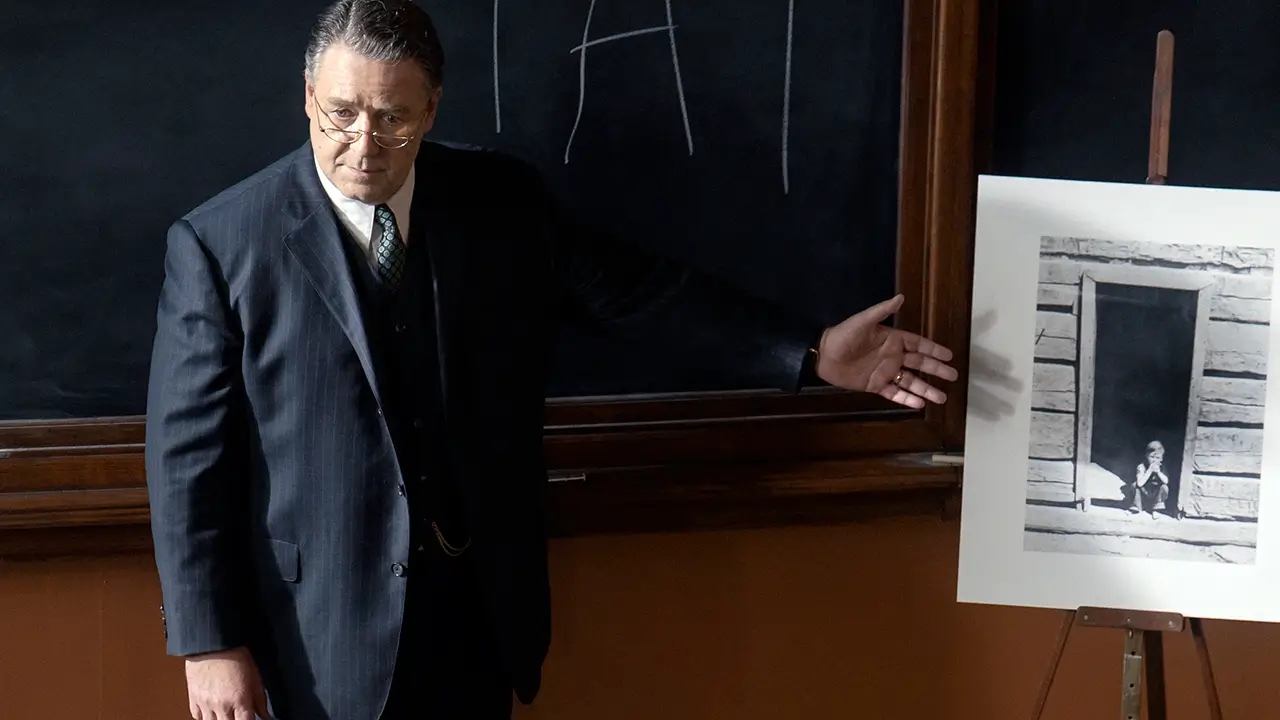
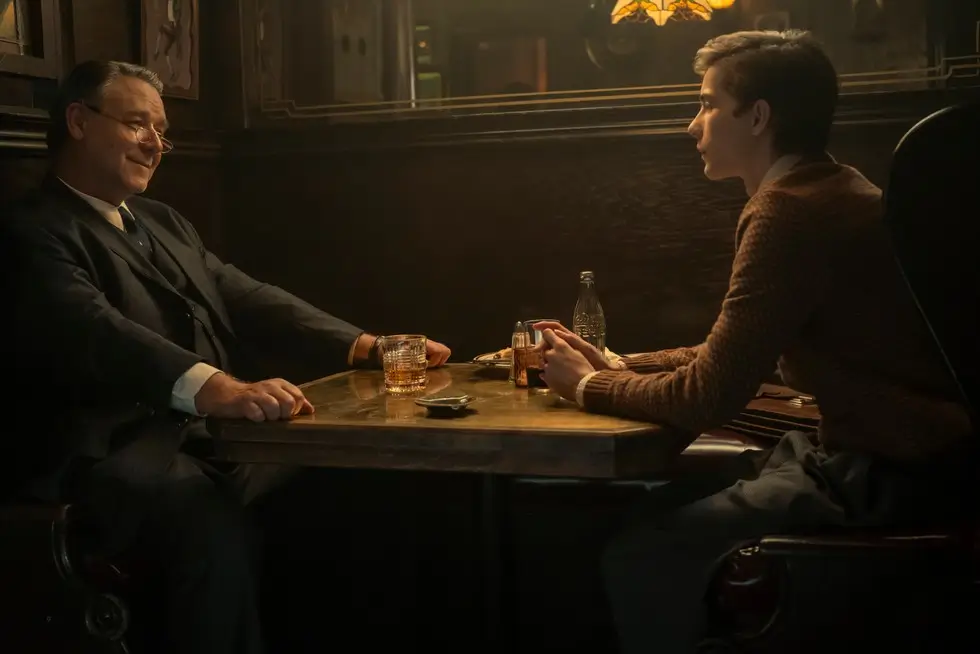
| Russell Crowe | Professor Henry Murray |
| Shailene Woodley | FBI Agent Joanne Miller |
| Annabelle Wallis | Supporting — underused |
| Alexander Ludwig | Supporting |
| Steven Ogg | Supporting |
Jacob Tremblay: A Genuine Attempt Trapped in a Boxed-In Character
I want to give Jacob Tremblay real credit here, because I think he is doing more with this role than the screenplay allows him to do.
Tremblay has grown visibly since his child-actor days, and this is exactly the kind of transition role that tests whether a former child star can carry genuinely difficult, adult psychological material. There are individual moments, particularly the scenes in the experiment chair, where he is being subjected to the hostile interrogation sessions, where his delivery captures something real about the specific isolation of a person who has been made to feel fundamentally alone and fundamentally observed. Those monologue moments are the closest the film comes to earning its ambition.
But the character he has been given to play never escapes a narrow, predetermined box: disturbed loner. I understand the argument that this might be intentional, that Kaczynski’s actual history involves genuine social isolation and a genuine break from ordinary human connection. But the film does not seem interested in complicating that portrait or finding the humanity underneath it in a way that would make his transformation feel tragic rather than simply inevitable. Whatever humanity Tremblay is reaching for in his performance gets flattened by a script that has already decided who this person is before the character has had a chance to become that person on screen.
He is miscast, in my opinion, not because he lacks talent, but because the specific combination of physical presence and internal stillness the role demands does not fully suit what he brings as a performer. I respect the effort. I do not think it lands.
Russell Crowe and Shailene Woodley: Two Actors Playing Tropes, Not People
This is where the film loses me most decisively.
Russell Crowe plays Professor Henry Murray as the mad, manipulative academic, a character type we have seen many times in many films, executed here without the specificity that would make him feel like an actual human being who did actual documented harm to actual young men. Crowe is a good actor. He is not given the material to demonstrate that here. The character exists to be sinister in scenes and then exit those scenes, and the film never builds him into someone whose psychology we understand beyond “this man enjoys breaking people down.”
Shailene Woodley’s FBI Agent Joanne Miller suffers from the inverse problem: she is the investigator whose intuition is simply, consistently correct, with no meaningful process of deduction that earns those correct hunches. This is one of the most tired tropes in the true-crime genre — the agent who is right because the script needs her to be right, not because we have watched her reasoning develop in a way that makes her competence feel earned. Woodley does not have anything to work with here. Her character is a plot function wearing a badge.
Together, these two performances represent the film’s central failure: it wants to be about complex psychology and instead settles for recognizable character shorthand.
The Dual Timeline Structure: A Good Idea That Kills Its Own Momentum
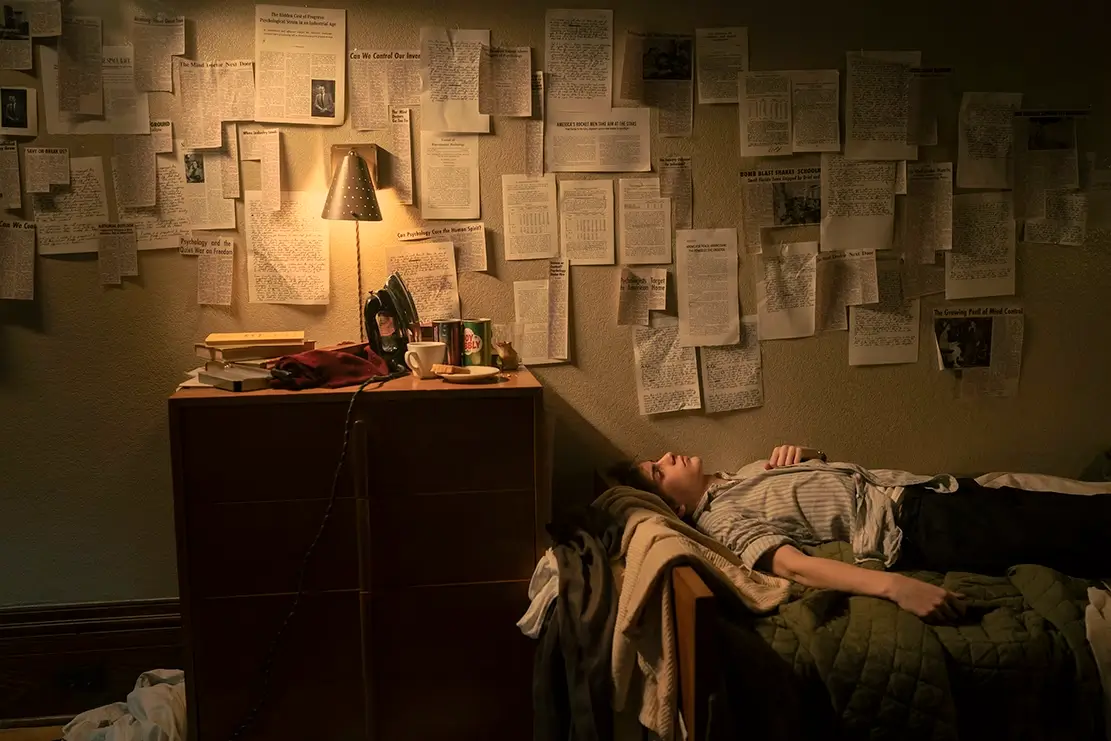
The back-and-forth structure between 1995 and the 1950s is, in theory, the film’s most interesting formal choice. In practice, it consistently undercuts whatever tension either timeline is building.
Just as the manhunt starts to generate real suspense, as we feel Agent Miller closing in, as the pieces of the investigation begin connecting, the film cuts back to the 1950s and resets that momentum. Just as the Harvard experiment sequences start to build genuine psychological dread, the film cuts forward and interrupts that too. Neither timeline gets the sustained runway it needs to fully develop its own internal tension, and the connective tissue between them, the sense that what happened in one timeline directly and specifically produces what happens in the other, never crystallizes into genuine insight.
I finished the film still unclear on what specifically the movie believes caused Kaczynski’s gradual radicalization. Not because the answer is inherently unknowable or because ambiguity was the intended effect, but because the film’s presentation of the material felt muddled and over-engineered rather than deliberately complex. There is a difference between a film that trusts its audience to sit with ambiguity and a film that has not fully worked out what it is trying to say. This one feels like the second thing.
Annabelle Wallis and the Supporting Cast: Talent Wasted Across the Board
Annabelle Wallis is criminally underused in this film. She is a genuinely capable actress who has done strong work elsewhere, and here she exists at the margins of a story that hints at something; there is a suggestion at one point of a marital affair between her character and Russell Crowe’s character, without ever developing that thread into anything meaningful. It appears, generates a moment of narrative interest, and then evaporates without consequence or follow-through.
This is symptomatic of the film’s broader problem with its supporting cast. Several of the actors in smaller roles are recognizable, busy character performers who have done substantial work in other projects. None of them are given the depth here to be more than functional presences moving the plot forward. For a film that is ostensibly interested in psychological complexity, it shows remarkably little interest in the psychology of anyone who is not its central subject.
The Provocation Problem: Wanting to Seem Deep Without Being Deep
This is my central frustration with Unabomber, and I want to state it plainly: the film wants to appear provocative and thought-provoking. It reaches for big questions about ambition, isolation, the ethics of psychological experimentation, the making of a radical. It stages these questions with the visual and sonic vocabulary of a serious prestige drama, deliberate pacing, moody cinematography, a score that tells you when to feel unsettled.
But when I actually examine what ideological or philosophical position the film is taking, what it believes about any of the questions it raises, I find very little there. The ideological battles it stages between characters amount mostly to verbal sparring that goes nowhere and resolves nothing. The film gestures at depth without providing it. It is the difference between a film that has thought deeply about difficult questions and a film that has decided to look like it has thought deeply about difficult questions. I do not think those are the same thing, and Unabomber, unfortunately, is the second kind.
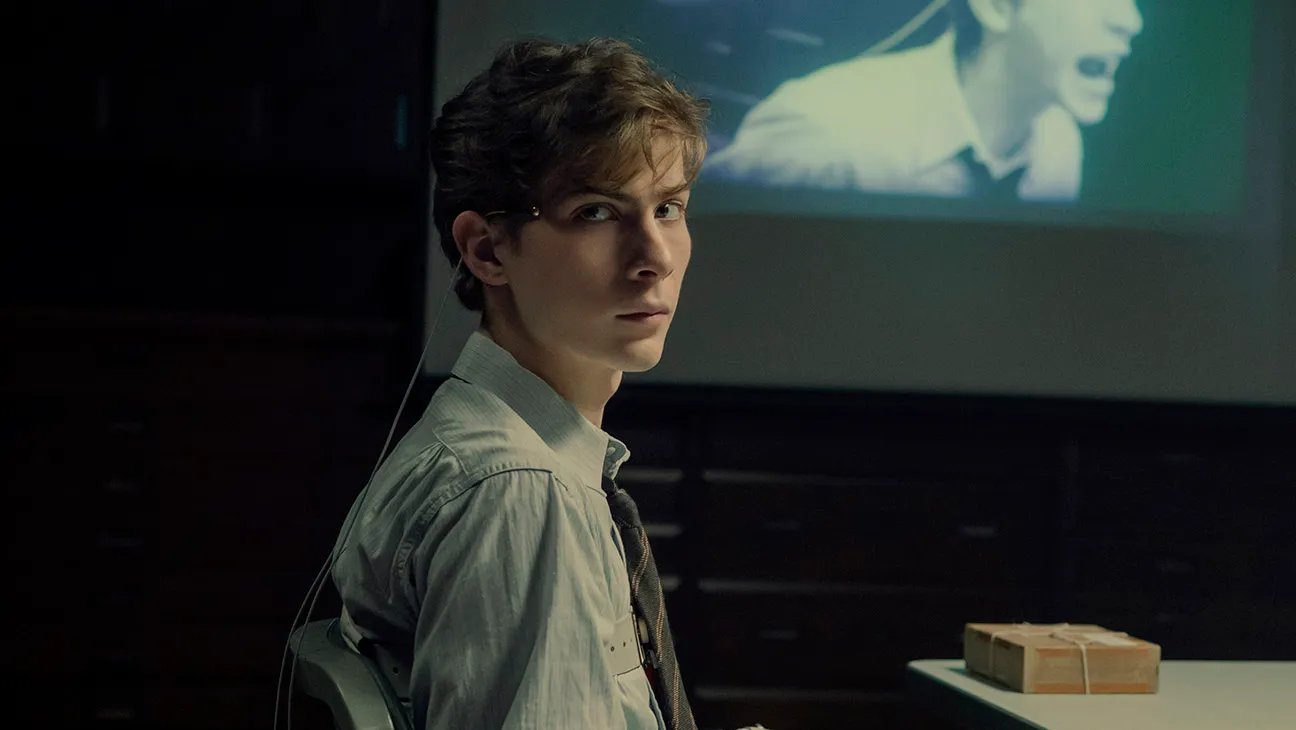
Why Does This Film Feel Like It Arrived Thirty Years Too Late?
It has been decades since Kaczynski’s capture. The manifesto has been dissected extensively. Previous films and documentaries, including Manhunt: Unabomber, which handled the investigative side of this story with more procedural rigor, have already covered significant ground here. For a new film to justify its existence, it needs either a genuinely fresh angle or an execution so precise that it elevates familiar material into something new.
Unabomber attempts the fresh angle, the psychological excavation angle, and fails to execute it with the precision required. The world has largely moved on from needing to understand Ted Kaczynski at the level of cultural urgency that existed in the 1990s. A film revisiting this territory needs to earn its relevance rather than assume it. This one assumes it, and the assumption does not hold up across nearly two hours of runtime.
What Unabomber Gets Right
Jacob Tremblay’s interrogation chair scenes. The closest the film gets to genuine psychological tension, delivered with real commitment by its lead.
The premise itself. Combining manhunt and psychological origin story is a legitimately interesting structural idea, even if the execution does not deliver on it.
Production values. The film looks and sounds like a serious prestige drama, even when the content underneath does not match that presentation.
What Could Be Better
The screenplay’s central thesis. The film never clearly articulates what it believes caused Kaczynski’s radicalization, leaving the psychological excavation feeling incomplete rather than deliberately ambiguous.
Russell Crowe and Shailene Woodley’s characters. Both reduced to recognizable genre tropes rather than developed as specific, complicated people.
The dual timeline structure. Undercuts momentum in both directions rather than building toward a synthesis.
Annabelle Wallis and supporting cast. Talented performers given almost nothing to work with.
The affair subplot. Introduced, gestured at, abandoned — symptomatic of the film’s broader tendency to raise threads it does not follow through on.
Pros & Cons
✓ Pros
- Genuinely interesting premise combining manhunt and psychological origin story
- Jacob Tremblay’s interrogation chair scenes show real commitment and some effective moments
- High production value — cinematography and score create a serious prestige atmosphere
- Ambitious structural choice attempting to interweave two timelines
✗ Cons
- Russell Crowe and Shailene Woodley reduced to genre tropes, not characters
- Dual timeline structure kills momentum in both directions
- The film never clarifies its own thesis about Kaczynski’s radicalization
- Annabelle Wallis and much of the supporting cast are wasted
- The affair subplot and other threads are introduced and abandoned
- Feels thirty years too late without a fresh enough angle to justify its existence
- Appears provocative and thoughtful without delivering genuine substance underneath
Is Unabomber Worth Watching on Netflix?
Only if you are specifically completionist about true crime dramatizations of the Kaczynski case, or if you want to see Jacob Tremblay’s attempt at a difficult, mature dramatic role regardless of whether the film around him supports it. For viewers looking for genuine psychological insight into what made the Unabomber, or for a taut manhunt thriller, this film delivers neither convincingly. Manhunt: Unabomber remains a stronger option if you want the investigative angle done well.
Where to Watch Unabomber
Unabomber is available exclusively on Netflix.
Final Verdict
| Category | Score |
|---|---|
| Screenplay | ★☆☆☆☆ |
| Direction | ★★☆☆☆ |
| Jacob Tremblay Performance | ★★★☆☆ |
| Russell Crowe Performance | ★★☆☆☆ |
| Shailene Woodley Performance | ★★☆☆☆ |
| Supporting Cast Utilization | ★☆☆☆☆ |
| Structure (Dual Timeline) | ★★☆☆☆ |
| Thematic Depth | ★☆☆☆☆ |
| Overall | ★★☆☆☆ (1.5/5) |
Unabomber is a film built on a genuinely promising premise that never figures out how to deliver on its own ambition. It wants to be thoughtful. It settles for looking thoughtful. Jacob Tremblay deserves credit for trying to find something real in a role that boxes him in from the opening scenes, but everything around him- the tropes Crowe and Woodley are stuck playing, the structure that undercuts its own tension, the supporting cast given nothing to do, the thesis that never arrives- keeps the film from becoming what it clearly wanted to be.
Thirty years after Kaczynski’s capture, the world has largely moved on. This film needed to give us a genuine reason to look back. It does not.
It doesn’t quite carry the weight its title promises, but I had a good time with it, and I’m curious what this director does next. If you’re deciding which movie to watch next, explore our latest reviews of Forgotten Island Review, The Vvaan Review, Primetime Review, The Dog Stars Review, Heart of the Beast Review, The Paradise Review, and Irumudi Review.
At NexaFeed, we publish spoiler-free movie reviews, OTT series reviews, ending explained articles, hidden details, and streaming guides covering Disney, Pixar, Marvel, Netflix, Prime Video, Apple TV+, HBO Max, and the biggest theatrical releases from around the world
Frequently Asked Questions
Is Unabomber on Netflix?
Yes. Unabomber (2026) is available exclusively on Netflix.
What is the best Unabomber movie?
Among prior dramatizations, Manhunt: Unabomber (the miniseries) is generally considered the stronger take, particularly for its procedural focus on the FBI investigation and linguistic analysis that led to Kaczynski’s capture. This 2026 Netflix film, which attempts to combine the manhunt with a psychological origin story, does not surpass it.
Is Manhunt: Unabomber worth watching?
Yes, and more so than this 2026 film if you are specifically interested in the investigative side of the Kaczynski case. It handles the procedural manhunt elements with more rigor and focus than this newer film’s more scattered, dual-timeline approach.
What is the Unabomber’s IQ?
Ted Kaczynski’s reported IQ has been widely cited in various media coverage as extremely high, consistent with his documented history as a Harvard-admitted prodigy who began his undergraduate studies at sixteen. Specific numbers vary by source, and this film does not center this detail as a major plot point.
Is Unabomber (2026) worth watching?
Only for viewers specifically interested in Jacob Tremblay’s performance or completionist true-crime viewing. The film’s ambitious dual-timeline structure and psychological angle do not deliver genuine insight, and Russell Crowe and Shailene Woodley are given tropes rather than characters to play. My rating: 1.5 out of 5.
Unabomber (2026) is streaming now on Netflix.