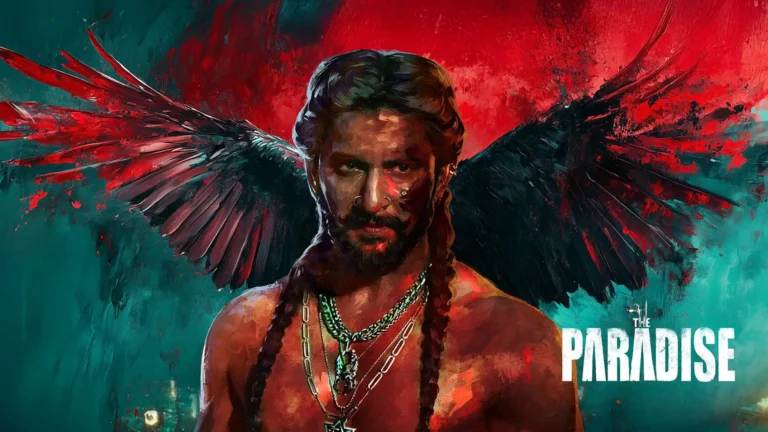
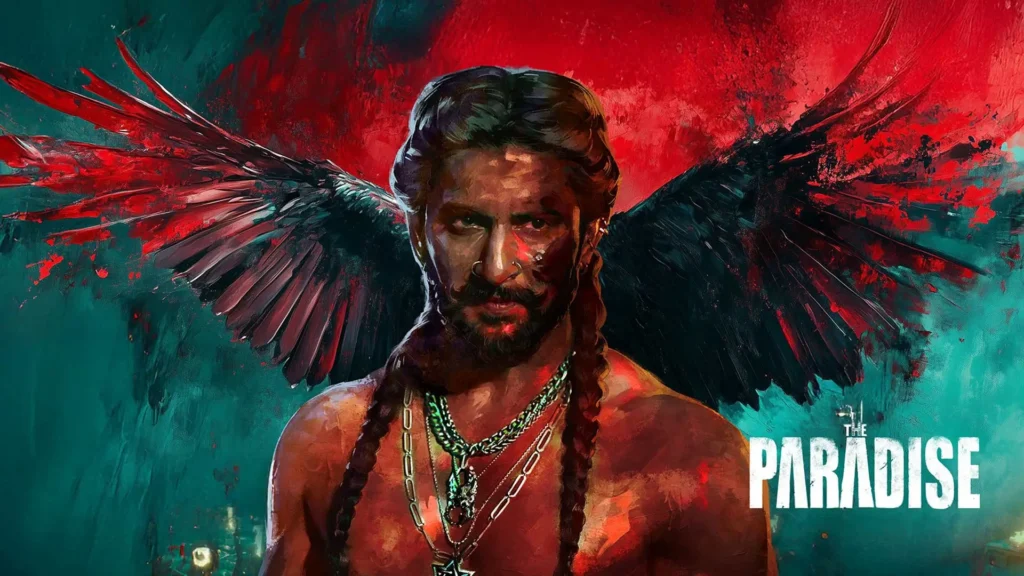
The Paradise Review Verdict: Paradise is one of the most visually beautiful films I’ve watched in a long time, and that’s genuinely the only thing I can compliment it on without reservation. Nani proves once again that he’s a good actor who can pull off serious, dramatic roles. Everything else about this film- the writing, the pacing, the way it handles poverty and violence- left me exhausted in a way I didn’t expect walking out of a theater.
This review discusses graphic violence and difficult subject matter as portrayed in the film, including scenes involving harm to a pregnant character and threats to a child. I’ve kept descriptions at the level needed for an honest review without going into unnecessary detail.
The Paradise Quick Verdict
I walked out of Paradise feeling physically exhausted, and I mean that literally. My body felt drained after watching this, the kind of tired where I needed to lie down for ten minutes before I could even process what I’d just sat through.
Nani is a good actor. I’d heard that about him for a while, and this film confirms it; he can pull off a role and commit to it. Visually, this movie is stunning, genuinely one of the most beautiful-looking films I’ve seen recently. But if someone ever wants an example of the kind of overwrought, exploitation-heavy Southern cinema people joke about, this is that example.
The Paradise Movie Info
| Detail | Info |
|---|---|
| Title | The Paradise |
| Lead Actor | Nani |
| Genre | Period Drama, Action |
| Setting | 1980s |
| Certification | A (Adult) |
| My Rating | ★★ (2/5) |
The Paradise Story: What It’s Actually About
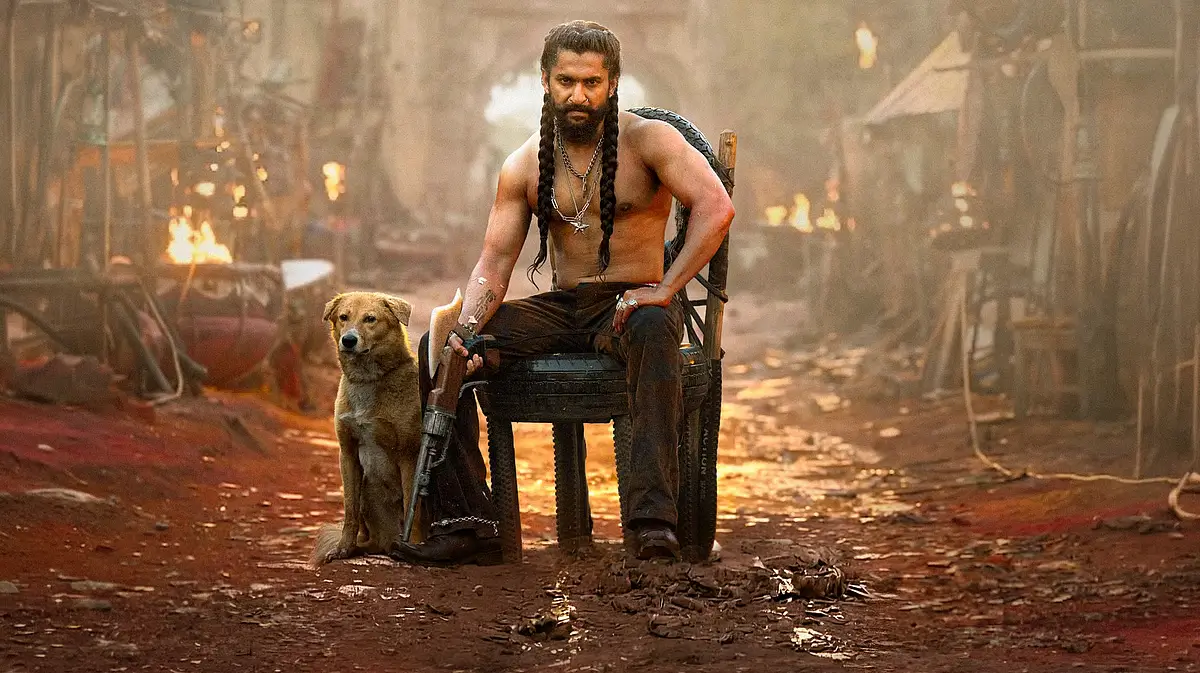
Set in the 1980s, the film takes place in a fictional settlement called Paradise, ruled by a warlord-type local strongman everyone calls Malik. A community living there, doing sanitation work like cleaning drains and toilets, has never been granted citizenship. The local strongman refuses to grant it to them, keeping them stateless and dependent, and their population has shrunk from around 10,000 to just 3,000 over the years.
The lead, Nani’s character Jadd, is born into this community. His mother tries to lead a resistance demanding recognition and citizenship for their people, and Malik responds with brutal violence. The story follows Jadd from birth through his teenage years, his imprisonment, and eventually his return as an adult seeking revenge and, ostensibly, justice for his community.
The Paradise Cast
| Actor | Role |
|---|---|
| Nani | Jadd, the lead character |
| Raghav Juyal | The Malik’s son |
Why The First Two Minutes Told Me Everything
I knew within the first two minutes that I was in for something exhausting. Right from the opening, the character delivering the opening narration dumps exposition on you at breakneck speed, rushing through it because there’s clearly too much material and not enough time, even with a three-hour runtime.
This is really my core issue with a lot of Hindi and South Indian films these days. Why does every other film need to be three hours long when there isn’t enough substance to fill that runtime properly? Paradise runs long and still can’t fit everything it’s trying to build into a coherent shape.
The Poverty Porn Problem
I have to call this out directly because it bothered me throughout. This film leans heavily on what I’d call poverty porn, presenting suffering and deprivation in the most exaggerated, almost fetishistic way possible, following the same visual templates other recent films have used for slavery and struggle narratives.
There’s a consistency to this that bothered me the more I noticed it. It rains constantly throughout large stretches, and people are shown standing in it, completely drenched, for no real narrative reason. It’s not even that the film hides that these people have proper roofs, when you get an aerial shot of the settlement, every house clearly has a tin roof. So why are people constantly shown soaked to the bone when shelter is visibly available just a few feet away? It felt like the film wanted the visual of suffering more than it wanted the suffering to make logical sense.
The Prologue: Visually Beautiful, Narratively Exhausting
The prologue follows the classic multi-chapter template several recent big-budget films have used, numbered chapters building toward the birth of the protagonist. Jadd’s mother, in the middle of an uprising against Malik, goes into labor during a storm and ends up giving birth standing in the rain and mud. Different cultures have different birthing customs, and there’s nothing inherently wrong with depicting that, but the scene keeps escalating in a way that feels less about authenticity and more about maximizing visual suffering.
Then comes a genuinely disturbing sequence. Malik, furious the community dared ask for their rights, straps a car battery’s wires to the pregnant woman’s stomach and revs the engine to deliver repeated electric shocks, forcing an early, traumatic delivery. It’s an incredibly harsh moment, and while the film clearly wants it to land as devastating, it mostly left me stunned at how far it was willing to go for shock value. Jadd survives; his twin sister doesn’t. There’s a striking visual moment right after, when infant Jadd reaches his arms out and a crow flies from behind him, a genuinely well-composed shot amid everything else going on.
The Teenage Years And The Biryani Scene
After the prologue, the story jumps to Jadd’s teenage years. This is around when I understood why I’d actually gone to watch this film, roughly a year and a half earlier I’d seen a viral clip online where a hand emerges from water with a slur tattooed onto it, a massive meme moment that made this film feel like a must-watch when it circulated.
In this stretch, teenage Jadd and his friend sneak into Malik’s house during a party to steal biryani, since neither has ever tasted it. They get caught, and Jadd is nearly executed on the spot. His mother intervenes, begging for his life, only for the guards to recognize her, revealing she’s a sex worker who’d been secretly seeing one of them. It’s a devastating reveal for Jadd. Malik decides not to kill the boy but instead has a slur permanently tattooed onto his hand as punishment.
The visuals throughout this sequence are genuinely striking, and the teenage actor playing Jadd gives a strong performance, thrashing while trying and failing to remove the tattoo with barbed wire.
Raghav Juyal’s Villain Actually Works
I have to give real credit here. Raghav Juyal plays Malik’s son, and even though his character is dispatched by the film’s halfway point, which felt like a wasted decision given how well he performed, he’s genuinely one of the better parts of this movie. He brings real presence to the role, an entitled, insecure son of a warlord desperate to be seen as more than just “the boss’s son,” trying to build his own political career. He’s typecast in this kind of role at this point, but there’s no denying he performs it well, including a brief dance sequence that shows off his background.
The mid-film confrontation between his character and Jadd, set up as a challenge over an election filing, builds real tension, right up until the interval delivers a properly staged, if excessively bloody, showdown.
Where The Action Completely Falls Apart
This is where the film loses me the most. The action choreography is genuinely unconvincing. Characters walk two steps, kill someone, walk two more steps, kill someone else, and the effort clearly went into VFX and blood rather than into making the choreography itself believable. I don’t think this style of action sells in today’s landscape anymore.
Films like Dhurandhar rank well precisely because the hero gets hurt, gets beaten down, and struggles. Once your standards have been set that high by other recent films in the genre, an action sequence built entirely on “he can do it because he’s the hero” doesn’t land anymore. Nothing about the physicality here convinces you Jadd is actually capable of the violence he’s dishing out.
The Romance Subplot That Derails The Film
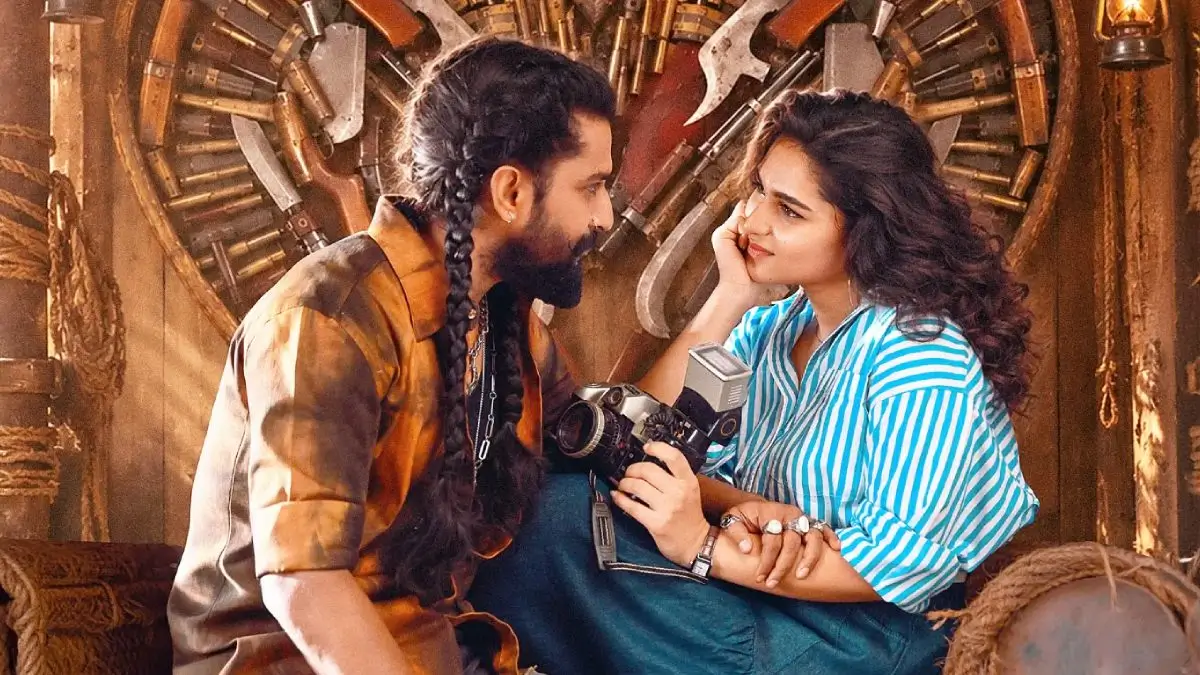
I have to talk about the heroine’s introduction because it’s almost comically lazy. She’s given zero connection point to the main story before being unceremoniously dropped in. Her subplot involves a failed attempt at becoming an actress, returning home in disgrace, learning her father died while she was away, and dealing with debt her mother is drowning in from an old theater business.
To pay off the debt, she convinces her mother she’ll start making adult films to screen at the theater, and her mother, astonishingly, praises her as some kind of visionary artist for it. This entire tangent runs for a significant stretch with almost no connective tissue to the main plot, other than eventually pairing her romantically with Jadd once he’s released from prison. It’s genuinely bizarre, tonally jarring, and adds little beyond padding the runtime.
The Second Half Spiral
Jadd eventually gets bail after 14 years in prison and picks up right where he left off, seeking vengeance against Malik’s family while trying to rally his community. There’s a training montage with a mentor figure that conveniently explains, right when it’s most narratively useful, exactly where Jadd’s fighting skills came from.
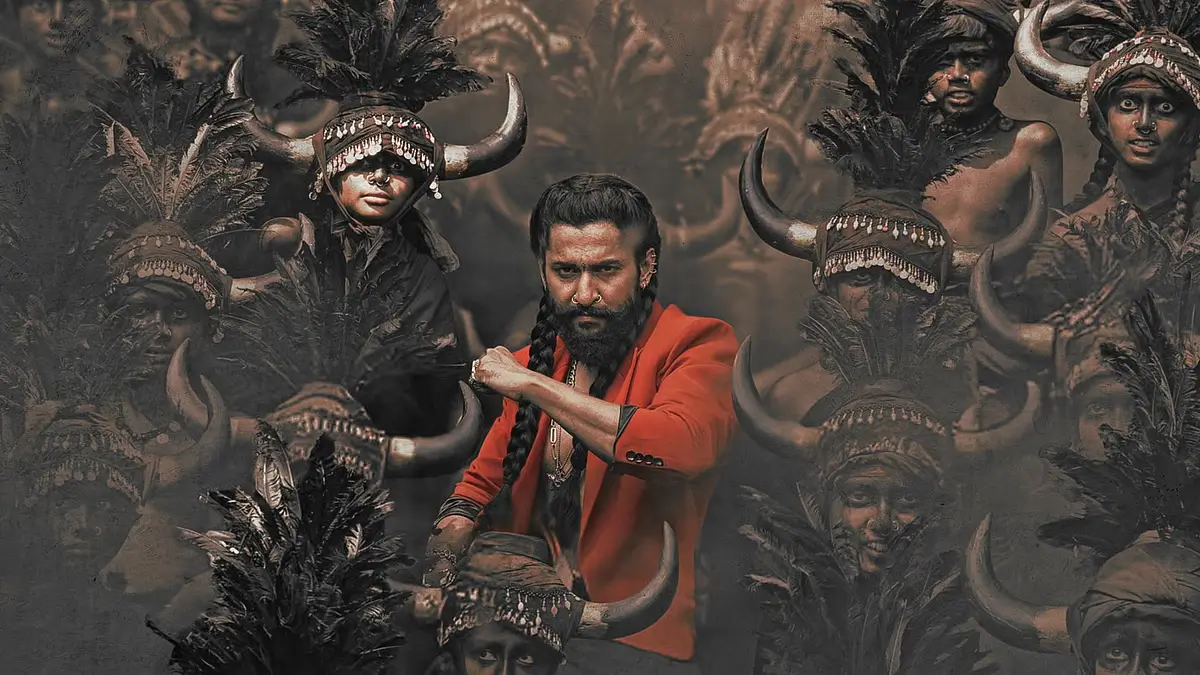
From here the plot takes strange turns. The community, tired of empty promises, essentially declares a breakaway micro-nation and takes hostages, escalating into terrorism charges filed against the entire community by a lawyer character clearly modeled on the “Kattappa” archetype from a certain famous franchise. The film pivots into political commentary about working within the system versus violence, invoking Gandhian principles through an elderly side character, before undercutting all of it with an even more chaotic finale involving police raids, a dog that somehow survives being shot, and a rocket launcher.
The Ending That Undercuts Everything
Without spoiling every beat, the resolution involves the community finally being granted citizenship, but the emotional cost is steep and undercut by how chaotic the buildup to it is. The villain’s ultimate defeat comes via an oddly anticlimactic act rather than any real confrontation with the hero, leaving the entire back half feeling like it built toward very little narrative payoff.
I’d genuinely skip this film without a second thought if asked whether it’s worth watching. I’ve sat through plenty of genuinely messy South Indian action films before, Pushpa included, and even when messy, I was still enjoying myself. Paradise is visually gorgeous, no denying that, but the story underneath just doesn’t hold together.
Sound Design And CBFC Issues
The sound design is genuinely poor in places. There’s a stretch in the first half, during a phone conversation between Jadd and Malik’s son, where the background score is mixed so loudly that entire lines of dialogue become inaudible. This happened more than once throughout the film.
I also have real issues with how this film’s certification was handled. It carries an Adult rating, yet it uses a slur repeatedly in the opening stretch before apparently deciding to mute it going forward, along with muting a certain word tied to the community’s breakaway plotline. The inconsistency here is jarring, and honestly I was disappointed that the certification board let some of this through given how the film handles it.
What The Paradise Gets Right
Visual craft. This is genuinely one of the most beautifully shot films I’ve seen recently, no argument there.
Nani’s performance. He proves he can carry a serious, dramatic role convincingly.
Raghav Juyal. A genuinely strong antagonist performance, even if underutilized.
A few standout individual shots. The crow moment after Jadd’s birth is a genuine highlight of visual storytelling.
What Could Be Better
The writing and pacing. Overstuffed, rushed, and unable to justify its own three hour runtime.
The poverty porn approach. Suffering is presented in a way that feels manufactured for visual impact rather than authentic.
Unconvincing action choreography. Fights feel staged rather than earned, undercutting the film’s biggest set pieces.
The heroine’s entire subplot. Disconnected from the main story and tonally jarring.
Sound design. Dialogue gets buried under an overly aggressive score in multiple scenes.
Inconsistent handling of sensitive language. Certification and content choices feel muddled rather than intentional.
The Paradise Pros & Cons
✓ Pros
- Visually stunning cinematography throughout
- Nani delivers a genuinely strong, committed dramatic performance
- Raghav Juyal is a standout as the antagonist
- A few individually striking visual moments
✗ Cons
- Bloated, rushed writing that can’t justify the runtime
- Heavy reliance on exaggerated poverty imagery
- Action sequences feel unconvincing and poorly choreographed
- A disconnected, tonally jarring romantic subplot
- Poor sound mixing that buries dialogue
- Inconsistent, confusing content and certification choices
Is The Paradise Worth Watching?
Honestly, no, not unless you’re purely watching for the visuals or for Nani’s performance specifically. If gorgeous cinematography alone is enough to carry a film for you, you might get something out of this. But if you’re looking for a coherent, emotionally earned story, I’d skip this one without hesitation.
The Paradise Rating: My Honest Breakdown
| Category | My Score |
|---|---|
| Story / Screenplay | ★★ |
| Direction | ★★½ |
| Cinematography | ★★★★★ |
| Nani’s Performance | ★★★★ |
| Action Choreography | ★★ |
| Sound Design | ★★ |
| Overall | ★★ (2/5) |
The Paradise Where To Watch
Paradise is currently playing in theaters. Given how much this film leans on its visual spectacle, if you do decide to watch it despite my reservations, I’d say the big screen is genuinely the right place to experience the cinematography, even if the story underneath doesn’t hold up to scrutiny.
Final Verdict
| Category | Score |
|---|---|
| Story / Screenplay | ★★ |
| Direction | ★★½ |
| Cinematography | ★★★★★ |
| Performances | ★★★½ |
| Pacing | ★★ |
| Sound Design | ★★ |
| Overall | ★★ (2/5) |
Paradise is a genuinely frustrating watch. It’s stunning to look at, Nani proves he’s a capable dramatic actor, and Raghav Juyal makes a real impression in a role that’s underused. But none of that saves a film buried under rushed writing, exploitative imagery, unconvincing action, and a romantic subplot that adds almost nothing. I left the theater exhausted in a way good films don’t leave you. This one left me needing to lie down.
It doesn’t quite carry the weight its title promises, but I had a good time with it, and I’m curious what this director does next. If you’re deciding which movie to watch next, explore our latest reviews of Daayra Review, Vibe Review, Buddy Review, The Dog Stars Review, Mandaadi Review, Resident Evil 2026 Review, and Irumudi Review.
At NexaFeed, we publish spoiler-free movie reviews, OTT series reviews, ending explained articles, hidden details, and streaming guides covering Disney, Pixar, Marvel, Netflix, Prime Video, Apple TV+, HBO Max, and the biggest theatrical releases from around the world
The Paradise Frequently Asked Questions
Q. Is The Paradise a good movie?
Ans. Visually, yes, it’s genuinely one of the most beautifully shot films I’ve seen recently, and Nani delivers a strong performance. But the writing, pacing, and handling of its heavier themes left me frustrated and exhausted rather than moved.
Q. What is my The Paradise rating?
Ans. I’d rate The Paradise 2 out of 5. The cinematography and lead performance are genuine strengths, but the bloated screenplay, unconvincing action, and disconnected subplots hold it back significantly.
Q. Who is in The Paradise cast?
Ans. Nani leads the film as Jadd, with Raghav Juyal playing Malik’s son and delivering one of the film’s stronger supporting performances.
Q. What is The Paradise movie about?
Ans. Set in the 1980s, the film follows Jadd, a man born into a stateless community denied citizenship by a local warlord. The story traces his childhood trauma, imprisonment, and eventual return seeking justice and recognition for his people.
Q. Is The Paradise worth watching in theaters?
Ans. Only if visual spectacle alone is enough for you. The cinematography genuinely benefits from a big screen, but the story and pacing issues are significant enough that I wouldn’t call it a must-watch.
Q. Is The Paradise very violent?
Ans. Yes, extremely. The film carries an Adult certification and includes graphic, prolonged violence throughout, including some genuinely difficult sequences involving harm to a pregnant character. It’s not a film for viewers sensitive to intense on-screen violence.
The Paradise is currently playing in theaters.