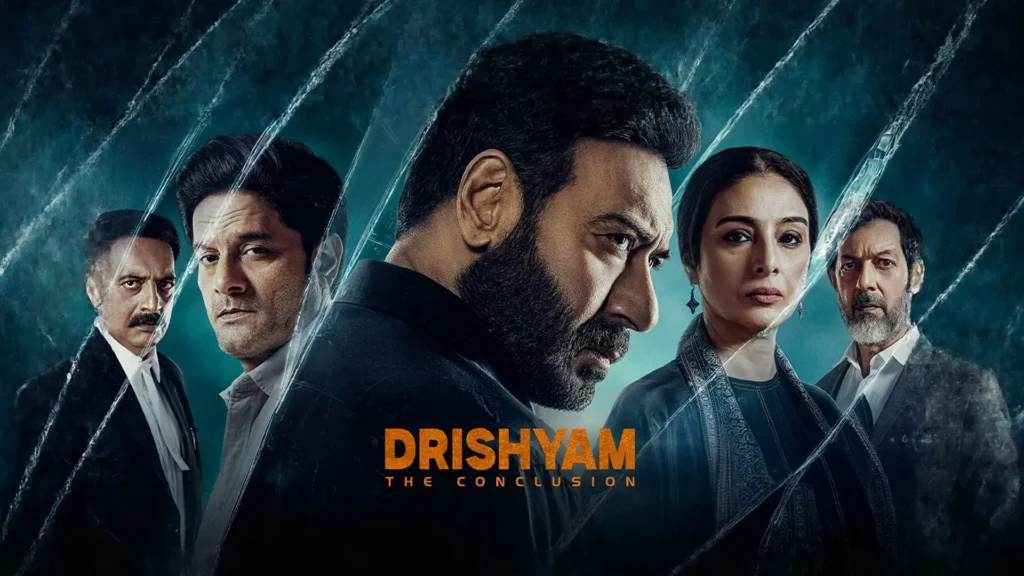
Drishyam 3 Review Verdict: Drishyam 3: The Conclusion is a genuinely good send-off to one of Hindi cinema’s most beloved thriller franchises, well-shot, well-written, anchored by a magnetic new antagonist in Jaideep Ahlawat and a reliably excellent Ajay Devgn. It does not reach the heights of the original Drishyam’s climax, and the second half noticeably loses the momentum the first half built so well. But as a conclusion to an 11-year story, it closes the book with more dignity than it opens new doors it cannot close.
Drishyam 3: The Conclusion released theatrically on October 2, 2026. This review is based on a theatrical viewing on opening day. Light spoilers are discussed without revealing the central twist or climax details.
Quick Verdict: Is Drishyam 3 Worth Watching?
Yes, and if you have followed this franchise through its first two Hindi installments, this is a must-watch. I went in with genuine excitement and came out with a clear opinion: this is a good movie, a satisfying conclusion, and a worthy final chapter, even if it does not deliver the one gut-punch twist moment I was personally hoping for.
Here is how I would categorise the audience reaction. If you are someone who watches a thriller purely for the ride, building tension, wondering what happens next, enjoying the climax without picking apart the structure afterward, you are going to have a great time and will not think twice about any of my reservations. If you are the kind of viewer who analyses structure while watching, who notices patterns across a franchise, you might walk out with a slightly more mixed feeling, the way I did. Both reactions are valid. I am giving this a strong recommendation, not a perfect score.
Drishyam 3: The Conclusion — Movie Info
| Detail | Info |
|---|---|
| Title | Drishyam 3: The Conclusion |
| Release Date | October 2, 2026 (Friday) |
| Director | Abhishek Pathak |
| Lead | Ajay Devgn as Vijay Salgaonkar |
| New Antagonist | Jaideep Ahlawat as SP Tomar (replacing Akshaye Khanna’s character) |
| Runtime | Approximately 2 hours 30 minutes |
| Franchise Status | Final installment — official conclusion |
| Relation to Malayalam Version | A separate, distinct story — not a remake of Drishyam 3 (Malayalam) |
| Our Rating | ★★★★☆ (4/5 — Strong Recommend) |
Drishyam 3 Cast
| Actor | Character |
|---|---|
| Ajay Devgn | Vijay Salgaonkar |
| Jaideep Ahlawat | SP Tomar — new crime branch officer leading the reopened investigation |
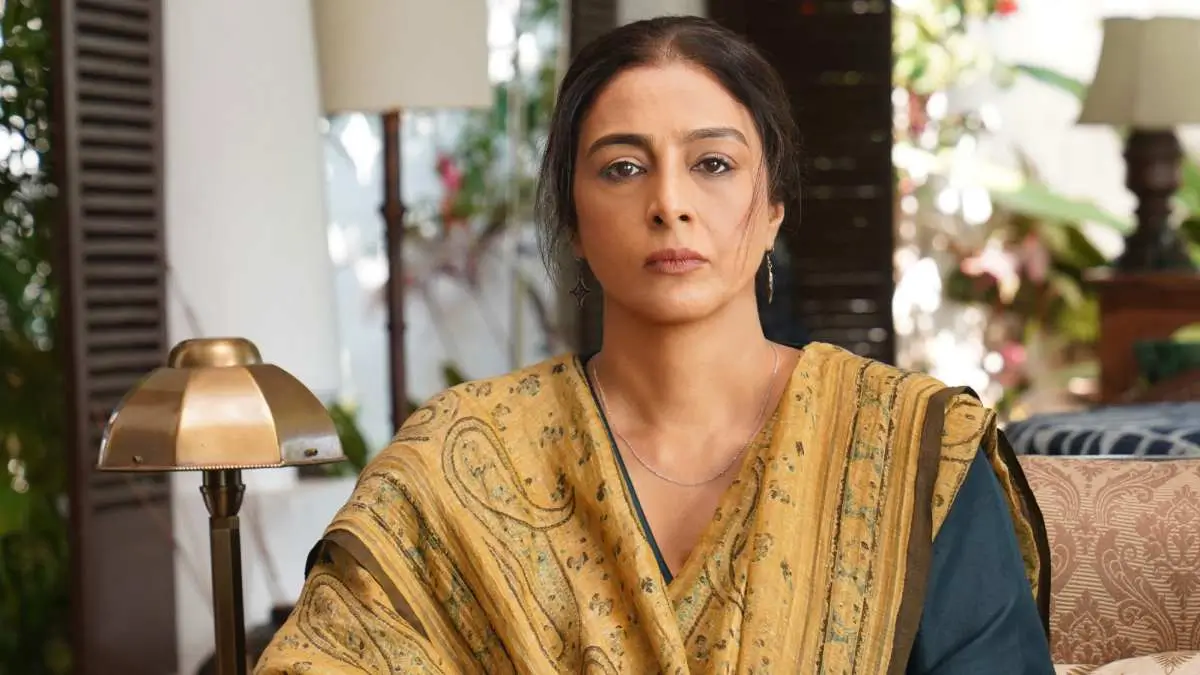
| Tabu | Supporting — connected to the original case |
| Rajat Kapoor | Supporting — Sameer’s father |
| Shriya Saran | Vijay’s wife |
| Kamlesh Sawant | Inspector Gaitonde — comic relief working alongside Tomar |
What Is Drishyam 3 About?
The story picks up some time after the events of Part 2. Vijay Salgaonkar and his family have, once again, managed to normalise their lives in Goa. But normalisation never lasts in this franchise; new evidence surfaces that reopens the long-closed case, and that evidence comes attached to a formidable new adversary: SP Tomar, a crime branch officer determined to finally bring the Salgaonkar family’s secrets into the light.
What that new evidence actually is, why the case reopens specifically now, and whether Vijay and his family can evade justice one more time the way they have twice before all of that is for the film itself to reveal. What I can tell you going in is the shape of the experience: a tense, conversation-heavy thriller that trusts its characters and its camera work to generate suspense rather than leaning on spectacle.
Importantly for anyone worried about continuity, you do not need to rewatch Parts 1 and 2 before seeing this. The film itself opens with a concise, well-integrated recap of exactly the characters and plot points from the previous two films that matter for this conclusion, and nothing more. It is a smart structural choice that signals from the first few minutes: we are heading toward a grand, final climax, and the makers know it.
Drishyam 3 Review: What Works
Abhishek Pathak’s Direction and Camera Work
Abhishek Pathak, returning to direct after Part 2, delivers his strongest work in the franchise with this film, and the camera work specifically deserves real praise. This is a conversation-heavy movie; nearly the entire plot is delivered and developed through dialogue between characters rather than action or spectacle, and the framing choices elevate what could easily have been a visually flat, talky film into something genuinely engaging to watch.
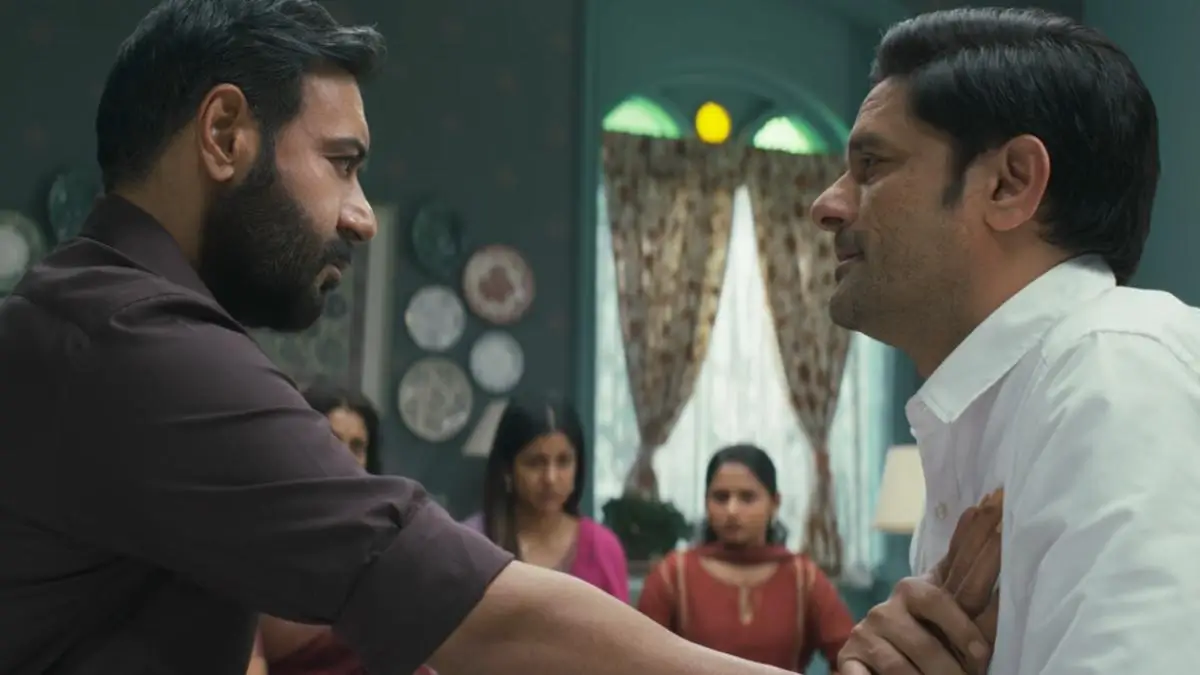
The specific technique I noticed and appreciated: in two-person conversation scenes, the camera is positioned from the side, capturing both characters in frame with whatever separates them a table, in several scenes- visible between them. Then, as the conversation intensifies, the film cuts to tight, zoomed-in close-ups on whichever character is speaking, tracking them specifically. When the conversation shifts to the other character, the camera shifts directly with it.
It is a small technical choice, but it makes every conversation feel like it is being tracked in real time rather than simply covered in standard shot-reverse-shot style. Several of these close-ups track a character’s hand or a cigarette before moving up to their face, a deliberate, controlled visual rhythm that adds tension to scenes that are, on paper, just two people talking.
The cinematography overall is strong, particularly in the night sequences; the lighting work is genuinely impressive, and the film leans into rain as an atmospheric device more heavily and more effectively than the previous two installments did.
The Writing and Pacing
Because this film relies so heavily on dialogue to build its narrative, the writing needed to be strong, and it is. The plot integrates seamlessly with Part 2’s events while moving at a notably faster pace than I expected; the film gets to its central conflict quickly rather than meandering through extended setup.
Some viewers may find the pace occasionally slow in stretches, and I will not pretend every scene moves briskly. But personally, I did not find this a significant complaint. The conversations between Jaideep Ahlawat’s character and Ajay Devgn’s character in particular are written to build genuine tension, and the background score amplifies that tension effectively enough that you find yourself fully immersed in these exchanges rather than waiting for them to end.
Jaideep Ahlawat as SP Tomar
This is the film’s biggest creative gamble, and it pays off completely.
In Part 2, Akshaye Khanna played the new police officer character and received considerable praise for it. For Part 3, behind-the-scenes circumstances meant Khanna was not available to return; the director has publicly said they were close to shooting with him before learning he could not be part of the film, which led to rewrites to fit Jaideep Ahlawat into the role instead. That is a significant swap for a franchise this beloved to make, and it was a real risk.
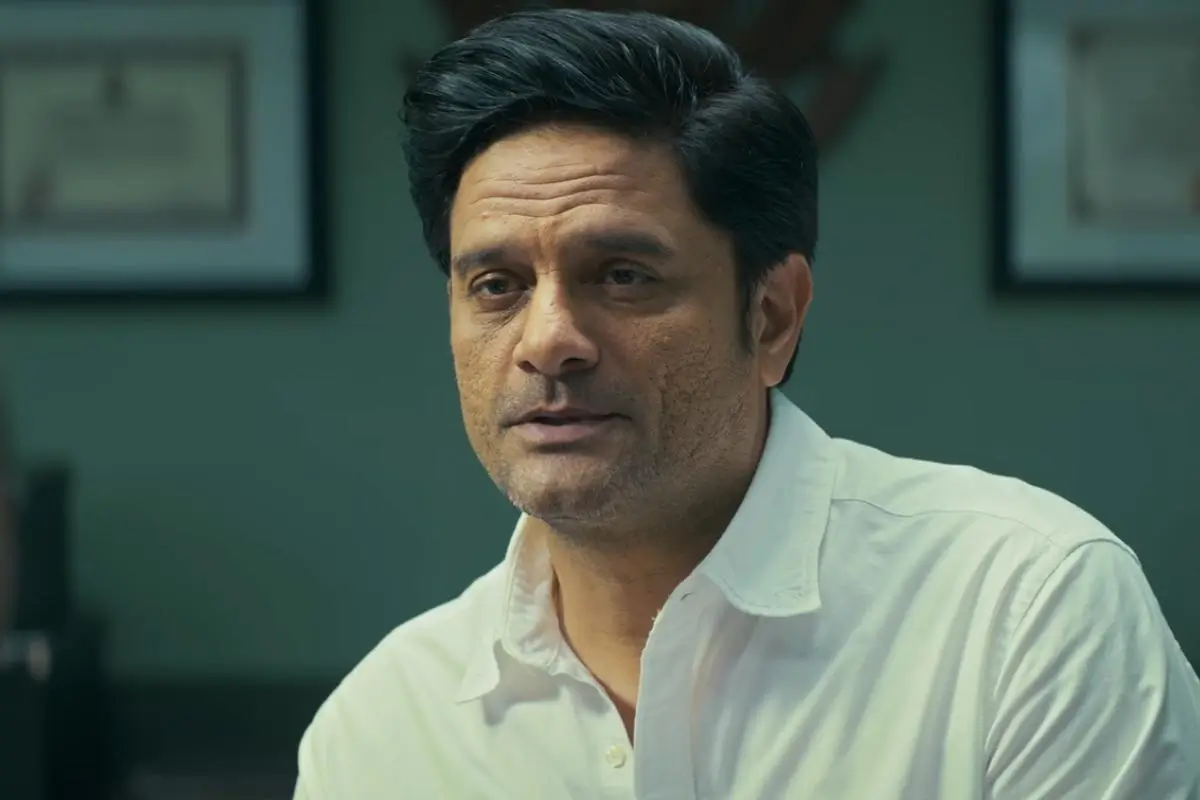
The risk paid off. Ahlawat’s SP Tomar commands every scene he enters from the moment he appears. The way he sizes up Vijay the first time they meet face to face, the way he controls the energy of every scene he shares with Devgn, genuinely impressed me.
Where Akshaye Khanna’s character in Part 2 would have been a welcome return, I understand entirely why the makers made this choice work rather than forcing his comeback, because what Ahlawat brings here stands entirely on its own. For some reason, Ahlawat simply excels at playing exactly this type of commanding, intense character, and he does it again here at a very high level.
Working alongside him, Kamlesh Sawant as Inspector Gaitonde brings a well-calibrated comic touch to scenes that could easily have felt tonally mismatched against Tomar’s seriousness. It never feels like the film is trying too hard to make you laugh; the comedy lands because it is genuinely well-integrated rather than forced.
Ajay Devgn’s Performance and “Those Eyes”
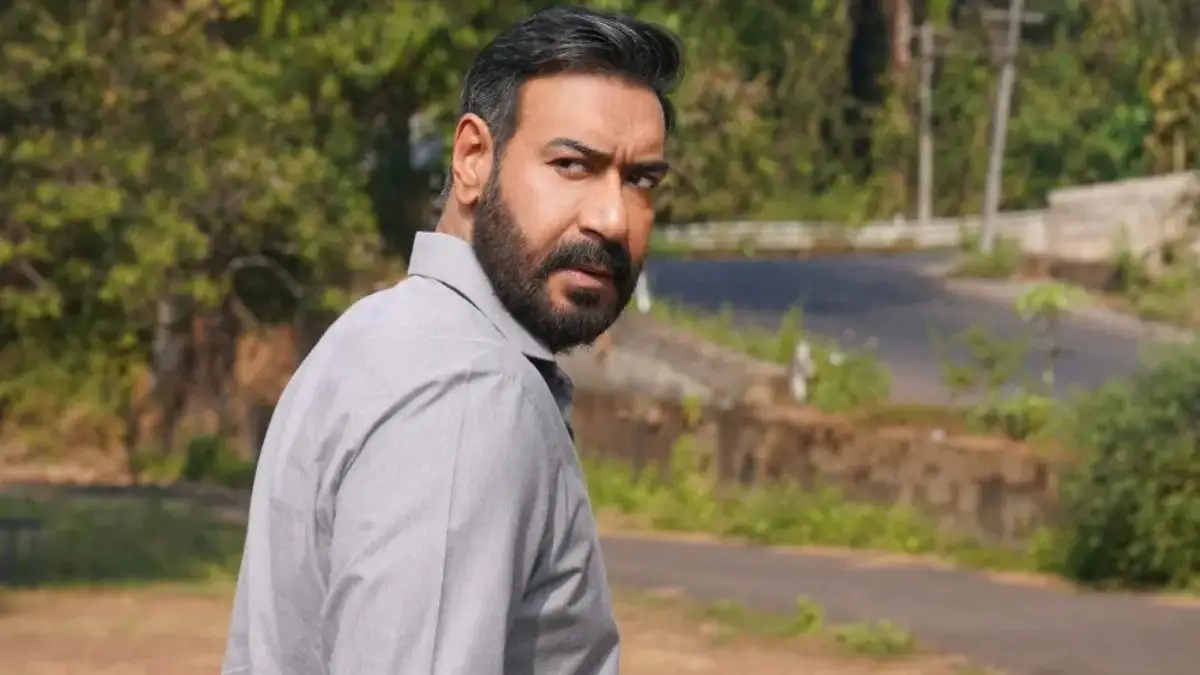
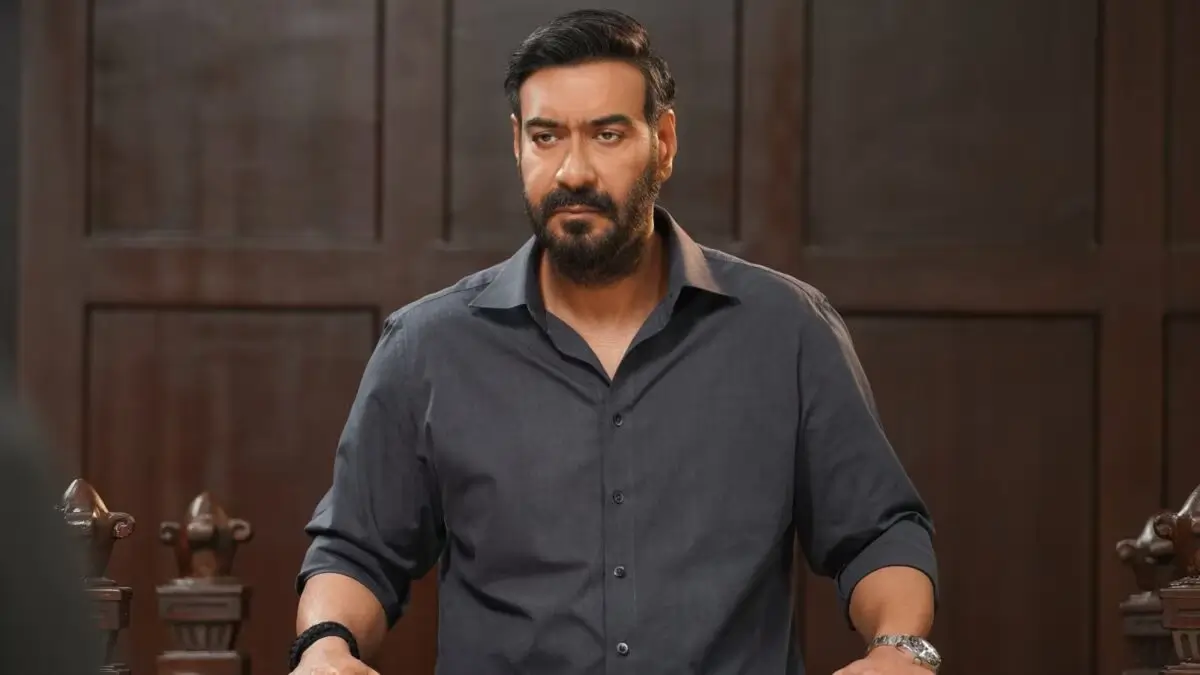
Much has already been said publicly about Ajay Devgn’s eyes in this film, and I understand why. There are numerous scenes where his character is doing essentially nothing but sitting and reacting, and he communicates everything through his eyes alone. It is remarkably versatile and universal work: take the exact same clip, change the background music, and the emotional read of the scene would shift entirely. Same shot, different context, completely different meaning. That is a genuinely impressive piece of screen acting, delivered with minimal dialogue in those specific moments.
Drishyam 3 Review: Where It Falls Short
The Supporting Family Gets Sidelined
Unfortunately, the rest of Vijay’s family does not get much screen time in this film. Shriya Saran appears here and there, and I have no real complaint about her performance specifically; there is one moment where her Hindi delivery felt slightly unusual to me, though a logical explanation for that eventually surfaces within the story. But overall, the family dynamic that was so central to the franchise’s emotional foundation takes a back seat this time around.
Tabu’s Role Is Largely Decorative
I will say directly: Tabu does not have much of a meaningful role in this film. If you removed her character entirely — aside from one or two scenes the plot would not change significantly. The same goes for the rest of Vijay’s family. They simply were not given enough screen time or dialogue to feel essential.
It is only in the climax, when the film begins unraveling itself the way every Drishyam film eventually does, that these characters feel briefly relevant again. Outside of that, they function as narrative accessories connected to the previous installments rather than active participants in this one’s plot, present mainly because their stories were tied to the earlier films, not because this film gives them anything meaningful to do.
The Second Half Loses the Momentum of the First
This is my most significant criticism, and I want to be specific about it. The first half of this film is genuinely excellent; I had real fun watching it, no exaggeration. But in the second half, the character who has been driving the story so compellingly essentially moves to the background, watching events unfold rather than actively shaping them the way the first half suggested he would. The specific narrative thread that launched Part 3 in the first place, involving Tabu’s character and her husband, never gets the solid, proper conclusion I was expecting given how much weight the film initially gave it.
The Climax Is Satisfying But Not Spectacular
I need to be honest about something here, with a mild spoiler warning for this specific point: the climax may feel slightly underwhelming, and here is exactly why. The original Drishyam’s climax was, to me, absolute perfection a moment I do not think can be recreated, and the makers clearly know this too. Part 2’s climax already felt somewhat luck-driven by comparison, as if Vijay succeeded more through fortune than through demonstrated skill. The Malayalam version’s third installment was built specifically to interrogate that exact question: was George Kutty just lucky, or is he genuinely brilliant?
The Hindi Part 3 operates on a different logic entirely. It tries to make Part 2’s events feel relevant and unfolds its own story through them, which means the climax plays out roughly as you would expect it to. You do not get the sensation of a massive twist or an unprecedented reveal, because by this point you have already watched Vijay succeed through similar means twice before, and you simply trust that he will figure it out again. It is the Superman-catching-the-plane feeling: you know the hero will manage it, so the “how” matters more than the “whether,” and here the “how” does not surprise you as much as the franchise’s best moments have.
A Pattern You Can See Coming
This franchise has a recognisable structural pattern by now, and Part 3 follows that pattern closely enough that attentive viewers will feel the predictability. You cannot pinpoint exactly what is going to happen scene by scene, but you have a strong sense of the shape events are going to take well before they arrive.
I kept hoping, somewhere in the final thirty minutes, that the makers would break from their own tradition and do something that would genuinely shock me something I truly would not have anticipated across three films. That moment never comes. Drishyam 3 concludes the story it started eleven years ago competently and with real craft, but it does not reach for the kind of audacious surprise that could have elevated it from “good conclusion” to “unforgettable conclusion.”
How Does Drishyam 3 (Hindi) Compare to the Malayalam Drishyam 3?
I want to be clear about something important: this Hindi film is not a remake of the Malayalam Drishyam 3, which released earlier this year. Both versions were reportedly shot around the same period with the explicit intention of releasing as separate, distinct stories in their respective languages, and that is exactly what happened.
The Malayalam version takes George Kutty’s obsession in a notably darker direction than the Hindi version does; the Hindi film does not follow that same dark turn. In fact, the two films are structurally quite different. The Malayalam version’s central storyline revolves significantly around a daughter’s wedding, which in the Hindi version is reduced to a comparatively minor plot thread.
The climaxes of the two films are completely different from each other, and even the specific evidence or plot mechanism each film’s new police officer uses to reopen the case differs entirely between versions. There may be some minor overlap maybe five to ten percent similarity, by my recollection- but these are genuinely two separate films telling two separate stories.
If you have already seen the Malayalam Mohanlal version and are wondering whether you need to bother with this Hindi one, yes, you should. This is essentially a new film built for Hindi audiences, not a retelling of what you have already seen.
One specific complaint I had about the Malayalam version: it moves at a very slow pace for most of its runtime and only speeds up significantly in the final ten to fifteen minutes of the climax. The Hindi Part 3 does not have this problem; it maintains a consistent pace from the start, introducing elements and building tension steadily throughout rather than saving all its momentum for the ending. Vijay in this version also never feels as helpless as his Malayalam counterpart does at points; you sense throughout that he is always cooking up some contingency, and that payoff lands satisfyingly in the climax.
Pros and Cons
✓ Pros
- Jaideep Ahlawat is a genuine success as the new antagonist, commanding every scene
- Camera work and framing elevate conversation-heavy scenes into something visually engaging
- Strong pacing throughout, avoids the slow-burn problem of the Malayalam version
- Ajay Devgn’s reaction-based performance is remarkably versatile
- A smart, concise recap at the start means no need to rewatch Parts 1 and 2
- Genuinely distinct from the Malayalam version, a real, separate story
- Good, unforced comic relief from Kamlesh Sawant’s Inspector Gaitonde
✗ Cons
- Second half loses the driving momentum the first half built so well
- Tabu and the extended family are underused, functioning mostly as connective tissue to earlier films
- Climax follows a predictable franchise pattern rather than delivering a genuine surprise
- Does not reach the heights of the original Drishyam’s near-perfect climax
- Vijay’s family subplot that launched the film does not get the solid resolution it was set up to deliver
Final Verdict
| Category | Score |
|---|---|
| Direction | ★★★★★ |
| Screenplay / Writing | ★★★★☆ |
| Jaideep Ahlawat’s Performance | ★★★★★ |
| Ajay Devgn’s Performance | ★★★★☆ |
| Cinematography | ★★★★★ |
| Pacing | ★★★★☆ |
| Climax | ★★★☆☆ |
| Supporting Cast Utilisation | ★★☆☆☆ |
| Overall | ★★★★☆ (4/5 — Strong Recommend) |
Drishyam 3: The Conclusion delivers exactly what this franchise’s strongest point has always been: genuine suspense and tension, built through character and conversation rather than spectacle. Jaideep Ahlawat’s arrival as the new antagonist is the film’s biggest success, and the direction and cinematography are the best the Hindi franchise has produced.
The second half softens the momentum; Tabu and the family are underserved, and the climax does not deliver the kind of unforgettable twist the series is capable of at its absolute best. But as a conclusion, and the makers are explicit that this is a conclusion, not leaving the door open for endless sequels the way so many franchises do, it closes the story with dignity and genuine craft.
If you loved Parts 1 and 2, go watch this. You will have a good time. Just do not expect the gut-punch of the original’s ending; that lightning was never going to strike twice.
It doesn’t quite carry the weight its title promises, but I had a good time with it, and I’m curious what this director does next. If you’re deciding which movie to watch next, explore our latest reviews of Forgotten Island Review, Sleepy Hollow Review, Beware Boiúna Review, Godzilla Minus Zero Review, Digger Review, Verity Review, and Endgame Encore Review.
At NexaFeed, we publish spoiler-free movie reviews, OTT series reviews, ending explained articles, hidden details, and streaming guides covering Disney, Pixar, Marvel, Netflix, Prime Video, Apple TV+, HBO Max, and the biggest theatrical releases from around the world
Frequently Asked Questions
Is Drishyam 3 a hit or flop?
The film opened to packed theaters on its October 2 release, with strong early audience turnout, suggesting a strong commercial start. Whether it ultimately classifies as a box office hit will depend on its full theatrical run, but opening day reception was genuinely enthusiastic.
Is Akshaye Khanna in Drishyam 3?
No. Akshaye Khanna, who played the police officer character in Part 2 to significant acclaim, does not return for Part 3. Behind-the-scenes circumstances meant he was unavailable close to the start of shooting, and the role was rewritten for Jaideep Ahlawat, who plays the new antagonist, SP Tomar, instead.
Is Drishyam 3 available on Prime Video?
Drishyam 3 is currently in theatrical release. A streaming release date has not been confirmed at the time of this review. Check back for updates on digital and streaming availability following the theatrical run.
Is there a Drishyam 4 coming?
The makers have explicitly positioned Drishyam 3 as “The Conclusion” to the Hindi franchise, signaling an intentional end to Vijay Salgaonkar’s story rather than leaving the door open for further sequels. No Drishyam 4 has been announced.
Is Drishyam 3 (Hindi) the same story as the Malayalam Drishyam 3?
No. Despite both films reportedly being shot around the same period, they tell genuinely distinct stories with different plot mechanisms, different central storylines, and completely different climaxes. The Malayalam version centers more heavily on a daughter’s wedding subplot, while the Hindi version treats that as a minor thread. If you have seen the Malayalam version, the Hindi film is still very much worth watching as its own separate story.
Drishyam 3: The Conclusion is now playing in theaters.