Mollywood Times Review Verdict: Mollywood Times is a masterpiece dressed as a film industry satire. It is smarter than you expect, more painful than you are prepared for, and more hopeful in its ending than anything in its premise suggests is possible. I could not stop thinking about it afterward, and I already want to watch it again.
I watched Mollywood Times on OTT. This review is written in English and contains thematic analysis but no major plot spoilers. For non-Malayalam speakers: the subtitles are excellent, thank Vivek Ranjit.
Quick Verdict
Mollywood Times is a film about a young filmmaker trying to make the best horror film in Malayalam cinema’s history. That is the premise. The film is actually about something much harder to summarize: what it costs to refuse to compromise. What happens when a person with genuine vision meets a system designed to reward anything except genuine vision? And whether holding your ground until the end is a form of success or a form of destruction, or, more honestly, both at once.
Abhinav Sundar Nayak made Mukundan Unni Associates as his first film and established himself as someone who thinks very differently from most directors working in any Indian language right now. Mollywood Times confirms that Mukundan was not a lucky accident.
This man has a specific mind and a specific voice, and he is not interested in making films for people who do not want to meet him on his terms. I find that deeply admirable, and I also found it, at certain points during this nearly three-hour film, genuinely challenging. Both of those things are true simultaneously, and I think both of them are part of what the film intends.
Mollywood Times — Movie Info
| Detail | Info |
|---|---|
| Title | Mollywood Times |
| Director | Abhinav Sundar Nayak |
| Writer | Ramu Sunil |
| Lead Actor | Naslen |
| Score | Jakes Bejoy |
| Language | Malayalam |
| Genre | Drama, Dark Comedy, Meta-Cinema |
| My Rating | ★★★★★ (5/5) |
What Is Mollywood Times About?
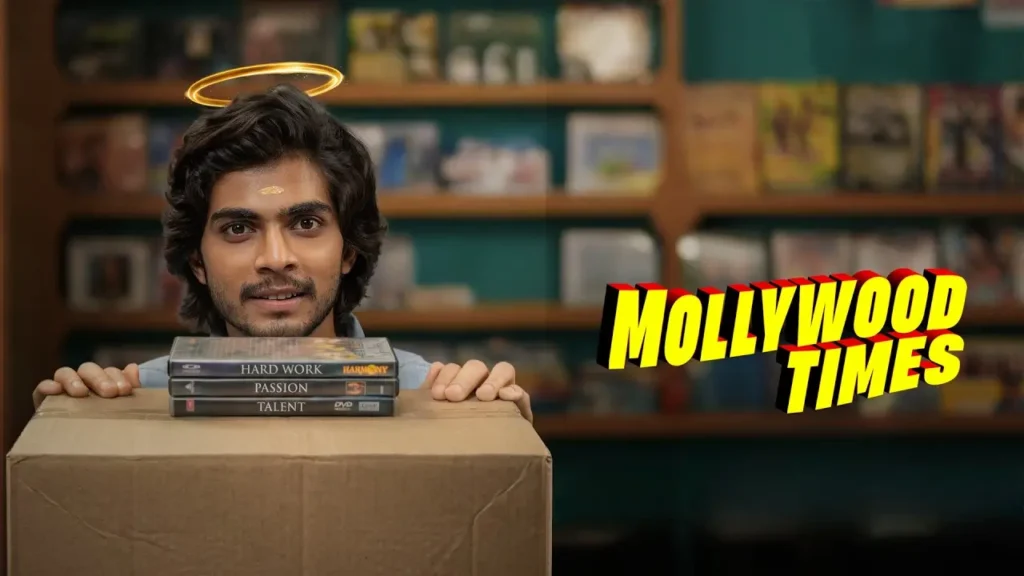
The film follows Vimal Madhavan, played by Naslen, a young outsider who wants to become the greatest maker of horror films in Malayalam cinema. Not the most respected filmmaker. Not the most awarded. He specifically, almost aggressively, wants to make horror. Not because it is commercially safe, horror films are typically looked down upon as lowbrow, but because when someone watches a horror film and genuinely experiences fear in their body, that is proof that cinema worked at its most fundamental level.
An audience member having a heart attack while watching your film matters more to Vimal than winning a National Award, which he views as a transaction between jury members with agendas and filmmakers with the right demographics.
This character positioning tells you immediately what kind of film you are in. Vimal Madhavan is not a charming underdog. He is rigid, uncompromising, occasionally insufferable in the specific way that people with absolute conviction about their own vision tend to be. He rejects a romantic interest early in the film because his goal comes first.
He refuses to adjust his creative decisions when producers demand changes. He destroys work rather than let it leave his control in a compromised state. He is, in the language of a specific literary tradition, a Howard Roark figure, the individual creator who believes that the moral claim to a work belongs entirely to the person whose vision originated it, regardless of how many collaborators were needed to execute it.
Whether you agree with that philosophy is part of what the film is asking you to consider. It does not ask you to admire Vimal without question. It asks you to sit with him through his consequences.
Is Mollywood Times Based on a True Story?
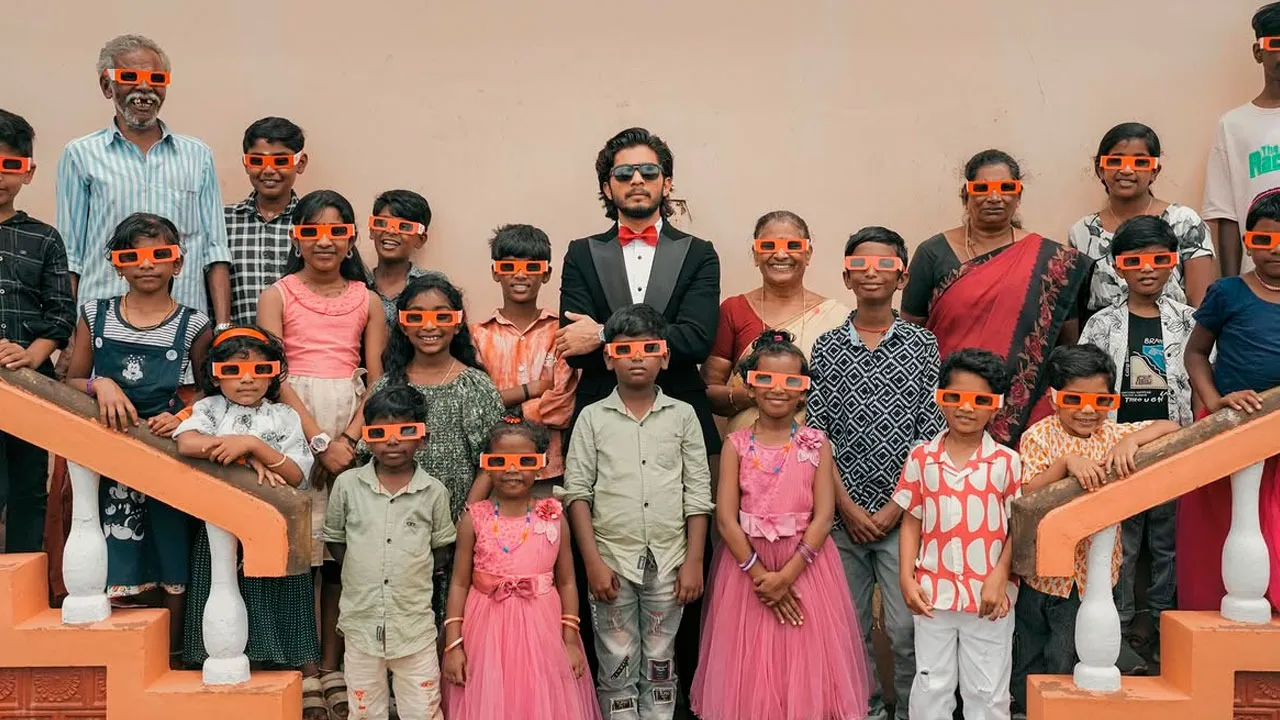
Not literally, but the director has confirmed in interviews that significant portions of Vimal’s journey are drawn from his own life, how he fell in love with cinema, the politics he encountered, the plagiarism disputes, the specific humiliations that come with being an outsider trying to operate inside an industry that runs on relationships and money rather than on talent.
The film opens with a direct personal statement from the director to a former partner, an unusually frank and intimate confession for any film to begin with, let alone one that then proceeds to be largely about the film industry’s corrupt practices. It is an autobiographical film with a fictional frame, and that tension gives everything that follows a sharpness that pure fiction could not replicate.
The Film Industry Exposes This Film Is — And Why Bollywood Won’t Want Anyone Talking About It
Mollywood Times is, in structure and subject, a biopic of modern Malayalam cinema. It is a systematic exposure of what actually happens behind the scenes that audiences are never shown: the backstabbing between peers, the plagiarism disputes and who wins them (not necessarily the person with the original idea), the way money determines creative outcomes rather than quality, the insecurity between filmmakers that curdles into sabotage, and the systemic celebration of mediocrity because the people with money and distribution power are interested in safe returns, not in excellent cinema.
The fact that this film comes from Malayalam cinema is its own form of meta-commentary. Malayalam cinema is currently the most critically respected industry in India. It produces more genuinely good films per year than any other regional industry.
And within that industry, someone was free to make a film exposing how even that industry works in practice, without it being suppressed or compromised. The existence of Mollywood Times is evidence of the health of the system it is critiquing. No other Indian film industry would have allowed this film to be made in this way.
If the same film were made about Bollywood, I do not think it would have reached an audience.
Naslen’s Performance Is One of the Year’s Best
I have been aware of Naslen as a performer for a while. I was not prepared for what he does here.
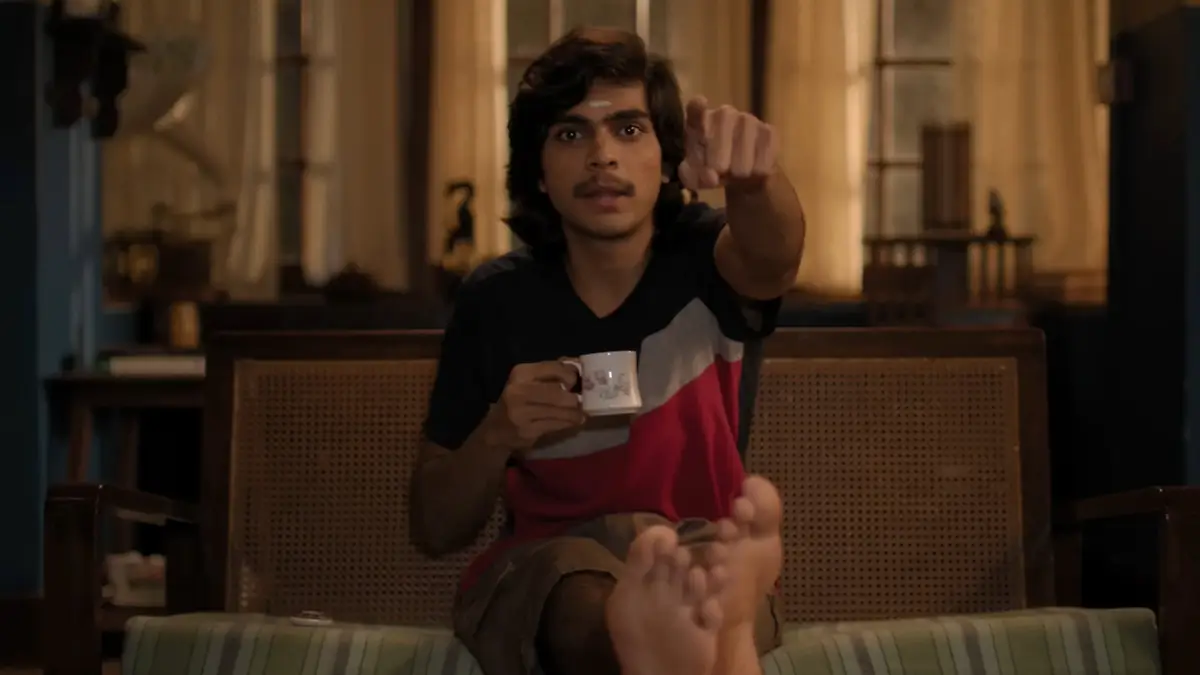
By the time the film reached its midpoint, I had completely stopped registering Naslen. I was watching Vimal Madhavan, a specific, fully inhabited human being with a specific history, a specific way of carrying himself, a specific quality of obsession that is visible in how he moves through a room and how he listens when someone speaks to him.
The internalized performance style Naslen brings to this role is exceptional. He does not announce Vimal’s emotions. He contains them, and in containing them makes you feel their pressure from the outside.
The single moment that stayed with me longest: Vimal watches a film and is devastated by what he sees. What Naslen does in those few seconds, the tears, the exhale, the specific quality of someone letting out breath they have been holding through an entire act of someone else’s creation, is acting at a level where technique and truth become indistinguishable. I cannot describe it further. You will know it when you reach it.
How This Film Thinks About Cinema Differently Than Any Other Film About Cinema
There is a specific and somewhat tired tradition of films about the film industry. They tend to fall into predictable patterns: the innocent corrupted by fame, the genius betrayed by commerce, the system that crushes dreams. Mollywood Times knows this tradition and declines to participate in it.
What Nayak and writer Ramu Sunil have done instead is build a genuine philosophical argument into their narrative structure. The film is not just showing you bad things that happen in the film industry. It is debating questions that have no clean answers: Who owns an idea? What is the difference between conceiving something and executing it?
Is filmmaking fundamentally a director’s personal expression or a collective endeavor? If a film fails commercially but achieves exactly what its director intended, is that success or failure?
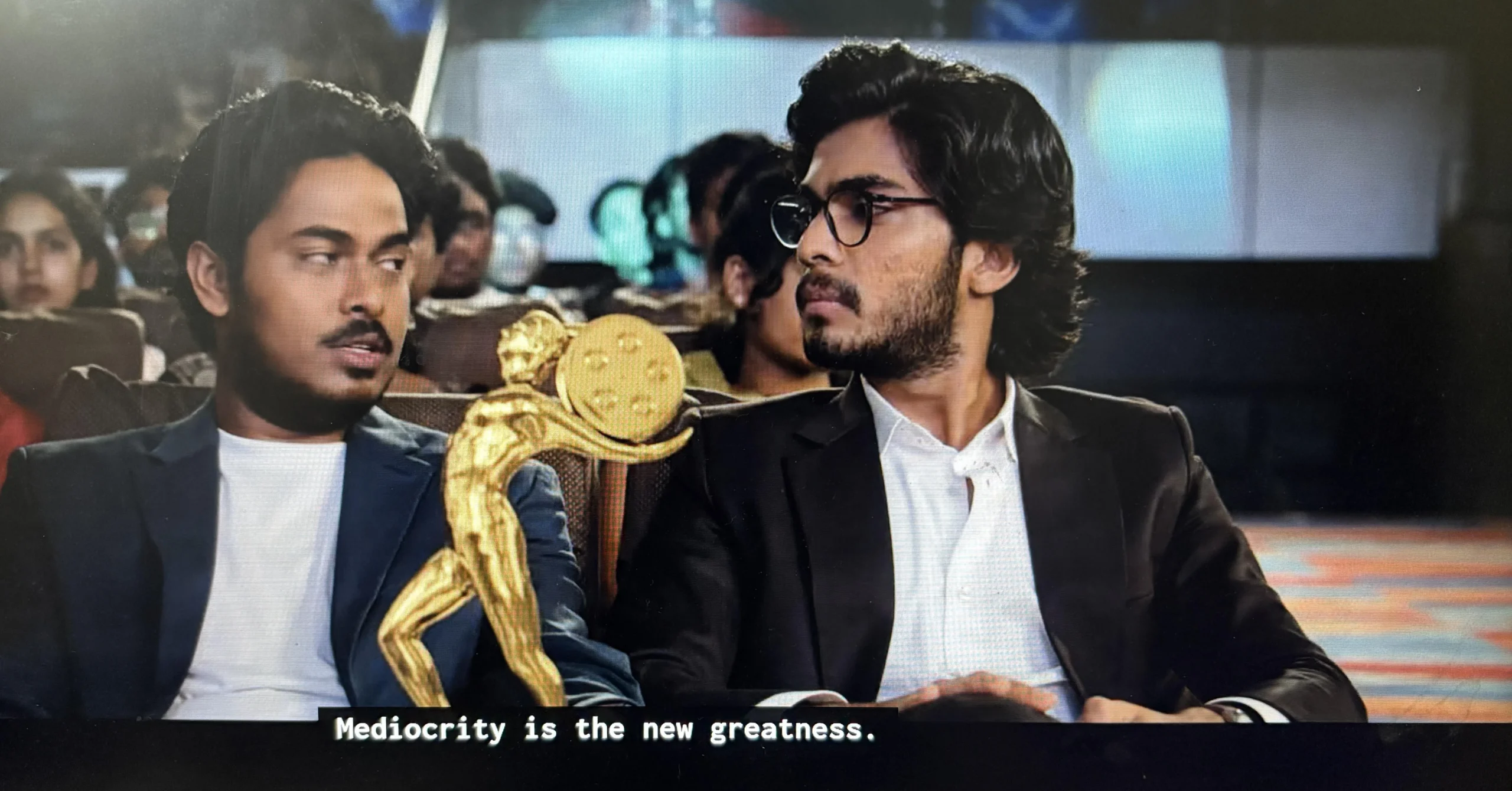
These debates are embedded in scenes and character confrontations rather than delivered as dialogue speeches. The antagonist Sangeet Prathap plays is the Peter Keating to Vimal’s Howard Roark, the filmmaker who finds success by giving audiences and producers exactly what they want, by being whatever the room needs him to be. He is not presented as villainous. He is presented as functional. The film’s most uncomfortable question is whether his approach is actually the more sophisticated one, and it refuses to answer that for you.
The Style and Craft: Why This Film Looks Unlike Anything Else
The cinematography, the editing, and the score are each doing something that coordinates with the others to create a specific texture I have rarely experienced in Indian cinema.
The camera work uses different lenses in ways that you notice consciously, wider lenses in certain locations, and different framing approaches at different stages of Vimal’s journey. There is Wes Anderson-style center framing at key moments, and a tracking shot through a corridor that carries that aesthetic register without feeling like imitation. These are not stylistic flourishes. They are landmarks in the narrative, as the film uses physical spaces as emotional signifiers throughout.
The editing during Vimal’s inner monologue sequences is genuinely unlike anything I have seen in recent Indian cinema, staccato, fragmented, building rhythm and then disrupting it in ways that put you inside the consciousness of someone whose mind is moving faster than the world around him can accommodate.
Jake’s Bejoy’s score uses a specific melodic structure, ascending and then descending, suggesting optimism and then pessimism in the same phrase, that I found quietly devastating when I finally noticed it. The sound design is exceptionally soft. Not harsh, not aggressive. Everything lands like sound on vinyl rather than digital, which is exactly right for a film about the texture of creative experience.
Where the Film Tests You
I want to be honest: at approximately two hours into a nearly three-hour film, I felt the repetition beginning to settle. Vimal faces another obstacle. Another person betrays him, fails him, or succeeds where he should have. The catalog of setbacks accumulates.
But I sat with that feeling rather than surrendering to it, and I think the film is doing something intentional with that frustration. The frustration the audience accumulates watching Vimal’s failures is a small, mediated version of the frustration Vimal himself is carrying. You are not supposed to feel comfortable with the pace of his obstacles. You are supposed to feel, by the film’s final act, what it actually costs to hold ground this long against this much.
The climax does not deliver a traditional catharsis. There is no big moment where everything resolves, and the system acknowledges his talent. What happens instead is smaller, more precise, and more true. I was not left with the satisfaction of a clean resolution. I was left with something that felt like being handed back a perspective I had temporarily lost. That is a different kind of ending and, in the end, a better one.
Is Mollywood Times a Hit or a Flop?
Commercially, Mollywood Times occupies a specific territory that will be familiar to anyone who follows Malayalam cinema closely: a film with a genuinely niche audience doing better than many expected precisely because Malayalam cinema’s audience is more sophisticated than most industries’ audiences. It is not a mass blockbuster. It is not designed to be. A film this uncompromising in its formal choices and this willing to challenge its audience’s patience will find its core audience and will be discussed by them intensely, which is arguably a more durable success than opening-weekend numbers.
Whether it is a “hit” depends on which definition you are using. In terms of the conversation it has generated and the impression it leaves on the people who see it, this film hits.
Pros & Cons
✓ Pros
- Naslen disappears completely into Vimal Madhavan, one of the year’s best performances
- A genuine philosophical argument embedded in a narrative rather than stated in dialogue
- Exposes the film industry’s actual operations with specificity and honesty
- Cinematography, editing, and score work in precise coordination
- Dark humor that gives the film a distinct personality without softening its edges
- The ending earns its emotional impact by refusing to manufacture it
- Subtitles are outstanding for non-Malayalam speakers
✗ Cons
- Nearly three-hour runtime does accumulate repetition in its middle section
- Very niche subject, general audiences with no investment in filmmaking culture will struggle to connect
- The film’s uncompromising stance toward its own audience occasionally crosses into impatience with anyone who needs more assistance
Mollywood Times Review Final Verdict
| Category | Score |
|---|---|
| Direction | ★★★★★ |
| Performance (Naslen) | ★★★★★ |
| Screenplay | ★★★★★ |
| Cinematography | ★★★★★ |
| Score | ★★★★☆ |
| Pacing | ★★★★☆ |
| Emotional Impact | ★★★★★ |
| Overall | ★★★★★ (5/5) |
Mollywood Times is the kind of film that people who care about cinema will cite for years. Not because it is easy or crowd-pleasing, it is neither, but because it is honest in a way that almost no film about the film industry has been willing to be. It respects your intelligence enough to not explain itself to you. It trusts you to feel its frustrations and follow its arguments without signposting. It ends not with triumph but with something more durable: the specific satisfaction of a person who remained exactly who they were, regardless of what it cost.
Abhinav Sundar Nayak has made exactly the film he wanted to make. If Vimal Madhavan is anything like his director, and everything suggests he is, he would approve.
If you enjoy honest, spoiler-free movie reviews and detailed ending breakdowns, don’t miss our latest coverage of Nagabandham Review, Satluj Review, and Young Washington Review. We also cover the biggest Malayalam, Bollywood, Hollywood, Telugu, Tamil, and OTT releases with in-depth analysis, hidden details, ending explained articles, and recommendations to help you decide what to watch next. Explore more reviews on NexaFeed to stay updated with the best movies and series of 2026.
Frequently Asked Questions
Q. What is the Mollywood Times movie about?
Ans. Mollywood Times follows Vimal Madhavan, a young filmmaker obsessed with becoming the greatest maker of horror films in Malayalam cinema. The film uses his journey as a framework for exposing the film industry’s real operations, plagiarism disputes, the politics of money over talent, the celebration of mediocrity, and asks deeper questions about creative ownership, compromise, and what success on your own terms actually costs.
Q. Who is the director of Mollywood Times?
Ans. Abhinav Sundar Nayak, whose debut film Mukundan Unni Associates established him as one of Malayalam cinema’s most original voices. Mollywood Times is his second film.
Q. Is Mollywood Times hit or flop?
Ans. Commercially, it occupies niche territory, not a mass blockbuster, not designed to be. Among film audiences and cinephiles, it has generated significant discussion and is widely considered one of Malayalam cinema’s strongest recent releases.
Q. Is Mollywood Times a comedy movie?
Ans. It contains dark humor and has moments of genuine comedy, but it is primarily a drama. The tone is closer to dark satire than comedy.
Q. Is Mollywood Times a horror movie?
Ans. No, the protagonist wants to make horror films, but Mollywood Times itself is a drama about the film industry. The horror film Vimal wants to make exists within the story; the film you are watching is not horror.
Q. Who is Mollywood Times based on?
Ans. The director confirmed elements are drawn from his own life and experiences in the industry. It is an autobiographical film with a fictional frame rather than a direct biopic.
Mollywood Times is currently available on OTT. Watch it with subtitles; they are excellent.