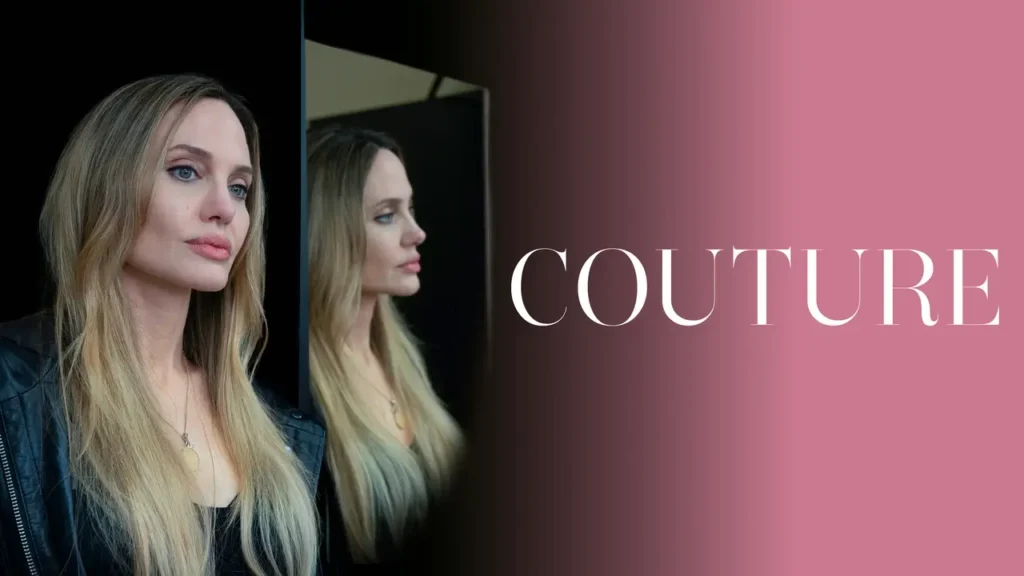
Couture Review Verdict: Couture has a genuinely resonant theme, a woman so consumed by working toward the future that she cannot live in the present, forced into confronting mortality at the worst possible professional moment, and Angelina Jolie gives a performance that deserves far better material. Unfortunately, the film surrounding her is structurally messy, tonally inconsistent, and populated by underdeveloped supporting characters and performances that range from uneven to genuinely weak. The metaphors are heavy-handed. The narrative is thin. Jolie is transfixing. The film is not.
This review is based on critical screenings of Couture ahead of its limited theatrical release. It synthesizes analysis from multiple critics who reviewed the film at TIFF 2025 and at its June 2026 theatrical debut. Spoilers are discussed in the Ending Explained section.
Quick Verdict
Couture premiered at the Toronto International Film Festival in September 2025 and arrives in limited US release in June 2026. The film is Alice Winocour’s fifth feature, a director whose previous work includes the well-regarded Disorder and Proxima. It stars Angelina Jolie as an American filmmaker who arrives in Paris to shoot a fashion film and receives a breast cancer diagnosis while there.
The premise has genuine emotional weight, and the film’s central theme, that we work ourselves so hard toward the future that we forget to live in the present, is handled with more clarity and relevance than the cluttered narrative surrounding it might suggest.
But Couture is ultimately undone by the gap between its best element (Jolie) and almost everything else. The supporting cast is inconsistent, with the non-professional models delivering performances that land somewhere between unconvincing and inadvertently comic. The symbolism is heavy-handed to the point of being distracting. The structure spreads across four female characters without giving most of them enough depth to justify their screen time. And the film ends before it earns its final image, buzzing a head we never see buzzed.
Couture (2026) — Movie Info
| Detail | Info |
|---|---|
| Title | Couture |
| Original Title | Stitches (working title) |
| Release Year | 2026 |
| Director | Alice Winocour |
| Premiered | Toronto International Film Festival, 2025 |
| Theatrical Release | June 26, 2026 (Limited, US) |
| Distributor | Vertical Entertainment |
| Genre | Drama |
| Language | Primarily English / some French |
| Our Rating | ★★☆☆☆ (2/5) |
What Is the Couture Movie About?
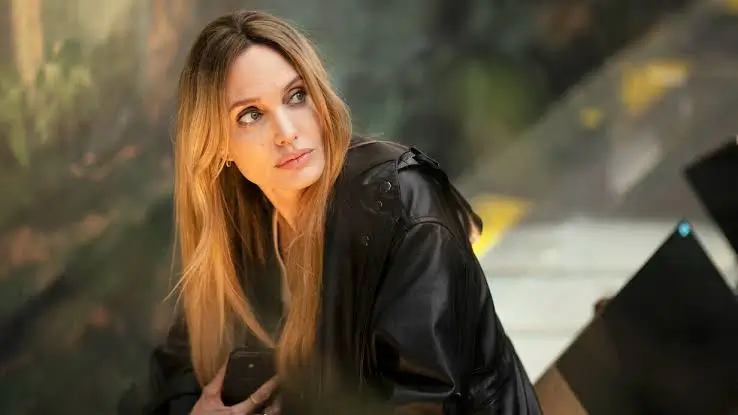
Couture follows Maxine Walker (Angelina Jolie), an American independent horror filmmaker who has been hired, for reasons she herself questions, to shoot a short film that will open a high-profile Paris Fashion Week show. She arrives two days before the event with limited time, limited budget, and apparently no knowledge that she is on the verge of a life-altering medical crisis.
Almost immediately, her American doctor calls, requesting she come in urgently to discuss her biopsy results. She refuses, she is in Paris for work, and arranges instead to see a Paris-based doctor. That doctor, played by Vincent Lindon, confirms she has an aggressive form of breast cancer requiring immediate mastectomy.
This diagnosis is the film’s emotional engine, but it shares screen time with three other female storylines: Ada (Anja Ane), a young South Sudanese woman with no modeling experience who has been cast both in Maxine’s short film and as the first model down the runway; Angele (Ella Rumpf), a makeup artist also secretly working on a manuscript she hopes to publish; and an unnamed seamstress (credited separately) constructing the dress Ada will wear at the show’s opening. Each of these women has her own ambitions, fears, and financial pressures. None of them gets enough screen time to be fully realized.
Couture Movie Cast
| Actor | Role |
|---|---|
| Angelina Jolie | Maxine Walker — American filmmaker, cancer diagnosis |
| Anja Ane | Ada — an inexperienced South Sudanese model |
| Ella Rumpf | Angele — makeup artist / aspiring writer |
| Vincent Lindon | The Paris doctor |
| Louis Garrel | The cinematographer |
| Aurora Clément | Fellow patient in waiting room |
| Grégoire Colin | Supporting |
| Finnegan Oldfield | Supporting |
Angelina Jolie’s Performance: The Film’s Only Unconditional Positive
Let us be clear about this before anything else: Angelina Jolie is the reason to watch Couture, and she makes a case, through sheer commitment and specificity, that she deserves significantly better material than this film provides.
Jolie plays Maxine with a particular and difficult quality: a woman who processes catastrophic news not with immediate visible devastation but with a kind of delayed, slowly dawning recognition that her priorities have been fundamentally wrong.
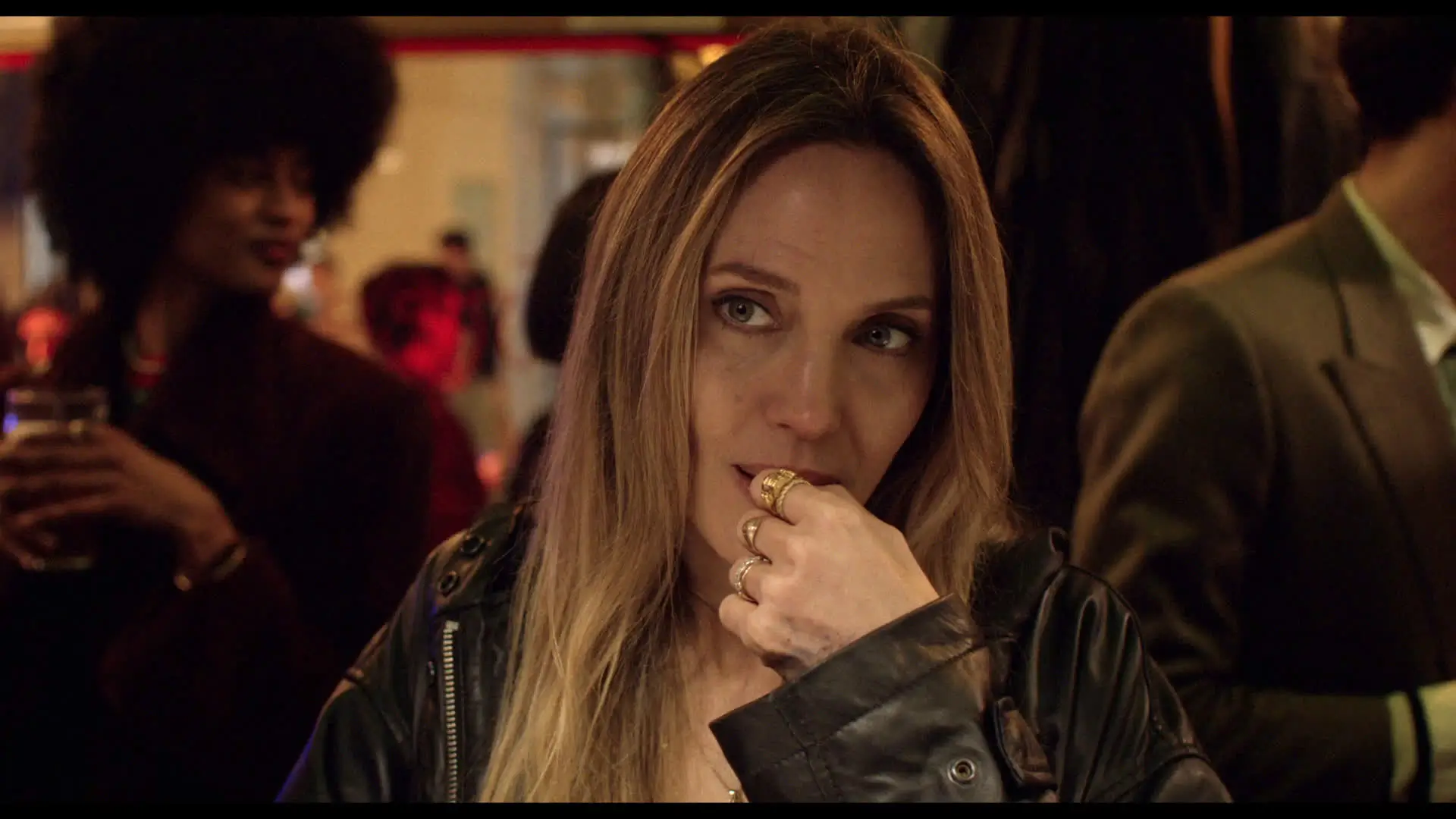
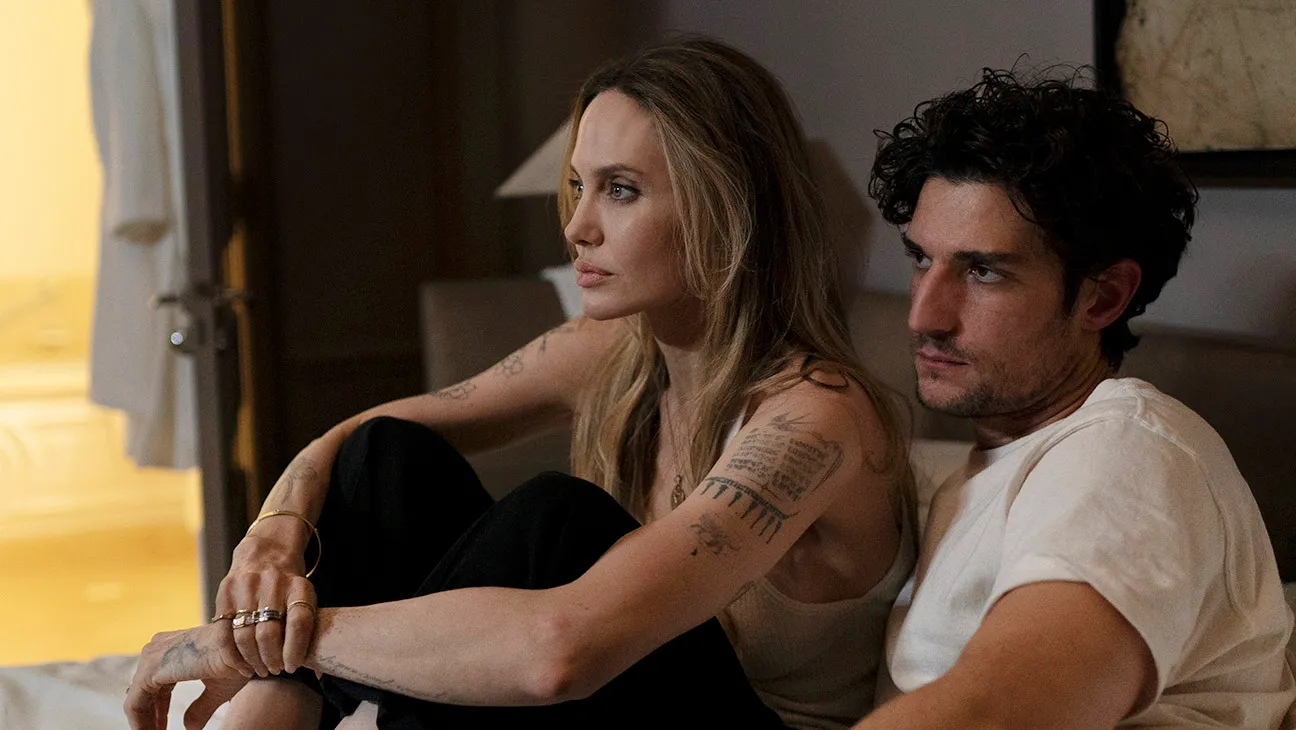
The moment where Maxine arrives at a bar after receiving her diagnosis, sits down with cinematographer Louis Garrel, and simply and directly asks him if he wants to come back to her hotel room to have sex is cited by multiple critics as the film’s most alive scene, the first moment where the script gives Jolie’s character a fully human, entirely authentic response to an impossible situation. The urgency of a woman who has just learned her body is about to change irrevocably, doing something purely present and real rather than planning for a future that has just been upended, lands with genuine impact.
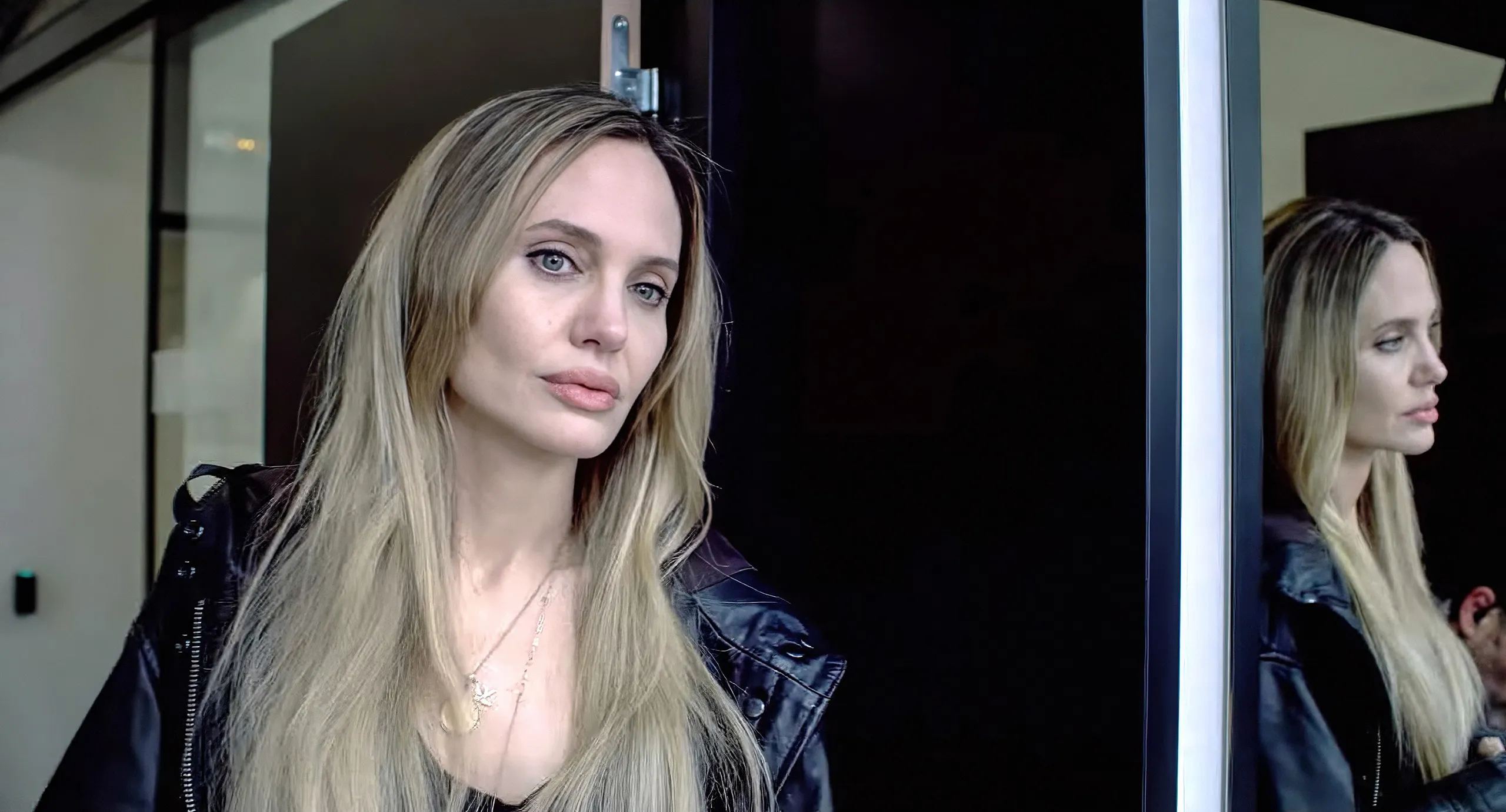
Her character arc, a woman so consumed by chasing the next project that she has neglected her daughter, her health, and her present-tense existence, is the film’s thematic core, and Jolie delivers it with the kind of physical specificity that makes even underwritten scenes work harder than they should. The revelation scene at the Paris doctor’s office is notably well-played. The wig scene, in which Maxine blurts out to Angele the diagnosis she has told no one, lands emotionally despite the script’s slightly awkward staging of it.
Among critics, there is also a specific note of Aurora Clément’s brief scene with Jolie in a waiting room, two strangers providing quiet comfort to each other, as one of the film’s most genuinely human moments, though Clément’s role is limited.
The performance deserved a better film. This is the clearest thing that can be said about Couture.
Performances: Where the Film Falls Apart
Anja Ane as Ada
Ada is the film’s second most prominent character and the one Jolie’s Maxine is most directly connected to through the short film project. Anja Ane is a newcomer, and her inexperience is visible in some exchanges, but the more consistent problem is the writing around her.
Ada’s backstory (aspiring pharmacist, in Paris only for the money to send to her family in Kenya) is sympathetic without being specific enough to generate genuine investment. Her storyline’s resolution, transferring €2,000 borrowed from a stranger to her family rather than using it to fly home, is logically murky in a way that makes the character’s priorities feel unclear rather than complicated.
The character genuinely has screen presence. She is not the film’s worst-performing element. She simply does not have the script to work with.
Ella Rumpf as Angele
The makeup artist / aspiring writer character is the film’s most underwritten significant role. Her subplot, receiving mixed feedback on her manuscript from an editor, then finding inspiration in Maxine’s cancer disclosure, exists primarily to provide the film’s closing narration during the fashion show’s climax.
That narration, by almost universal critical assessment, is one of the film’s most misjudged choices. The writing is described as boring, the device as unnecessary, and the execution as a distraction from visuals that would have worked better without commentary.
Her individual scene with Jolie, the wig-and-revelation exchange, works better than her other material, primarily because Jolie’s energy elevates it.
Non-Professional and Supporting Models
This is the film’s most frequently cited performance problem. The models surrounding Ada, inhabiting the fashion house environment, populating the hotel scenes, attending the club sequence, deliver performances that multiple critics characterize as ranging from inadequate to genuinely cringeworthy.
One comparison offered: any episode of America’s Next Top Model contains better acting from people in similar positions. This is harsh but not unfair based on the critical consensus. Alice Winocour has directed actors in English before (Proxima, with Eva Green), but appears to have been unable to generate convincing performances from this many non-professional cast members simultaneously.
Vincent Lindon as the Paris Doctor
Lindon is one of France’s most respected actors, and his presence here carries the weight of that reputation while being offered a role that does not justify it. Critics note that his doctor character communicates the urgency of Maxine’s diagnosis in ways that feel tonally strange, simultaneously too pressing and not organized enough to be convincingly medical.
One memorable critical observation: Lindon appears visibly unwell himself in the role, which is blackly comic for a character whose job is to tell someone else they need immediate treatment, particularly as he smokes a cigarette while delivering this information.
Louis Garrel as the Cinematographer
Exists primarily to be supportive of Jolie’s character and to serve as the object of her spontaneous sexual advance, the film’s most human scene. His character has minimal independent development, functioning as a narrative anchor for Maxine rather than a character in his own right.
Direction: Alice Winocour’s Ambitions vs. Execution
Alice Winocour is a director with genuine style and a track record of committed, interesting work. Her previous films, Disorder, Proxima, and Paris Memories, demonstrate a capacity for intimate psychological drama with strong female leads at their center. Couture shares those interests but does not achieve them with the same clarity.
The film’s structural problem is fundamental: it wants to be four things simultaneously (a cancer diagnosis drama, a fish-out-of-water professional story, an immigrant aspirations narrative, and a meditation on overwork and the inability to live presently) without giving any of them enough time to develop fully. The result is a film that feels stitched together; the original working title was Stitches, which is more honest about this quality than the final title, rather than organically unified.
The symbolism is the direction’s most significant aesthetic failure. The seamstress pricking her finger while constructing Ada’s dress, paralleled with the surgeon marking Maxine’s body for the mastectomy, is the film’s central visual metaphor. It is not subtle. The blood motif, Ada apparently beginning her period during a test shoot, the seamstress’s pricked finger, and the horror filmmaker’s connection to blood are applied with a repetition that signals thematic importance rather than generating genuine resonance.
When the same symbolic register reappears multiple times without developing in meaning, it starts to feel like a design substituting for depth rather than conveying it.
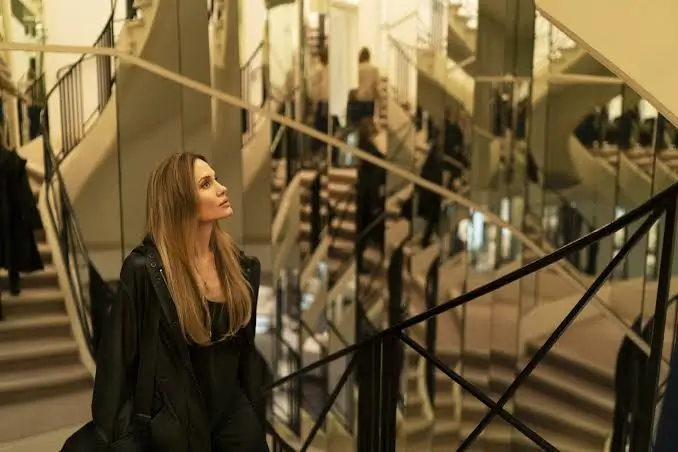
The film’s best directorial moments are its most human and unadorned: the waiting room scene between Jolie and Clément, the hotel room scene between Jolie and Garrel, and the brief moments where the camera simply stays on Jolie’s face while she processes something rather than reaching for a visual metaphor.
Screenplay Analysis: What Works and What Doesn’t
The screenplay’s central thesis is clear and genuinely resonant: we work ourselves so hard toward the future that we forget to inhabit the present, and a health crisis forces a confrontation with that reality. This is communicated primarily through Maxine’s arc, and when the film focuses on it, the writing is effective.
The problem is everything around it. The parallel female characters, Ada, Angele, and the seamstress, are positioned to refract and extend the central theme (all four women are working toward futures that the film’s final event suggests may not arrive as planned), but none of them are developed with enough specificity for their parallels to feel earned rather than schematic.
The phone call sequences are specifically flagged as weak. Three separate phone conversations, Maxine with her ex-husband, Maxine with her daughter, and Maxine’s initial call with her American doctor, are described as inadequate: flat, tonally off, and in the daughter’s case, actively off-putting. A teenager who cannot navigate a familiar city without GPS assistance and then responds to her mother’s attempts to reconnect with petulance and disengagement is a type rather than a character.
The makeup artist’s narration over the film’s climactic weather sequence is the script’s most misjudged single choice. Instead of allowing the visual drama of the fashion show being overtaken by a storm to speak for itself, and the imagery of models walking in torrential rain while the production structure blows apart, does apparently have real visual power, the film has Angele narrating over it. Multiple critics note this kills the sequence’s potential impact rather than enhancing it.
The Fashion Show Ending Explained
The film builds toward its Paris Fashion Week fashion show, set inexplicably outdoors in a forest location rather than in any covered or managed space, with no apparent check of the weather forecast. When the show begins, a severe storm hits. The production is literally blown apart. The models walk through driving rain and wind. Everything that has been planned and struggled over for the duration of the film is reduced to chaos by a force entirely outside anyone’s control.
This is the film’s thematic argument made literal: you can plan, prepare, work obsessively, and sacrifice everything for a moment of professional achievement, and something entirely outside your control can render all of it irrelevant. The point is not that the effort was wasted but that the obsession with the outcome was misplaced; what mattered was always the living done along the way, not the destination.
The problem critics identify is not with the metaphor itself but with how it is executed. The storm’s devastation of the show is intercut with Angele’s boring narration rather than being allowed to be visceral and visual. The four women’s individual resolutions are handled quickly and without the emotional weight the film has spent its runtime trying to build.
The film’s final image is Maxine purchasing electric clippers, the implication being that she is about to buzz her head before chemotherapy, an act of agency and acceptance in the face of the treatment ahead. The camera cuts before we see it happen. Several critics note they wanted to see this moment, that withholding it felt like the film blinking at the moment of its most charged imagery.
What Couture Gets Right
Angelina Jolie’s performance. The only fully realized element of the film. Specific, committed, and working overtime to compensate for the material surrounding her.
The central theme. The idea of overwork as a form of self-negation, and mortality as a forced reckoning with present-tense existence, is genuinely relevant and handled with more clarity than the film’s execution might suggest.
The hotel scene. Maxine asks Garrel directly to come back to her room, the film’s most human, most immediate, most alive sequence.
The waiting room moment. Jolie and Aurora Clément, two strangers providing brief comfort, are the film’s most quietly effective scene.
Ada’s screen presence. Despite the underwriting, Anja Ane has something in front of the camera. It is not fully developed here, but it is visible.
What Could Be Better
Almost everything outside Jolie’s storyline. The supporting characters are underdeveloped, underwritten, and in some cases poorly performed. The film asks us to care about four women and genuinely earns interest in only one.
The symbolism. Heavy-handed, repetitive, and substituting for depth rather than generating it.
The closing narration. A misjudged choice that deflates what should be the film’s most visually powerful sequence.
The phone call sequences. Flat, tonally inconsistent, and, in the case of the daughter character, actively annoying.
Vincent Lindon’s role. A miscast deployment of a strong actor in a poorly conceived supporting role.
The ending. Cuts before the film’s most charged possible image rather than committing to it.
Pros & Cons
✓ Pros
- Angelina Jolie delivers one of her most committed recent performances
- The central theme (overwork, present-blindness, mortality) is genuinely resonant
- The hotel scene is the film’s best writing and performance convergence
- Some strong visual choices in the present-day Paris setting
- The fashion show’s visual chaos has real potential (partially squandered)
- Aurora Clément’s brief scene with Jolie is the film’s most quietly human moment
✗ Cons
- Performance quality varies enormously; non-professional models drag scenes down significantly
- Symbolism is heavy-handed throughout (blood, seamstress, surgery parallels)
- Three of the four female protagonists are underwritten
- Closing narration from Angele over the fashion show climax is tonally wrong and boring
- Vincent Lindon is miscast and given a poorly written role
- Phone call sequences are weak and tonally flat
- The film ends before its most powerful potential image
- Structural messiness, four parallel storylines with insufficient time for any
How Couture Compares to Alice Winocour’s Previous Films
| Film | Year | Rating |
|---|---|---|
| Augustine | 2012 | ★★★★☆ (4/5) |
| Disorder (Maryland) | 2015 | ★★★★☆ (4/5) |
| Proxima | 2019 | ★★★☆☆ (3/5) |
| Paris Memories | 2022 | ★★★☆☆ (3/5) |
| Couture | 2026 | ★★☆☆☆ (2/5) |
Couture represents a step down from Winocour’s best work. Her early films, Augustine and Disorder, demonstrated a tighter focus and a stronger command of tonal register than her recent output has maintained. The ambition here is evident, but it is unmatched by the execution. The comparison to Maria Callas (offered by one critic), a film in which a singular, compelling performance by a major actress carries material that may not entirely deserve it, is apt.
Is the Couture Movie All in French?
No. Couture is primarily in English, with some French dialogue, particularly in scenes with French characters (Vincent Lindon’s doctor, the French medical and fashion world context). Angelina Jolie’s character is American and speaks English throughout. The film was shot in Paris but functions as an English-language film with French elements rather than as a French-language film.
Is Couture a Good Movie?
Couture is a mixed experience. It is not without merit; Jolie’s performance alone makes it worth watching for her fans, and the film’s central theme is handled with enough clarity to resonate. But it is structurally messy, inconsistently performed, and too heavy-handed in its symbolism to sustain genuine engagement across its full runtime. For most viewers, it will be a film appreciated more than enjoyed, respected for its intentions while frustrating in its execution.
Where Can I Watch the Couture Movie?
Couture opens in limited theatrical release in the United States on June 26, 2026, through Vertical Entertainment. A wider theatrical expansion and OTT/streaming release date have not been confirmed at publication. Check Vertical Entertainment’s official channels and major streaming platforms for updates on when Couture becomes available for home viewing.
Final Verdict
| Category | Score |
|---|---|
| Story / Screenplay | ★★☆☆☆ |
| Direction | ★★★☆☆ |
| Performances (Jolie) | ★★★★☆ |
| Performances (Rest of Cast) | ★★☆☆☆ |
| Symbolism / Craft | ★★☆☆☆ |
| Emotional Resonance | ★★★☆☆ |
| Theme | ★★★☆☆ |
| Ending | ★★☆☆☆ |
| Overall | ★★☆☆☆ (2/5) |
Couture is a film that contains a genuinely fine performance and a genuinely relevant theme inside a structure that cannot hold them together. Angelina Jolie gives everything she has to Maxine Walker, and the film’s moments of genuine human warmth, brief, scattered, and almost accidental, suggest the better movie lurking inside this one.
That better movie, focused more tightly on Maxine’s experience and less intent on weaving in four parallel female narratives that none of them have enough space to breathe, would have been considerably more moving than what Couture actually is. See it for Jolie. Manage your expectations for everything else.
If you enjoyed our Couture Review, be sure to explore more of our latest movie and TV reviews on Nexafeed. From award-season dramas and Hollywood blockbusters to gripping sci-fi series, superhero adventures, and streaming originals, we cover everything with honest reviews, ending explained guides, cast breakdowns, and spoiler-free recommendations. You can also check out our reviews of The Bear Season 5, Silo Season 3, Elle, and many more trending releases to help you decide what’s worth watching next.
Frequently Asked Questions
Q. Is Couture a good movie?
Ans. Couture is a mixed film, genuinely good in its central performance (Angelina Jolie is excellent) and thematic ambition, but structurally messy, inconsistently performed by its supporting cast, and too heavy-handed in its symbolism. Most critics rate it as slightly below average to average overall, with Jolie’s performance being the primary reason to watch.
Q. What is the Couture movie about?
Ans. Couture follows Maxine Walker (Angelina Jolie), an American independent filmmaker hired to shoot a short film for a Paris Fashion Week show, who receives a breast cancer diagnosis while there. The film interweaves her storyline with three other female characters: a young South Sudanese model (Anja Ane), a makeup artist who is also an aspiring writer (Ella Rumpf), and a seamstress constructing the show’s opening dress. At its core, the film is about working so hard toward the future that you forget to live in the present, a lesson Maxine’s diagnosis forces her to confront.
Q. Who is in the Couture movie cast?
Ans. The Couture cast includes Angelina Jolie as Maxine Walker, Anja Ane as Ada, Ella Rumpf as Angele, the makeup artist/writer, Vincent Lindon as the Paris doctor, Louis Garrel as the cinematographer, Aurora Clément in a supporting role, and Grégoire Colin and Finnegan Oldfield in smaller parts. Angelina Jolie is the film’s clear lead and most prominent performer.
Q. Where can I watch the Couture movie?
Ans. Couture opens in limited US theatrical release on June 26, 2026, through Vertical Entertainment. A streaming or OTT release date has not been confirmed. Check Vertical Entertainment’s official channels and major streaming platforms, including Netflix, Amazon Prime Video, and Apple TV+, for home viewing availability once the theatrical window closes.
Q. Is the Couture movie all in French?
Ans. No. Couture is primarily in English. Angelina Jolie’s character is American and speaks English throughout. Some dialogue with French characters (Vincent Lindon’s doctor and others in the Paris setting) is in French. The film functions as an English-language production shot on location in Paris rather than as a French-language film.
Q. Is the Couture movie based on a true story?
Ans. Couture is a fictional film, not a direct adaptation of a true story. However, the film’s subject matter, a woman receiving a breast cancer diagnosis while away from home for work, has been noted as paralleling aspects of Angelina Jolie’s own publicly documented experience with preventive mastectomy, which she discussed in a 2013 New York Times essay. Whether this biographical parallel is intentional or incidental to the film’s conception is not confirmed.
Couture opens in limited US theatrical release on June 26, 2026. Streaming date to be confirmed.