
Toxic Review Verdict: Toxic is not just a bad film. It is a masterclass in how to spend 500 to 800 crore and produce something that feels like it was edited by someone who fell asleep at the keyboard. Yash has made a film for an audience he imagined in his head, one that does not care about story, logic, characters, or basic filmmaking, and even that imaginary audience has rejected it. When the movie that was supposed to take Indian cinema to the world ends up embarrassing the country’s cinematic sense internationally, something has gone catastrophically wrong.
Toxic is currently in theatrical release worldwide. Shot in English, dubbed in Hindi, Tamil, Telugu, and Kannada. Runtime: approximately 3 hours. This review is based on a theatrical viewing and contains full plot spoilers including the climax.
Quick Verdict: Is Toxic Worth Watching?
No. Not in theaters. Not on OTT. Not even as background noise. I had predicted from the first look, the teaser, and every trailer that this film was going to be a disaster, and I want to go on record saying that watching it was somehow worse than even those predictions. I have sat through a lot of bad cinema. Toxic occupies a special category. It is the kind of film that makes you question not just the people who made it, but the entire ecosystem that greenlit it.
Save your money. Save your time. Save your brain cells.
Toxic (2026) — Movie Info
| Detail | Info |
|---|---|
| Title | Toxic |
| Director | Geetu Mohandas |
| Lead | Yash as Raya |
| Female Cast | Nayanthara, Kiara Advani, Tara Sutaria, Huma Qureshi |
| Setting | Goa, Macao, various international locations |
| Shot In | English |
| Budget | Reported ₹500–800 crore |
| Genre | Action / Crime / Fantasy (unintentional) |
| Our Rating | ★☆☆☆☆ (1/5) |
Toxic Full Cast
| Actor | Character / Role |
|---|---|
| Yash | Raya — violent gangster / protagonist |
| Nayanthara | Female lead — on a Royal Enfield in heels |
| Kiara Advani | Female lead — severely underwritten |
| Tara Sutaria | Female lead — severely underwritten |
| Huma Qureshi | Female lead — Cleopatra-adjacent, severely underwritten |
| Dolly Chaiwala | “Ticket” — Raya’s imaginary alter ego |
What Is Toxic About? The Story Explained
I will try to explain the plot of Toxic, though calling it a plot is generous. It is more accurately a collection of incidents that share a colour palette and a leading man.
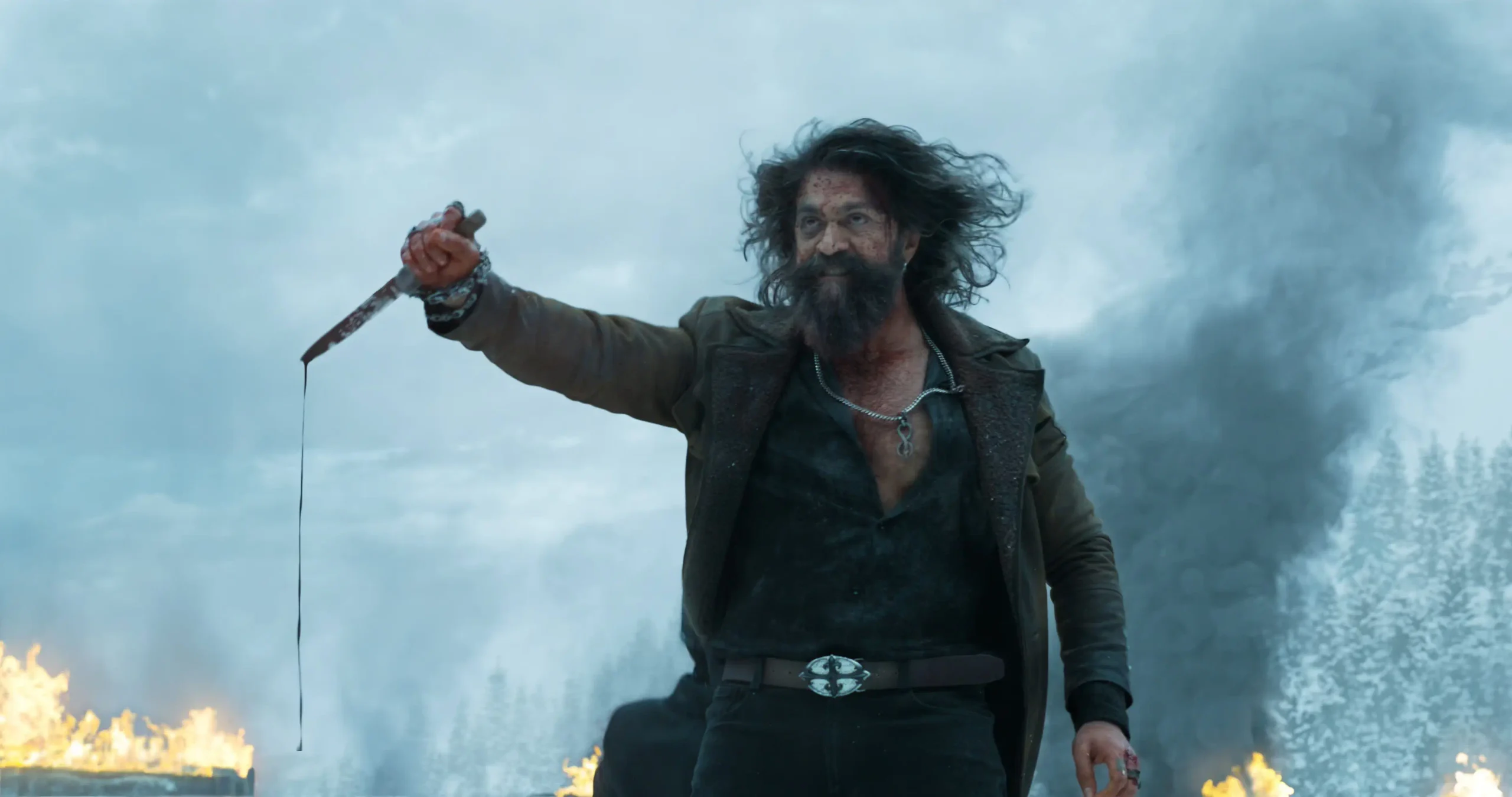
Raya is a gangster operating out of Goa who has built an empire through violence, intimidation, and an apparently supernatural ability to survive any situation regardless of physics. The film tracks his involvement in a major India-China trade deal being brokered in Macao, his various romantic entanglements with four different women, and a psychological through-line involving an imaginary character called Ticket, who looks exactly like Dolly Chaiwala, that Raya keeps seeing throughout the film.
The reveal, saved for the climax, is that Ticket never existed. He is a hallucination. Years before the events of the film, Raya pushed his son into water, and the child drowned. Raya survived. The guilt of that moment created the imaginary character of Ticket, a manifestation of his grief. This is the film’s attempt at psychological depth.
The execution of this idea in the climax is something I will address separately, because it deserves its own eulogy.
Toxic Review: The Editing Is the Film’s Biggest Crime
I want to start here because it is the problem that colours every other experience of watching Toxic. The entire film is edited like a trailer. Not like a film that has strong trailer moments. Like someone took 170 minutes of footage and assembled it the way you would cut a 90-second hype reel.
You will be watching a shot. Something interesting might be about to happen. And then, a random cut. You are somewhere else entirely. A completely different scene. No transition, no geography established, no sense of how we got from Point A to Point B. This happens constantly. It happens every fifteen minutes by my count. The editing is so abrupt, so disconnected from any rhythmic logic, that the film never builds momentum because it keeps cutting itself off at the knees.
The timeline jumps are equally baffling. In one scene, Raya is in Goa. Cut. He is in Macao. Cut. He is in what appears to be a computer-generated snowy location that I genuinely cannot place geographically. Cut. Back to Goa. Then, in the same scene where he was apparently in Goa, there is a sudden cut to a different snowy cottage where several characters are interacting. I was not confused about the story. I was confused about where anyone was supposed to be at any given moment.
The technical term for this is incoherent. The less technical term is that everyone in the editing room appeared to have consumed something that impaired their professional judgment.
Toxic Movie Review: Yash’s 50 Slow-Motion Entries
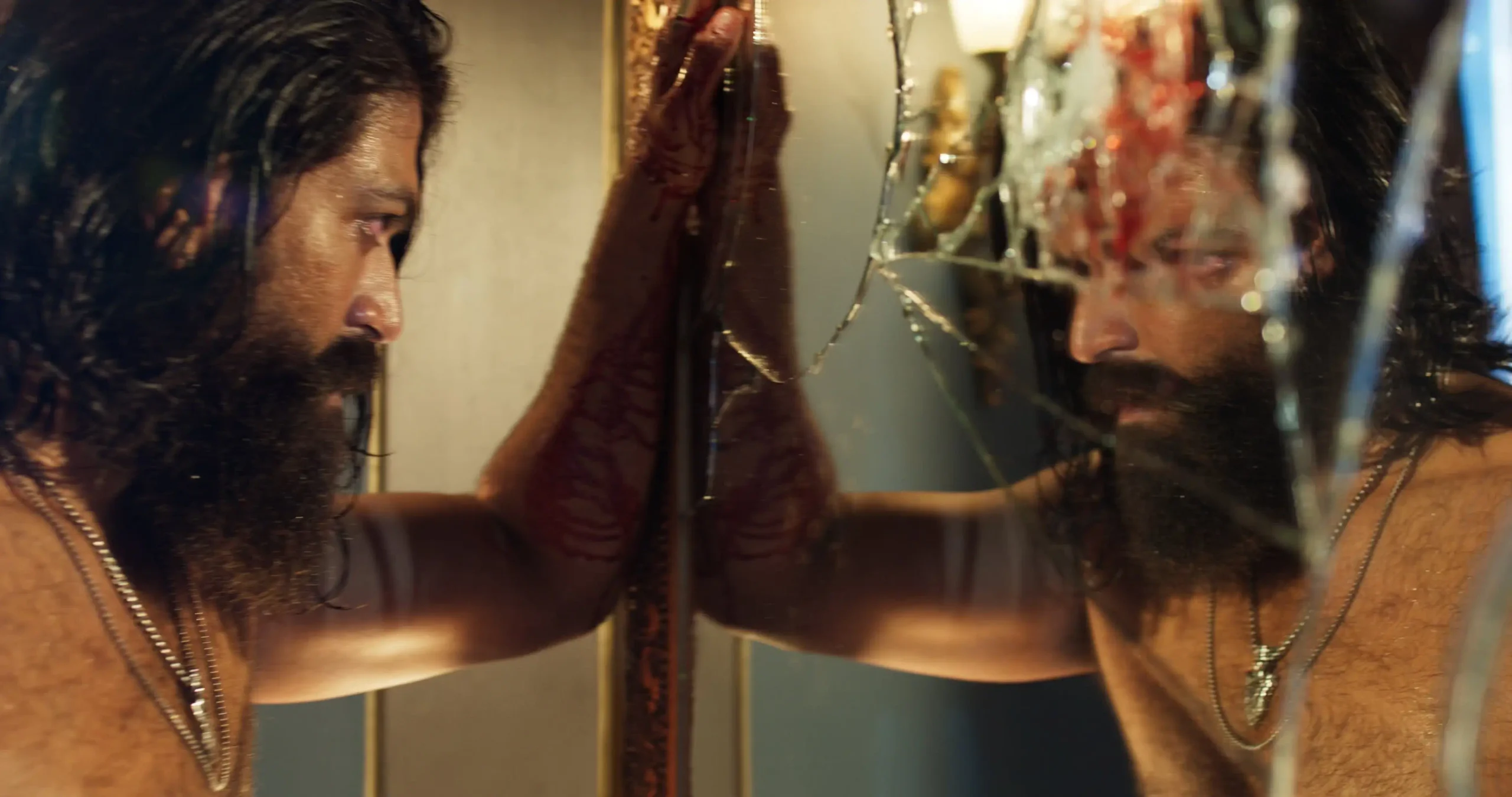
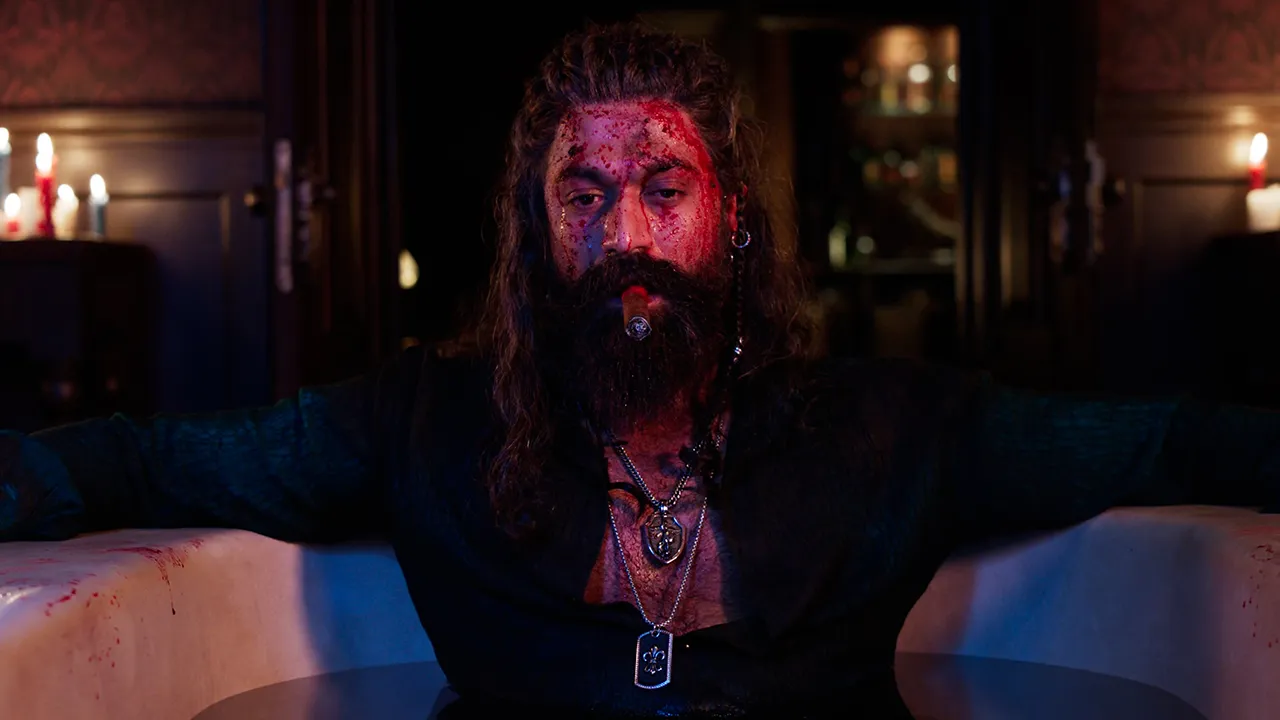
Every Yash film has the hero entry sequence. That slow-motion reveal, the camera lovingly cataloguing his tattoos, his haircut, his sunglasses, his shirt being tucked in with the gravitas of a national event. In KGF, this was used strategically, and it worked. In Toxic, Yash’s character makes approximately 50 to 60 of these entry sequences across a three-hour runtime.
I stopped counting at thirty. By the midpoint of the film, I was not feeling the aura the film was insisting I feel. I was feeling fatigued. Every time a new scene began, the camera would go to the slow-motion Yash-is-arriving routine, adjusting the collar, the belt, the jacket, the sunglasses, the walk, and I had already seen this exact sequence dozens of times. The background score for one of these entries actually features an English song with the lyrics “his aura will hit you” playing while Yash adjusts his clothing in slow motion for the 31st time. By that point, the aura had not hit me. I was immune.
The film’s action formula is similarly repetitive. Raya enters a location. Enemies are present. Instead of engaging with them efficiently, which someone of his apparent skill could easily do- he performs the slow-motion entry ritual. The enemies wait. They do not shoot during the waiting period. They understand that Raya needs to complete his entrance before the violence can begin. Once he is ready, he dispatches them with tactical precision that suggests special forces training. Then he does it again in the next scene.

The Female Characters: Four Talented Actresses, Four Wasted Roles
Nayanthara, Kiara Advani, Tara Sutaria, and Huma Qureshi are all genuinely talented performers. I want to say that clearly before I explain what Toxic does with them.
Every female character in this film exists to respond to Raya. They are not characters. They are reactions to a character. Every first encounter Raya has with a woman involves him being rude, dismissive, or worse, and every female character responds to this by falling immediately into whatever Raya needs from them next. The film presents male aggression as a form of seduction so consistently and so uncritically that it becomes its own genre of bad writing.
Huma Qureshi’s character spends the film in elaborate queen-adjacent staging; someone on the production design team spent real money on her setups — while delivering dialogue that is cringe-inducing in both English and Hindi. Nayanthara gets a memorable entry on a Royal Enfield, which would be cool if the film had anything to do with her afterward. Tara Sutaria’s character exists largely to be present in scenes where Raya is. Kiara Advani’s character is given one of the film’s most poorly written moments, a scene involving self-harm that the screenplay responds to with a line so callous and tone-deaf that it produced genuine discomfort rather than the intended reaction.
The dialogue across the board is genuinely extraordinary in its badness. There is a line where Raya tells a woman, “If burning is your destiny, then I am the torch.” There is another line comparing a meeting to needing more than coffee on a rainy day. There is a line about leaving his signature on every part of a woman’s body. Each of these lands with the specific thud of someone who has read one too many motivational Instagram posts and mistaken them for poetry.
The CGI and Budget Question
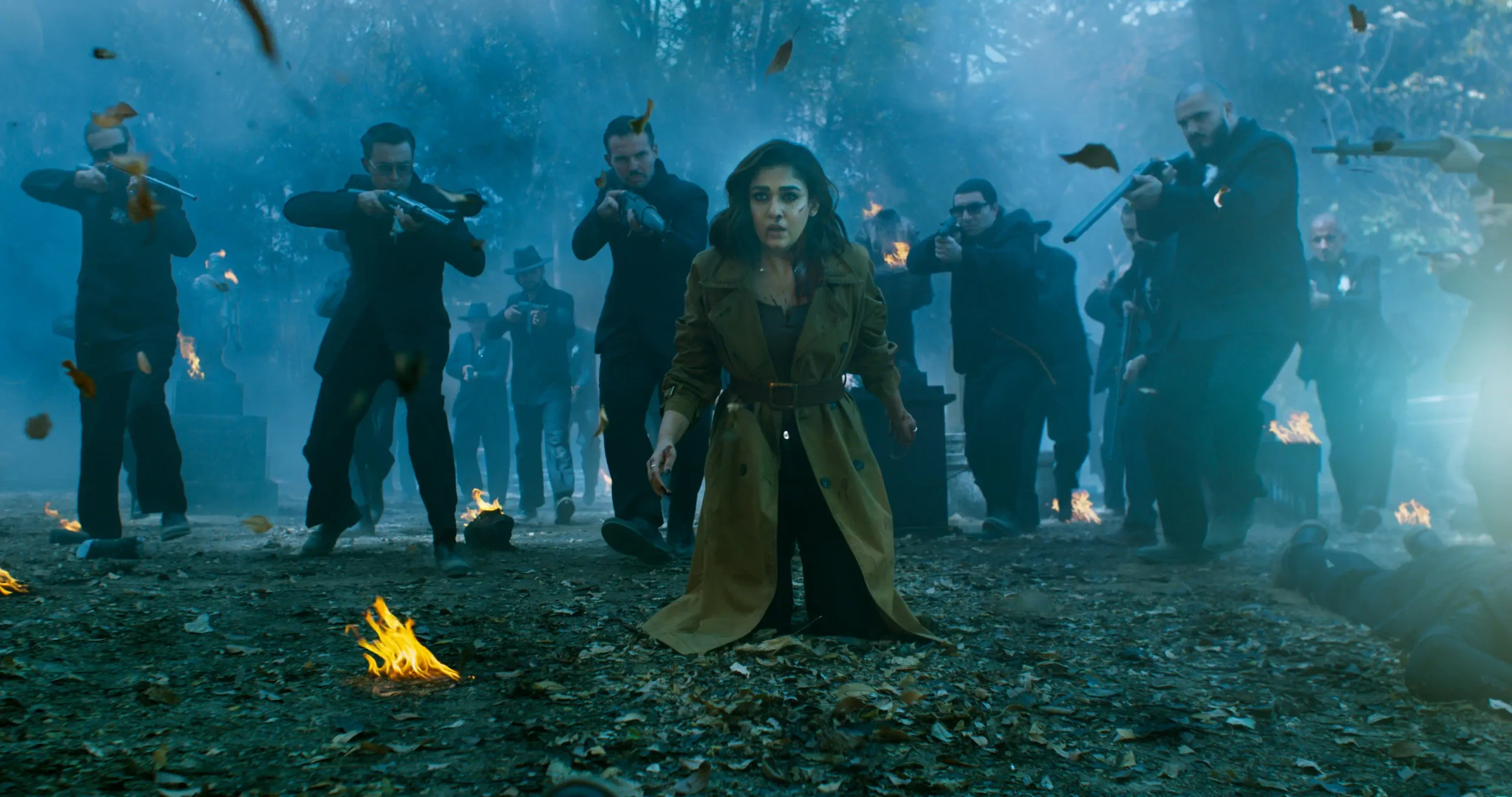
The reported budget of this film is somewhere between 500 and 800 crore rupees. I mention this only because the CGI and VFX work in Toxic looks like it was completed under significant time and resource pressure, and not the kind that produces good work. More than half the film appears to have been shot against green screens, and the compositing is frequently obvious. The fire in Yash’s entry sequence, one of the flagship visual moments of the entire film, is computer-generated. Not practical fire, not a combination. CGI fire, in a scene designed to establish the scale and texture of this world.
For a film that positioned itself as India taking on Hollywood production values, the visual effects represent a significant gap between aspiration and execution. The sound design compounds this; the audio mixing is so loud and so chaotic that dialogue frequently becomes inaudible during action sequences, while explosions and gunshots blur together into an undifferentiated wall of noise. After approximately thirty minutes of this, I had a headache. After ninety minutes, I was briefly stepping out of the auditorium just to give my ears a break.
The Climax: A Masterpiece of Incoherence
I said I would address the climax separately, and I must, because it is something I need you to understand fully.
The film establishes that Ticket, the Dolly Chaiwala-lookalike character played by Yash in a different avatar- is imaginary. He does not exist. He is Raya’s hallucination, a manifestation of guilt from the drowning of his son. The film spends considerable time establishing this as its psychological twist.
And then, in the climax, Raya and Ticket have a fully choreographed physical fight sequence in a cabin. A real fight. With actual stunt choreography, multiple moves, the kind of fight that requires two physical bodies in the same space. An imaginary person participates in a tangible, coordinated action sequence.
After this, in the final battle, Ticket reappears to help Raya fight a fully equipped army: night vision goggles, bulletproof vests, winter gear, the works, while Raya stands in an open trench coat with his shirt unbuttoned in what appears to be a blizzard, because aura provides insulation. Ticket, who does not exist, inflicts physical damage on real enemies alongside Raya. The film does not acknowledge the logical problem this creates with its own central twist.
Raya then ends the battle by picking up a rocket launcher and firing it at a Chinese aircraft with the accuracy of someone who has clearly used rocket launchers regularly. The aircraft is destroyed. The war is won. The film ends.
Is Toxic a Hit or a Flop?
The box office performance of Toxic, given the level of investment behind it, represents a significant commercial disappointment by any reasonable measure. The film delayed its release multiple times, a sign that the people involved knew what they had made, and when it finally released, the audience response aligned more or less with what the film deserved.
What will happen in the week following this review is predictable: the director will be blamed. Yash will be described as a great actor betrayed by a bad script. Paid reel accounts will explain the film’s deeper themes to anyone willing to watch a 45-second video. And none of that changes what is on screen.
Toxic vs KGF: Is Yash Still the Boss?
KGF worked because it understood what it was. It was a stylised, unapologetically mass-entertainment action film that committed to its own mythology and gave Yash the space to build a character who earned his iconic status within the logic of that world. The slow-motion entries had context. The violence had stakes. The world had rules.
Toxic attempts to replicate the KGF formula, the dark colour grading, the brooding anti-hero, the maximalist action, without any of the foundations that made that formula work. Where KGF built a world, Toxic assembles a mood board. Where KGF gave its character a coherent arc, Toxic gives its character fifty entries. The comparison does not flatter Toxic.
Pros and Cons
✓ Pros
- Nayanthara’s entry on the Royal Enfield is visually striking for approximately four seconds
- Some of the action choreography, divorced from the chaotic editing, shows genuine craft
- The psychological concept of Ticket as a guilt hallucination is not inherently a bad idea
- The film ends
✗ Cons
- Editing like a trailer, every fifteen minutes throughout the entire runtime
- 50-plus slow-motion hero entry sequences
- All four female leads completely wasted in roles that exist only to react to Raya
- CGI quality dramatically inconsistent with reported budget
- Hindi dubbing is among the worst I have encountered in a major release
- Sound mixing creates headaches rather than atmosphere
- The climax violates its own central twist in both the cabin fight and the final battle
- Three hours of runtime with no coherent story arc
- Dialogue that reads like motivational posters written by someone who has never had a conversation
- The film’s own target audience rejected it
Final Verdict
| Category | Score |
|---|---|
| Direction | ★☆☆☆☆ |
| Screenplay | ★☆☆☆☆ |
| Editing | ★☆☆☆☆ |
| Yash’s Performance | ★★☆☆☆ |
| Female Cast Utilisation | ★☆☆☆☆ |
| CGI / VFX | ★★☆☆☆ |
| Sound Design | ★☆☆☆☆ |
| Climax Logic | ★☆☆☆☆ |
| Overall | ★☆☆☆☆ (1/5) |
Toxic is not a film that failed to reach its ambition. It is a film that never understood what its ambition should be. It confused attitude with character, slow motion with storytelling, and a 500-crore budget with the ability to make an audience feel something. The result is three hours that do not just waste your time; they actively make you resent it.
I said all of this before the first look. I said it after the teaser. I said it after every trailer. The film is exactly what the warning signs promised it would be. The only thing that surprised me is that even the audience the film was explicitly made for found it unwatchable.
When you spend that much money on something this incoherent, the word “disaster” is not a critique. It is just a description.
If you’re deciding which movie to watch next, explore our latest reviews of The Odyssey Review, Insidious: Out of the Further Review, Moana Live-Action Review, Spider-Man: Brand New Day Review, Spider-Man: Brand New Day Post-Credits Scene Explained, The Odyssey Ending Explained, and Mutiny Review. At NexaFeed, we publish spoiler-free movie reviews, OTT series reviews, ending explained articles, hidden details, and streaming guides covering Disney, Pixar, Marvel, Netflix, Prime Video, Apple TV+, HBO Max, and the biggest theatrical releases from around the world.
Frequently Asked Questions
Is Toxic worth watching?
No. Not in theaters, not on OTT, not with any level of managed expectations. The screenplay is incoherent, the editing is chaotic, the climax contradicts its own central twist, and the runtime of three hours is genuinely difficult to endure. Our rating: 1 out of 5.
Is Toxic a hit or flop?
Given the reported budget of 500 to 800 crore, the box office performance of Toxic represents a significant commercial disappointment. The repeated pre-release delays suggested the makers were aware of the product they had, and audience reaction on release was broadly negative across markets.
What is Toxic about, Yash’s film?
Toxic follows Raya, a violent Goa-based gangster involved in an India-China trade deal in Macao, who is haunted by an imaginary character named Ticket, revealed in the climax to be a guilt hallucination stemming from the drowning death of his son. The film features Nayanthara, Kiara Advani, Tara Sutaria, and Huma Qureshi in severely underwritten supporting roles.
Is Toxic based on a true story?
No. Toxic is a fictional action film. It is not based on real events or real people.
Who directed Toxic?
Geetu Mohandas is the credited director. However, a significant portion of the film’s writing and direction is widely reported to have been handled by Yash himself, which may explain the film’s particular character, a star-driven production where the star’s vision overrode the creative checks that might have identified the screenplay’s problems before filming.
Toxic is currently in theatrical release. Viewer discretion and low expectations are strongly advised.