Insidious: Out of the Further Review Verdict: Insidious: Out of the Further is the most genuinely ambitious sequel this franchise has produced, which is both a real compliment and a reminder of how low that bar has sat for a while. The first half plays like another lap around a familiar track. The back half and especially the third act surprised me in ways I genuinely did not expect. Not a great film. A better-than-it-had-any-right-to-be one.
Insidious: Out of the Further is the sixth installment in the Insidious franchise. It is currently in theatrical release. This review is based on a theatrical viewing and contains minor thematic spoilers but no major plot reveals.
Quick Verdict: Is Insidious Out of the Further Worth Watching?
If you are an Insidious fan, casual or committed, yes. Go see it in theaters. Support it. It earns the trip in a way the last two films did not.
If you have never connected with this franchise or bounced off The Red Door, I would say wait for streaming. This film is not going to convert you. It has too many of the same problems that have held the series back since the second film: predictable jump scare staging, thinly written characters, a sense that most of what you are watching is a slightly remixed version of something you have seen before. But for every twenty minutes of that, there is a sequence or a story beat that made me lean forward and think, okay, now I am watching something.
The sofa cushion scene alone is worth the runtime. More on that shortly.
Insidious: Out of the Further — Movie Info
| Detail | Info |
|---|---|
| Title | Insidious: Out of the Further |
| Franchise Entry | Film 6 |
| Lead Cast | Amelia Eve, Lin Shaye |
| Genre | Supernatural Horror |
| Composer | Joseph Bishara |
| Franchise Creator | James Wan |
| Our Rating | ★★★☆☆ (3/5) |
What Is Insidious: Out of the Further About?
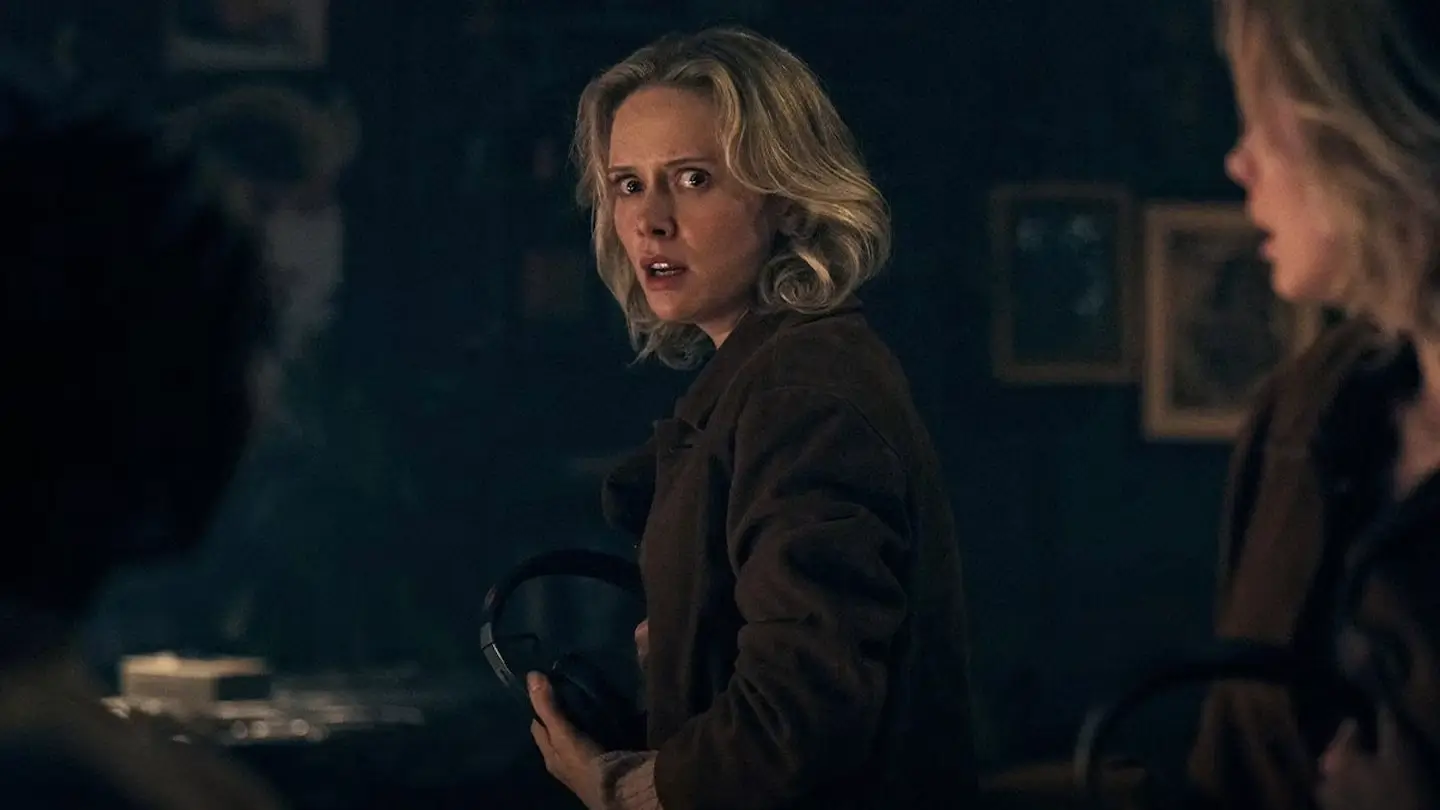
The film centres on a woman, played by Amelia Eve, who has the ability to travel into the Further and, crucially, bring things back from it. Not just visit. Not just observe. Actually pull entities from that realm into ours. Which, as you would expect, makes her extraordinarily useful to the malevolent forces that inhabit that world.
They want her. They want what she can do. And the film is essentially the story of what happens when the things on the other side of the door stop waiting for someone to open it and start coordinating to use her as the key.
That premise is genuinely interesting. The Further has always been the franchise’s strongest creative asset, this dim, haunted, decaying space where the dead and the demonic coexist and the rules of the physical world do not apply. The problem with most of the sequels is that they use the Further as a location rather than as a mythology.
You go in, it is dark and creepy, you come back. Out of the Further is the first sequel that asks what the Further actually wants as a collective. What happens when the entities inside it stop being individual threats and start working together?
The answer, which I will not detail fully, gives the film its most interesting third act in the franchise’s history outside the original.
Insidious Out of the Further Movie Review: Where It Works
The Third Act Earns Everything
I am going to be honest about my experience watching this: for the first hour, I was writing it off. It felt like another Insidious film. Same structure, same domestic-drama-flavoured first act, same slow accumulation of creepy moments leading toward the Further, same Lin Shaye arriving with the lantern to explain the mythology. I was entertained. I was not surprised. I had been here before.
And then the back half happened.
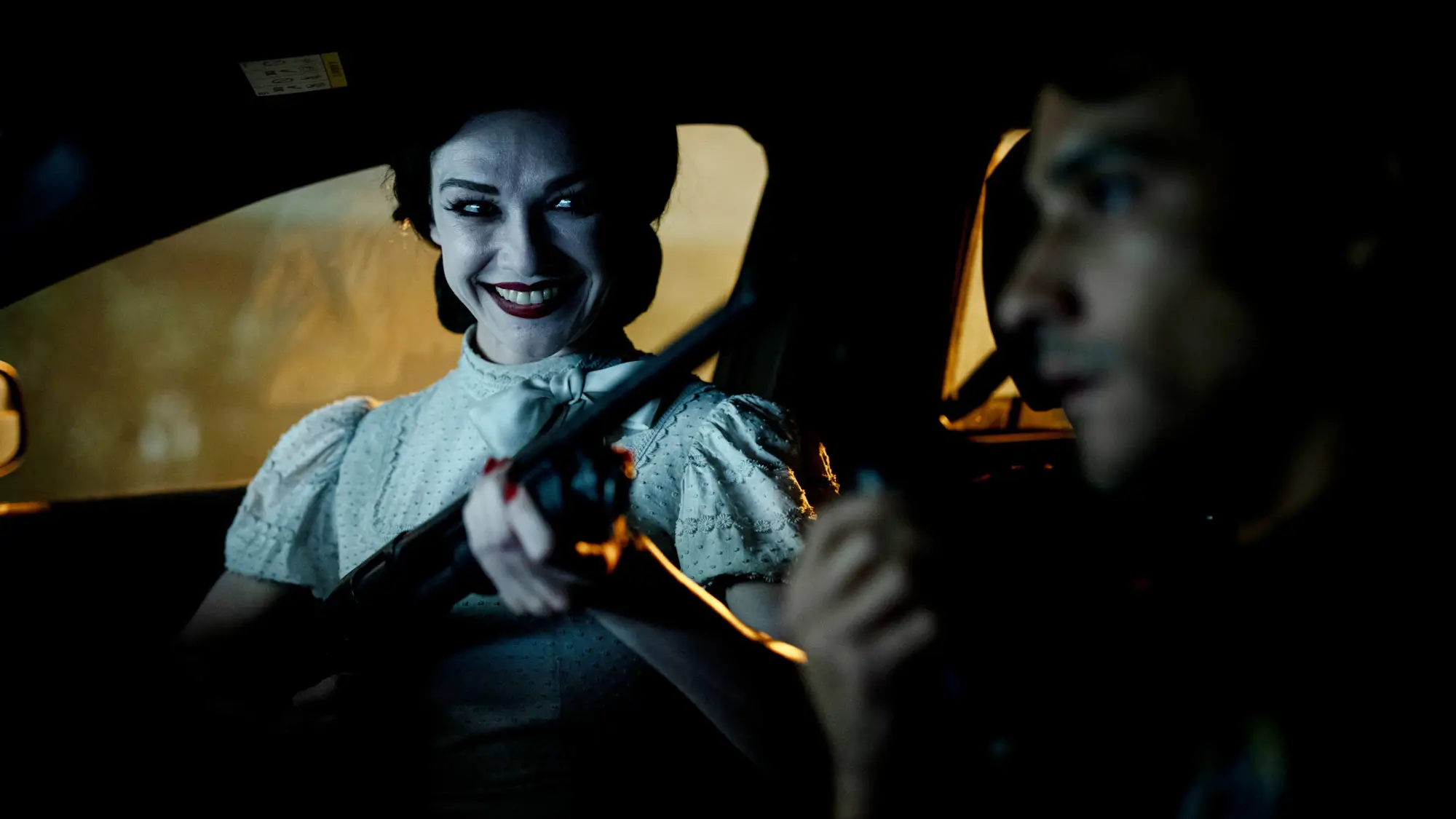
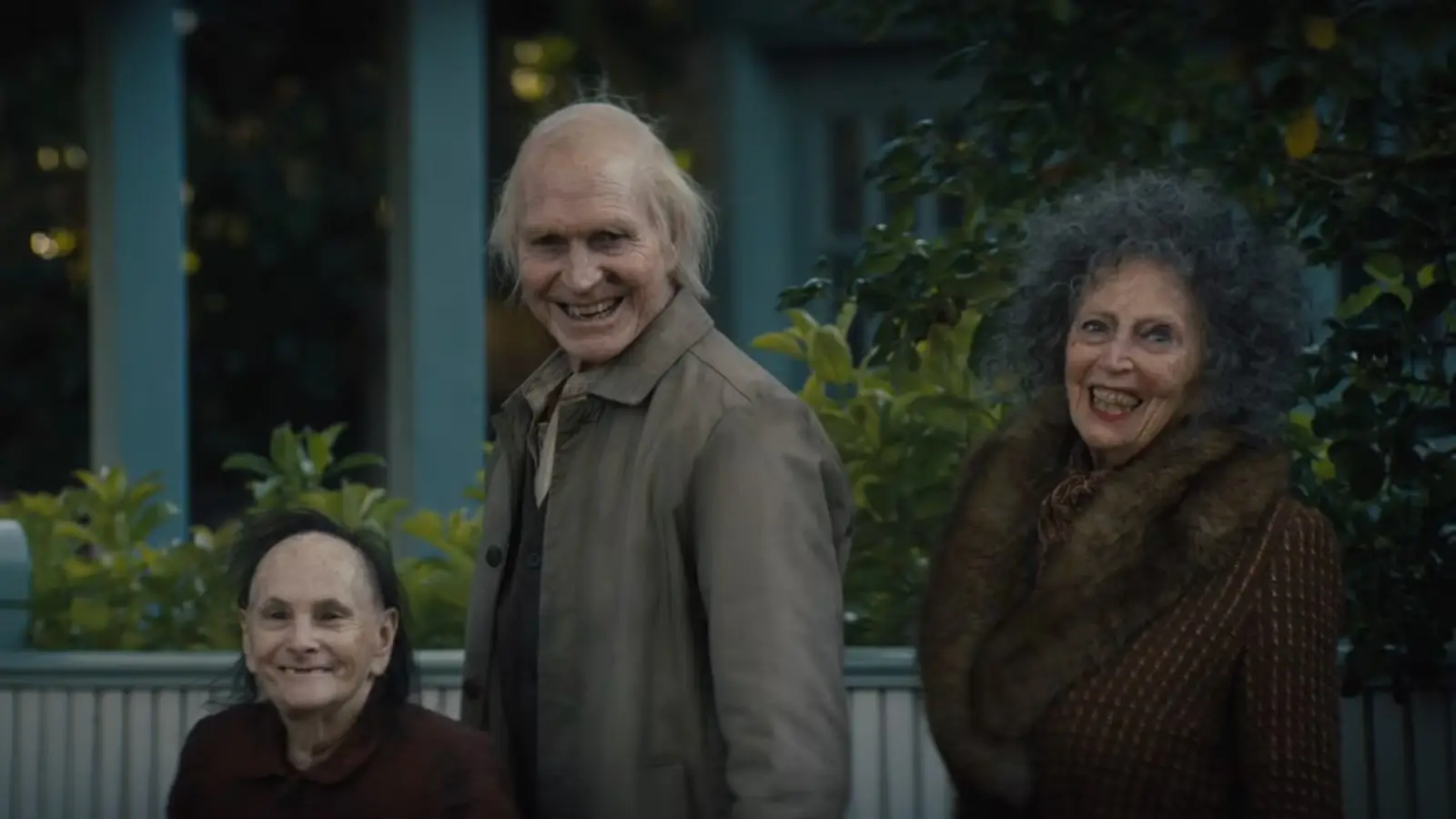
The idea that the entities inside the Further are not just individual threats but active collaborators, working together, planning, using our protagonist’s ability as part of a coordinated strategy, is the first thing this franchise has done since the third film that genuinely expands the world rather than just revisiting it. The main antagonist, an entity named Cyrus, is the specific choice that makes this work. Cyrus is not another demonic design with sharp teeth and a scary face.
He is a human entity with sentience. He communicates. He plans. He is ten steps ahead of the characters at almost every point in the film, and the horror of him is not what he looks like; it is the feeling that you are being outmanoeuvred by something that has been thinking about this for a very long time.
That shift in villain type, from monster to strategist, changes the texture of the third act completely. And when the film deploys its greatest hits sequence, where basically every major entity from the previous five films makes an appearance in the Further working under Cyrus’s coordination, it stops feeling like fan service and starts feeling like genuine escalation. These are not cameos. These are soldiers. And they are all moving toward the same objective.
The main character’s emotional arc also lands better than I expected. Her strained relationship with her mother, and the way the film uses the Further to reflect and distort that trauma, gives the third act a personal weight that most Insidious sequels do not bother to earn.
The reveals about what is real and what the protagonist, and you, have been led to believe are handled with more care than the franchise usually delivers. By the time everything converges in the final thirty minutes, I was genuinely engaged in a way I had not been in the first hour. That turnaround matters.
The Sofa Cushion Sequence
If there is one thing from this film that will stick with people, one sequence that gets talked about the way the red-faced demon reveal gets talked about from the original, it is the sofa cushion scene.
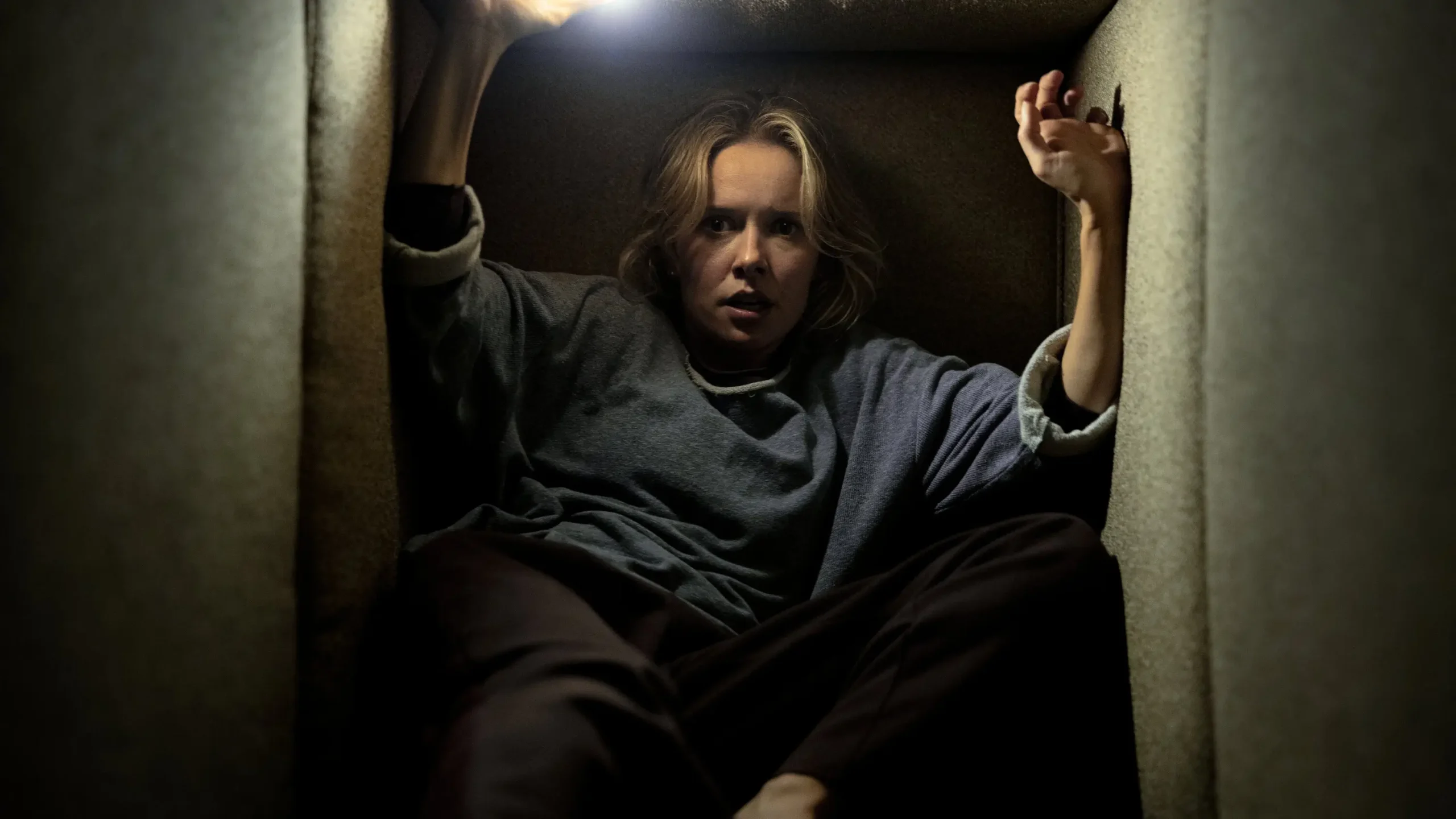
The daughter has built a little fort out of sofa cushions. Our protagonist enters it. And then the space does what the Further does: it expands, distorts, and becomes something else entirely. The tight little cushion tunnel becomes a vast, claustrophobic labyrinth. Dark hallways with no clear exit. The kind of space where you cannot stand up straight, cannot see what is ahead, and very quickly understand that you are not alone.
The staging is excellent. The way the cinematography keeps the frame tight throughout, maintaining the crushing smallness of the space even as it has inexplicably become enormous, is exactly the kind of directorial intelligence the franchise shows at its best. It made me genuinely uncomfortable.
As someone who does not love enclosed spaces, the slow crawling sequences had me holding my breath. And the entities that populate that labyrinth are some of the more effectively designed the franchise has produced.
That scene alone justifies a theatrical viewing. Horror is better when you cannot look away from a screen large enough to fill your peripheral vision.
The Dentist Chair Sequence
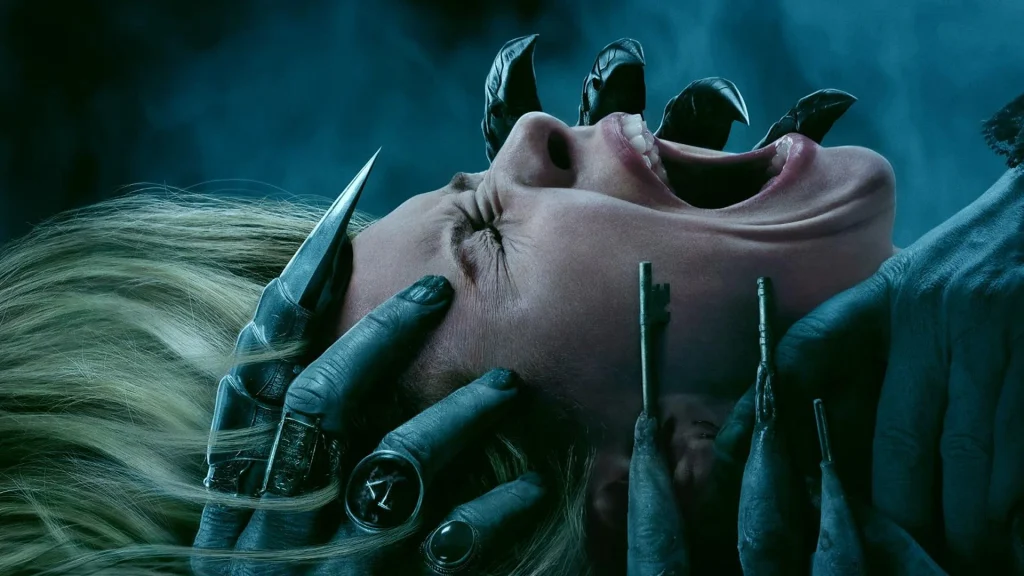
The marketing has used the dentist chair footage, so I am not revealing anything by saying: it is better and more extended in the actual film than the trailer suggests. It is less about fright and more about sustained wrongness, the kind of visual nastiness that makes your stomach turn rather than making you jump.
Things being pulled from inside mouths in ways that human anatomy simply does not allow. It is gross in a very specific, deliberate way, and it sets an early tone for the film’s willingness to go to genuinely unpleasant places even when the jump scares themselves are not landing.
Joseph Bishara’s Score
This is a constant in Insidious films, and I will keep saying it: the score is one of the most distinctive and consistently effective in modern horror. Bishara, who also plays the Lipstick-Faced Demon, which is one of cinema’s most surreal dual roles, has a compositional style that is immediately recognisable and genuinely original.
Those string arrangements, the way tension is built through sound before a single visual has done any work. Six films in and it still feels like the DNA of this franchise rather than background noise. Any Insidious film without him would feel wrong, and he remains the most reliable element across the entire run.
Insidious Out of the Further Review: Where It Struggles
The Jump Scare Problem
This is the one thing I cannot give a pass on, because the franchise was built on the foundation of knowing how to scare an audience and Out of the Further is, for most of its runtime, genuinely bad at it.
The staging is the issue. Anytime the film is about to deliver a scare, a creepy image entering the frame, an entity appearing- the character you are following is positioned off to the side of the shot. All of that empty space to the left or the right of them is the tell.
Your eyes go to the void. You wait. And then, without fail, exactly what you expected to appear in that void appears in that void. There are no fake-outs. There are no subversions. The camera is telling you the scare is coming before the scare arrives, every single time.
This is a craft problem, not a concept problem. The entities in this film are well designed. The ideas behind many of the scary moments are strong. But the execution repeatedly undercuts itself by signalling too clearly and too early. The original film’s scares worked because Wan understood how to delay revelation, how to keep the audience’s eye moving rather than giving it a fixed target. That instinct is absent here.
Insidious: Out of the Further First Half
To its credit, the film recovers. But the first forty-five minutes are a struggle. The characters are introduced with enough competence to make them watchable but not enough depth to make them compelling.
The domestic drama setup, strained mother-daughter dynamic, cop boyfriend, and secrets about the past are so familiar from previous Insidious entries that it reads as a template rather than a story. I was not bored. I was waiting. And waiting for a horror film to get interesting is a problem.
The fact that the back half earns it retroactively helps. But it does not eliminate the drag of sitting through the setup.
The Franchise’s Credibility Problem
There is something structural happening in Out of the Further that I found genuinely distracting, and it is a problem the series has been building toward for a while. The original Insidious worked because it felt small and secret.
A family, a haunting, a small group of specialists, Lin Shaye’s Elise and her two colleagues, who existed at the margins of the world, unknown to the mainstream. That smallness made the horror feel real. If nobody knows about the Further, the terror of it discovering you is amplified.
Out of the Further does things in its third act that cannot be covered up. Events that are visible, physical, undeniable. The film does not address how the world absorbs this. It just moves on, and you are left with the nagging sense that the broader reality of the franchise, the idea that this is a hidden, secret phenomenon, has been quietly abandoned in favour of escalation.
That might be a conscious choice as the franchise continues to expand. But it weakens the specific texture of dread that made the early films feel genuinely frightening rather than cinematically staged.
Lin Shaye Deserved More
I love Lin Shaye. She is a genuine horror icon, and Elise is the role she will be remembered for. But six films in, the film does not quite know what to do with her beyond the function she has always served: arrive, hold the lantern, deliver the exposition, ground the supernatural in a recognisable human presence. She does it well.
She always does it well. But there is a version of this film that uses the accumulated history of her character to do something more emotionally complex. Out of the Further is not that film, and the absence of ambition around her is noticeable.
Insidious Out of the Further Rating Compared to the Franchise
Here is honestly where I place each film:
| Film | My Take |
|---|---|
| Insidious (2010) | Franchise best — still holds up in its strongest sequences |
| Insidious Chapter 2 (2013) | Has its moments, mostly disappointing |
| Insidious Chapter 3 (2015) | My personal favourite — Lee Whannell directing, the tightest story |
| Insidious: The Last Key (2018) | Retreads too much, forgettable |
| Insidious: The Red Door (2023) | Weak — lipstick-faced demon nostalgia doing heavy lifting |
| Insidious: Out of the Further (2026) | Best sequel since Chapter 3 — genuinely tries something new |
That is real praise in context. This is the first Insidious sequel in over a decade that left me thinking the franchise still has something to say rather than something to exploit.
Insidious: Out of the Further Pros and Cons
✓ Pros
- The third act is the franchise’s most genuinely original since the first film
- Cyrus as an intelligent, planning villain is a smart evolution of what the Further’s entities can be
- The sofa cushion sequence is a standout, one of the better set pieces in the franchise’s history
- The dentist chair scenes are effectively unsettling
- Joseph Bishara’s score remains the franchise’s most consistent creative asset
- The mother-daughter emotional arc pays off with real weight in the final act
- Better than the last two films by a meaningful margin
✗ Cons
- Jump scare staging is predictable and formulaic throughout the first half
- First forty-five minutes feel like a template rather than a story
- Lin Shaye deserved more to do than lantern-and-exposition
- Strains the credibility of the Further as a hidden phenomenon
- Amelia Eve’s American accent slips in a few moments
- Too familiar in structure despite genuine thematic ambition
Insidious: Out of the Further Final Verdict
| Category | Score |
|---|---|
| Direction | ★★★☆☆ |
| Screenplay | ★★★☆☆ |
| Lead Performance (Amelia Eve) | ★★★☆☆ |
| Lin Shaye | ★★★½☆ |
| Scare Sequences | ★★☆☆☆ |
| Third Act | ★★★★☆ |
| Score (Bishara) | ★★★★☆ |
| Franchise Ambition | ★★★★☆ |
| Overall | ★★★☆☆ (3/5) |
Insidious: Out of the Further is not the film that saves this franchise. It is the film that suggests the franchise might still be worth saving. That is a different thing, and I want to be precise about it. The first half is too familiar, the jump scares are too telegraphed, and the decision to push the Further into territory that strains real-world credibility is a problem the series will have to reckon with eventually.
But the back half. The third act. Cyrus. The sofa cushion sequence. An emotional core that actually earns its resolution. For the first time since Lee Whannell sat in the director’s chair for Chapter 3, I left an Insidious film thinking about what the seventh one could do rather than whether the franchise should stop.
That counts for something. Go see it if you care about this world. The Further has one more story left in it, maybe more.
If you’re deciding which movie to watch next, explore our latest reviews of The Odyssey Review, The Westies Review, Moana Live-Action Review, Spider-Man: Brand New Day Review, Spider-Man: Brand New Day Post-Credits Scene Explained, The Odyssey Ending Explained, and Night Nurse Review. At NexaFeed, we publish spoiler-free movie reviews, OTT series reviews, ending explained articles, hidden details, and streaming guides covering Disney, Pixar, Marvel, Netflix, Prime Video, Apple TV+, HBO Max, and the biggest theatrical releases from around the world.
Insidious: Out of the Further Frequently Asked Questions
Is Insidious: Out of the Further good?
It is better than the last two films by a significant margin and features the franchise’s most genuinely original third act since the original. The first half is formulaic, and the jump scares are predictable, but the back half earns real engagement. Our rating: 3 out of 5. Recommended for Insidious fans in theaters; casual viewers can wait for streaming.
What happens in Insidious: Out of the Further?
The film follows a woman with the ability to travel into the Further and bring entities back to the physical world. Malevolent forces inside the Further, led by a sentient, strategically minded entity named Cyrus, coordinate to exploit her ability and open a door between their realm and ours. The film traces her attempts, alongside Elise and other characters, to understand and stop what is coming.
Is Insidious: Out of the Further rated R?
Based on the franchise’s history and the film’s content, sustained horror violence, disturbing imagery, and body horror elements in the dentist and sofa cushion sequences, the film carries a rating consistent with previous entries. Check your local listings for the specific certification in your territory.
Is the Insidious movie worth watching?
Yes, with calibrated expectations. If you are an Insidious fan or enjoy supernatural horror with a strong mythology, Out of the Further is worth a theatrical visit. If you found the recent sequels too formulaic, this film is an improvement but shares enough of the same DNA that your experience will likely be similar. The third act in particular is the strongest the franchise has produced in over a decade.
How does Out of the Further compare to the other Insidious films?
It is behind the original and Chapter 3 in terms of overall quality, but ahead of Chapter 2, The Last Key, and The Red Door. The franchise’s best work still belongs to James Wan and Lee Whannell’s direct involvement. Out of the Further is the most ambitious sequel made without either of them, which is the most meaningful compliment the film has earned.
Insidious: Out of the Further is now in theatrical release.