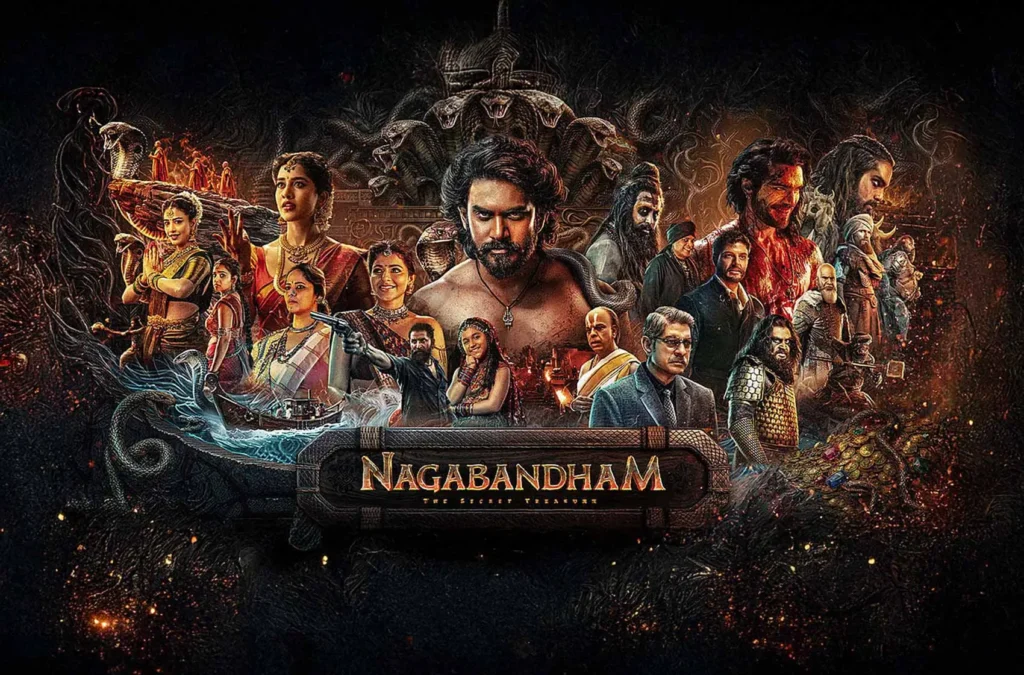
Nagabandham Movie Review Verdict: I walked into Nagabandham with real curiosity. The trailer had something genuinely interesting in it: ancient Vishnu temples, treasure mythology, and a devotional adventure angle that reminded me of what Karthikeya 2 did right. I walked out confused, a little insulted, and genuinely unsure what this film thought it was. Incredible concept. Catastrophic execution.
I watched Nagabandham at a 10 PM show in a mini theatre, housefull audience, which tells you the curiosity this film generated. This review is based entirely on my personal theatrical experience. I am writing this in English. Mild spoilers are discussed in the story and ending sections.
Quick Verdict
Let me start with what made me want to see this film. The concept is legitimately fascinating: an ancient book called Nagabandham that holds the secret to a divine treasure. Ancient Vishnu temples. Sacred traditions that the trailer hinted at with real beauty. A devotional adventure in the tradition of Karthikeya 2 and Jai Hanuman. There is real material here. Genuinely good material.
And then the film shows Lord Vishnu’s reclining idol, one of the most beautiful temple visual presentations I have ever seen in Indian cinema, something that genuinely stirred something devotional in me, and within two minutes cuts to the hero and heroine in a love song where she emerges from water in clothes that had more in common with a bikini than with anything else. The song is called something like “Aye Khuda Tu Kahan,” while the film is literally about Hindu gods and temples.
I sat in my seat for a moment, trying to figure out if I had misunderstood something. I had not. That is genuinely what happens in this film.
The subject matter has value. The direction does not respect it.
Nagabandham 2026 — Movie Info
| Detail | Info |
|---|---|
| Title | Nagabandham |
| Release Year | 2026 |
| Language | Telugu (pan-India release) |
| Genre | Adventure, Fantasy, Devotional, Action |
| Reported Budget | Approximately ₹100 crore |
| My Rating | ★★☆☆☆ (2/5) |
What Is Nagabandham About?
The Nagabandham of the title is an ancient book, a famous text in the film’s mythology, that contains the secret to a divine treasure. Not a regular treasure. A treasure belonging to the gods. The kind of treasure that, if a human being got their hands on it, they would stop believing any power existed above them.
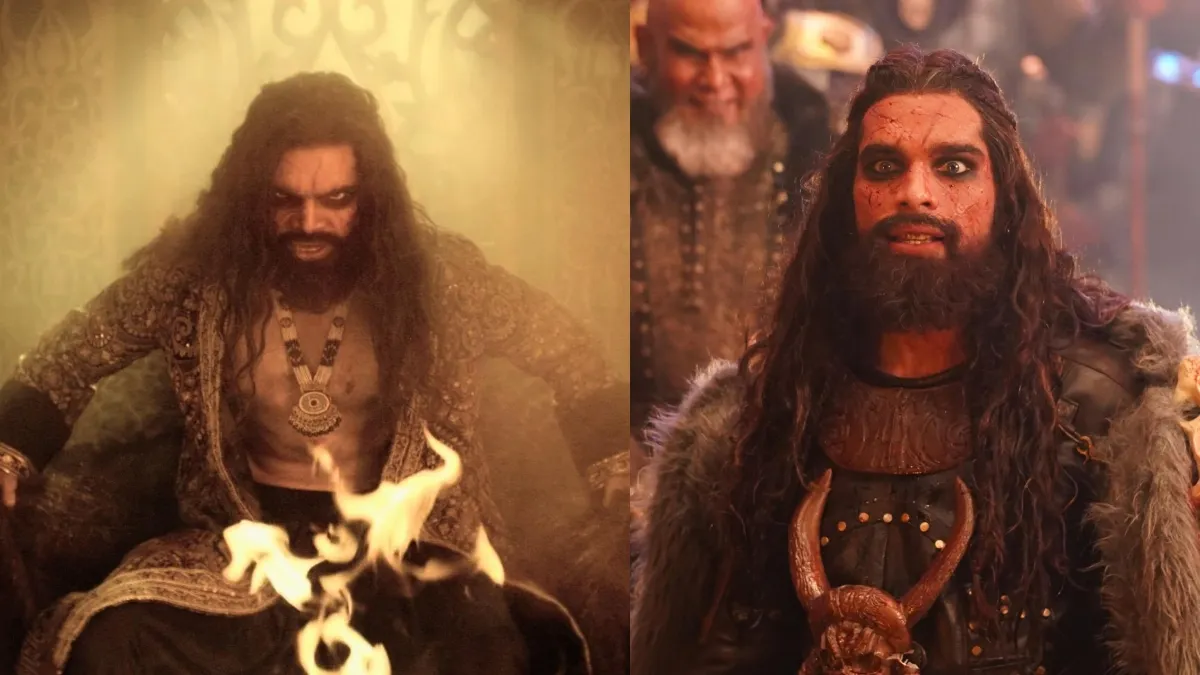
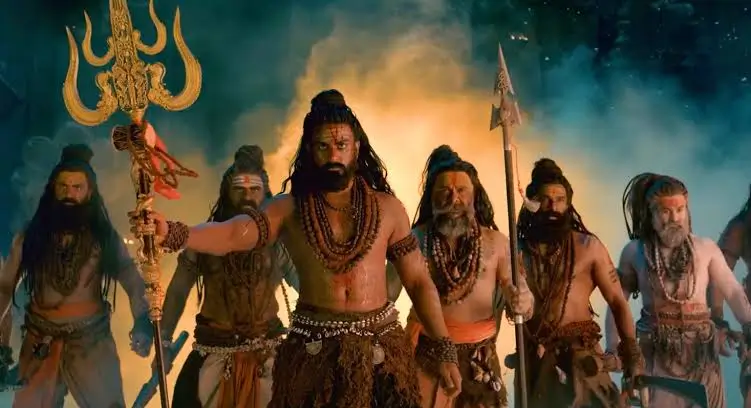
A demon, an asura, has been hunting this treasure for a very long time, and the film makes clear just how badly he wants it through approximately 70% of its runtime, consisting of graphic violence. The villain was played by the same actor who challenged Hrithik Roshan in his debut in Fighter, and the casting carries a certain visual weight. He is committed. The role, however, needed a film that matched his commitment.
The hero is positioned as a reincarnated protector, a man who in his previous life was a guardian of these traditions, reborn in the present to protect his family and his dharma from the asura’s advance. When the villain’s brutality exceeds what any human can contain, Lord Shiva takes an avatar to intervene. That avatar sequence is reportedly the reason the film’s budget crossed ₹100 crore. I will get to whether it was worth it.
The treasure book itself, the Nagabandham, the entire reason the film exists, is never opened. The whole film is built around getting to the door. The door is opened at the very end. And then: come back for Part 2. I am not joking.
Nagabandham Movie Cast
| Actor | Role |
|---|---|
| Lead hero (new face) | The protagonist, reincarnated protector |
| Villain (Fighter fame) | The asura leads every action sequence |
| Supporting ensemble | Priests, family members, and archaeological characters |
Those Temple Visuals Almost Made Me Forget the Rest
I want to be honest about what this film gets right before I explain where it fails, because the right parts are genuinely right.
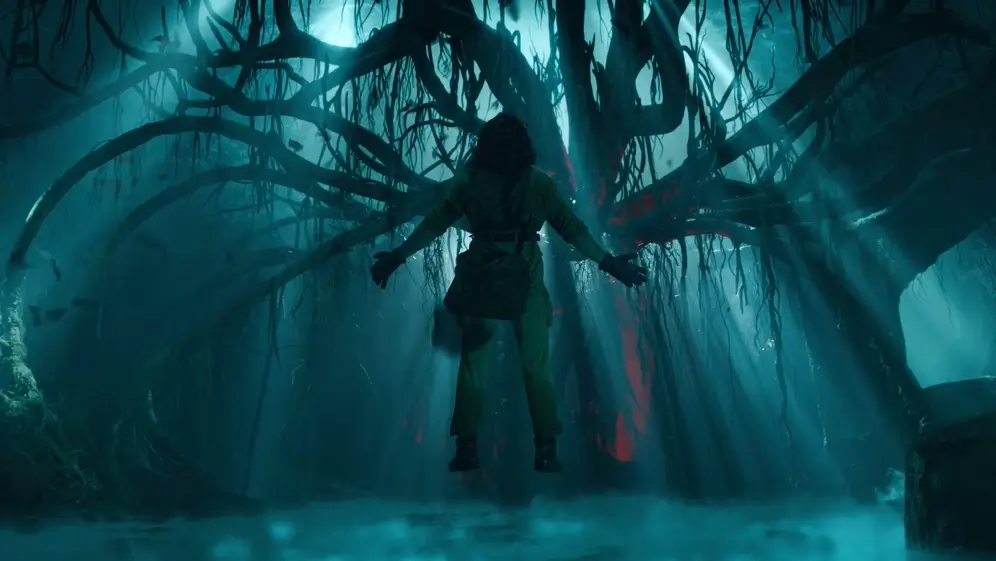
The ancient temple sequences are among the most visually beautiful devotional cinema I have seen from South India in recent years. The reclining Vishnu idol, Anantashayana, presented with puja, aarti, and yagna around it, is done with a reverence and a visual care that stopped me cold. I felt something watching it. That does not happen in every film that claims a devotional angle.
The backstory, showing the ancient traditions, the secret practices connected to the Nagabandham book, and the architecture of the temple complexes, is presented with genuine detail and genuine respect. You can tell someone in this production cared about getting the texture of these spaces right. There are moments where the film feels like it is taking you inside a living tradition rather than using that tradition as set decoration.
The concept of reincarnation as the moral engine of the story, a protector reborn to fulfill an unfinished duty, is a framework that has mythological depth. It is not a new idea in Indian cinema, but it is a real one. Baahubali used it. Karthikeya 2 used it. Kantara used something adjacent. When these films work, they work because the mythology feels earned. Nagabandham has the pieces.
It also has a director who did not know what to do with them.
Nagabandham Movie Review: Where It All Falls Apart
The Direction Has No Idea What Film It Is Making
This is the film’s central and unfixable problem. Nagabandham cannot decide whether it is a devotional film, an action spectacle, a treasure-hunt adventure, or a love story, and so it tries to be all four simultaneously and succeeds at none of them.
Consider the sequence I described in the opening: Lord Vishnu’s idol, puja, aarti, the film building a genuine spiritual atmosphere, and then a bikini-adjacent love song two minutes later. This is not a stylistic choice. This is a failure of creative vision. You cannot position your film as devotional, show sacred iconography with reverence, and then immediately cut to wet clothing and a song asking “God, where are you?” while using Hindu divine imagery as a backdrop. It is not just tonal whiplash. It is disrespectful to the very audience you are trying to attract.
I kept thinking about Karthikeya 2, which managed to blend adventure and devotion without ever feeling like it was using religion as content. The spiritual dimension in that film felt real because the film’s relationship to that dimension was honest. Nagabandham’s relationship to its spiritual subject is not honest. It is using devotion as marketing and romance as commercial protection. The two things do not coexist here; they actively cancel each other out.
The Villain’s Goal Is Never Actually Clear
This bothered me throughout the entire film. The asura wants the Nagabandham book so he can use the Brahmakamal flower as a key to access the divine treasure. Fine. But the film never shows us what that means in any concrete way. What does he intend to do with the treasure? What is his actual ideology? What is he trying to become?
He is presented as extraordinarily dangerous; the film’s action sequences exist almost entirely to demonstrate how much damage he is capable of inflicting, but the existential weight of his goal is never communicated. He is violent for violence’s sake, and by the time the film reaches its climax, I had stopped caring about the treasure he was after because I still did not understand why it mattered.
The Hero Cannot Lead This Film
I want to be careful here because I understand that directing a performance and writing a character are different jobs, and both failed him simultaneously. But the lead actor is not ready to anchor a ₹100 crore mythological epic as a protagonist meant to be identified as an avatar of Lord Shiva.
There is a specific quality that is required for this kind of role, something that Prabhas has, that Fahadh Faasil has in different registers, that the best South Indian lead actors bring to mythologically weighted material. A contained power. A sense that what is inside the character is larger than what they are expressing. The lead of Nagabandham does not have this yet. He tries. The trying is visible. But the gap between the scale of the mythology around him and the scale of his presence inside it is never closed, and that gap undermines every scene he is in.
The supporting cast, priests, family members, and ensemble characters are fine. Several are genuinely good. They cannot compensate for a lead performance that cannot carry the mythological weight the film requires.
70% Violence, Almost None of It Earned
Nagabandham contains more graphic violence than almost any Indian film I can recall watching. Women are burned, crushed, cut with swords, and subjected to acts I genuinely do not want to describe here. The film presents this violence as a demonstration of the villain’s extreme evil, and conceptually, I understand that argument. To justify divine intervention, you need to show human limits being exceeded. Fine.
But there is a difference between violence that builds toward something and violence that is simply present, repeated, and unedited. By the midpoint of this film, I had stopped reacting to the violence because it had become the film’s default mode. The same kinds of brutal acts are happening to different characters in different locations. The editing does not control it. It does not shape it. It accumulates without purpose.
One action sequence runs for eight to ten minutes with no discernible change in what is happening on screen. The climactic face-off between hero and villain, the moment the film should have been building toward for three hours, is extended well past the point where it retains dramatic tension. I was not on the edge of my seat. I was waiting for it to end.
Keep this film away from children. This is not a recommendation to watch it as an adult, but a genuine caution about content.
The Nagabandham Book Is Never Opened
I cannot move on without addressing this. The entire film, the entire premise, the entire justification for every act of violence, every sacrifice, every temple sequence, every treasure hunt, exists to reach the moment where the Nagabandham is opened, and its secret is revealed.
The door is reached. The key is used. The door opens. End of film. Part 2.
I understand franchise filmmaking. I understand that Baahubali did it before this film. I understand the commercial logic. What I cannot accept is a film that spends three-plus hours building toward a single revelation and then withholds it not as a thematic choice but as a business decision. The audience in my theatre, housefull, genuinely engaged during the devotional sequences, went quiet in a particular way when this happened. Not the quiet of a cliffhanger. The quiet of people who feel they have been misled.
The Shiv Avatar Sequence: Was It Worth ₹100 Crore?
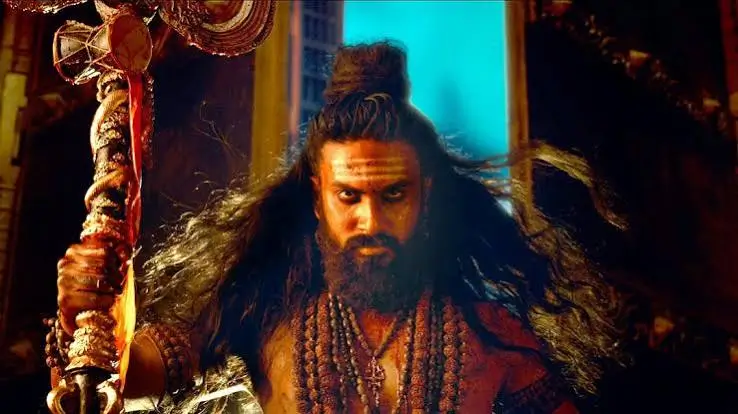
This is the sequence the entire marketing was built around. Lord Shiva takes an avatar to confront the asura when human power is no longer sufficient. This is the moment that reportedly pushed the budget past ₹100 crore.
The VFX is better than I expected from a South Indian production at this scale, but the comparison that came to my mind was Govindia-era Avatar references, which tells you something about the ceiling. It is not what you would call convincing by global standards. It is spectacular in a way that is specific to a certain kind of Indian mythological spectacle, loud, large, earnest. Whether that earnestness translates into genuine cinematic impact depends entirely on whether you are already emotionally invested in the mythology.
In my case, the film had spent two hours and forty minutes testing that investment through relentless violence and tonal incoherence. By the time the Shiv avatar arrived, I was not in the emotional space the film needed me to be in for that sequence to work. I watched it. It was large. It was not transcendent.
The Song I Cannot Stop Thinking About (For Wrong Reasons)
The love song played against the backdrop of sacred Hindu imagery, with the heroine in wet, minimal clothing, with “Aye Khuda Tu Kahan” as the lyric, is the single most jarring tonal decision I have encountered in a film of this type in recent memory. I am not being puritanical about item numbers or romance in commercial cinema. I am saying that when you have spent the previous scene presenting Lord Vishnu’s reclining idol with devotional reverence, this cut is actively disrespectful to your own subject matter.
If you are making a devotional film, protect the register. If you want to make a masala commercial film with romance and item numbers, do not frame the entire project as devotional cinema. You cannot have both. Nagabandham tries to have both, and the result is something that feels dishonest to everyone, to devotional audiences who came for a spiritual experience and to commercial audiences who came for entertainment.
What Nagabandham Gets Right
The ancient temple visuals. The best sequences in this film, the Vishnu idol presentation, the puja sequences, and the ancient temple architecture, are genuinely beautiful and handled with real reverence.
The concept. A divine treasure protected by an ancient book, a reincarnated protector, a demon whose ambition crosses divine limits. This is strong source material that a better film could have done remarkable things with.
The villain’s physical presence. The actor playing the asura has genuine screen menace. In a better-constructed film, he would be terrifying rather than just relentless.
The second half’s divine ambition. The attempt to take the mythology seriously in the Shiv avatar sequences, whatever their execution limitations, comes from a real creative ambition that I respect, even where the VFX falls short.
What Nagabandham Gets Wrong
The direction. There is no coherent vision guiding this film. It is a collection of good intentions without the structural intelligence to connect them.
The lead performance. Not ready for a role of this mythological weight.
The editing. Genuinely bad. Action sequences run eight to ten minutes with no internal development. The climactic battle is extended to the point of numbing the audience rather than exciting them.
The tonal incoherence. The bikini-adjacent love song against sacred Hindu imagery is not a minor complaint. It fundamentally undermines the film’s stated devotional identity.
The withholding of the book. Three hours of setup for a Part 2 announcement is not a narrative choice; it is a betrayal of audience trust.
70% violence with no editorial control. It desensitizes rather than horrifies. By the middle of the second half, the violence has stopped meaning anything.
Jai Hanuman, Karthikeya 2, Kantara — Where Nagabandham Falls in That Tradition
Films that blended adventure and devotion successfully:
| Film | What It Got Right | Rating |
|---|---|---|
| Kantara (2022) | Authentic relationship with folk tradition, earned spiritual climax | ★★★★★ |
| Karthikeya 2 (2022) | Mythological depth balanced with accessible adventure | ★★★★☆ |
| Jai Hanuman (2024) | Devotional sincerity without commercial compromise | ★★★☆☆ |
| Nagabandham (2026) | Great concept, failed execution, tonal dishonesty | ★★☆☆☆ |
Nagabandham wants to be in this company. It has the subject matter. It does not have the directorial vision, the performance at its center, or the editorial discipline that this tradition demands.
The difference between Kantara and Nagabandham is the difference between a filmmaker who believes in what they are making and a filmmaker who is using what they are making for commercial protection. You can feel that difference every time the film shifts register in a way that serves the box office rather than the story.
Nagabandham Pros & Cons
✓ Pros
- Ancient temple sequences are visually stunning and devotionally sincere
- Strong mythological concept, divine treasure, reincarnated protector, asura villain
- Villain actor brings genuine physical menace
- The Shiv avatar sequence, for all its VFX limitations, has real ambition
- Devotional sequences connect; I genuinely felt something during the best of them
✗ Cons
- The director has no coherent vision, and the film does not know what it is
- The lead actor cannot carry the mythological weight the role demands
- Editing is catastrophically bad, action sequences run 8-10 minutes unbroken
- Tonal incoherence: bikini-adjacent love song immediately after sacred Hindu iconography
- 70% violence with no editorial purpose, numbing rather than impactful
- The Nagabandham book is never opened, the entire film is a Part 1 setup
- Women are subjected to extreme graphic violence that crosses into gratuitous territory
- Three hours plus runtime with no justification for the length
- VFX aspires to Avatar, arrives closer to early 2000s Govinda-era scale
Is Nagabandham Worth Watching?
For general audiences: No. The film is too long, too violent, tonally incoherent, and ends without resolution.
For fans of South Indian devotional mythology films who are specifically interested in the subject matter, You will find something in the temple sequences worth seeing. The ancient Vishnu iconography genuinely is beautiful. But you will also sit through three hours of everything surrounding it, and that is a significant ask.
If you are religious and the devotional angle is important to you, be aware that the same film that shows Lord Vishnu’s reclining idol with reverence also cuts to a bikini-adjacent love song within the same reel. Make that decision with full information.
Do not take children. The violence in this film is extreme.
Where to Watch Nagabandham (OTT Release)
Nagabandham is currently in theatrical release. Based on standard Telugu film OTT windows, a streaming release is expected within 4-6 weeks of theatrical release. The most likely platform is Amazon Prime Video, which has acquired streaming rights for several major Telugu releases in recent years. Check Prime Video, ZEE5, and Netflix for availability updates after the theatrical window closes.
Final Verdict
| Category | Score |
|---|---|
| Concept / Story | ★★★★☆ |
| Direction | ★☆☆☆☆ |
| Lead Performance | ★★☆☆☆ |
| Villain Performance | ★★★☆☆ |
| Visual Effects | ★★☆☆☆ |
| Editing | ★☆☆☆☆ |
| Temple / Devotional Sequences | ★★★★☆ |
| Tonal Consistency | ★☆☆☆☆ |
| Violence (Purposefulness) | ★☆☆☆☆ |
| Overall | ★★☆☆☆ (2/5) |
I left the 10 PM show having sat next to my brother, who fell asleep in the second half and told me, when I woke him, that he was “understanding this film better with his eyes closed.” I laughed at the time. Looking back, I think he was onto something.
Nagabandham had everything it needed to be the next great South Indian devotional adventure. The mythology is real. The visual ambition is real. The temples are genuinely beautiful. But none of that can survive a director who puts a love song against sacred iconography, extends every action sequence until it loses meaning, casts a lead who cannot carry the mythology, and withholds the film’s central promise for a sequel that the audience had no reason to trust after spending three hours with this one.
Shouting “Om Namah Shivaya” in the climax does not make a character divine. You have to earn the feeling first. This film does not earn it.
If you enjoyed this Nagabandham review, you might also like my reviews of Alpha, Baby Do Die Do, and other latest Telugu, Hindi, and pan-India movies. I watch every film in theatres whenever possible and share honest, first-person reviews focused on storytelling, performances, direction, and whether a movie is actually worth your time and money. Explore more reviews on Nexafeed to discover what to watch next.
Frequently Asked Questions
Q. Is the Nagabandham movie released?
Ans. Yes. Nagabandham is currently in theatrical release.
Q. Where can I watch Nagabandham?
Ans. Nagabandham is currently in theatres. OTT streaming is expected within 4-6 weeks of release. Amazon Prime Video is the most likely platform based on Telugu film streaming deal patterns. Check Prime Video, ZEE5, and Netflix for availability updates.
Q. What platform is the Nagabandham movie on?
Ans. Nagabandham has not yet been confirmed for a specific OTT platform at the time of this review. Based on Telugu industry release patterns, Amazon Prime Video is the most likely destination. Check major platforms after the theatrical window closes.
Q. What is Nagabandham about?
Ans. Nagabandham is an ancient mystical book containing the secret to a divine treasure. An asura has spent years hunting it. A hero, positioned as a reincarnated protector, stands against him to protect his family and his dharma. When human power proves insufficient, Lord Shiva takes an avatar to confront the demon. The film ends before the book’s secret is revealed, setting up Part 2.
Q. Who is the hero of Nagabandham?
Ans. Nagabandham introduces a new lead hero, a fresh face in South Indian cinema, as the film’s protagonist. The villain role is played by the actor who challenged Hrithik Roshan in his debut in Fighter. The film was intended to launch the hero as a major Pan-India star.
Q. Is Nagabandham a true story?
Ans. No. Nagabandham is a fictional adventure fantasy film drawing on Hindu mythological traditions, specifically around Lord Vishnu, Lord Shiva, and ancient temple traditions. It is not based on any documented historical event or true story.
Q. How is the Nagabandham movie rating?
Ans. My personal rating is 2 out of 5. The film has a genuinely strong concept and beautiful devotional sequences, but is undermined by poor direction, catastrophic editing, an underpowered lead performance, tonal incoherence between its devotional and commercial aspirations, extreme ungoverned violence, and an ending that withholds the film’s central promise for a sequel.
Q. What is the movie Nagabandham 2026?
Ans. Nagabandham (2026) is a Telugu-language mythological adventure from South India, released pan-India with Hindi dubbing. It is about an ancient divine treasure, a demonic villain hunting it, and a hero reborn to protect his people. It aspires to the tradition of Kantara and Karthikeya 2. It does not reach their standard.
Nagabandham is in theatres now. OTT release to follow — platform TBC. Content warning: extreme graphic violence throughout. Not suitable for children.