Main Vaapas Aaunga, directed by Imtiaz Ali, starring Diljit Dosanjh, Sharvari, Vedang Raina, and Naseeruddin Shah, is currently in theatres. This article contains full spoilers.
Quick Answer: Main Vaapas Aaunga is not a perfect film. Its first half will test the patience of anyone raised on the fast-paced romantic template that Bollywood has normalized. But if you stay through it, the second half delivers one of the rawest, most emotionally brutal experiences Hindi cinema has produced in years. Naseeruddin Shah alone is worth the ticket. Rating: 3.5 / 5
Main Vaapas Aaunga Review: Story, Themes, and First Impressions
Before the plot, a context: there are two kinds of slow films. Films that waste your time, and films that demand it. Main Vaapas Aaunga is firmly the second kind, but it will not announce that immediately. You will have to earn it.
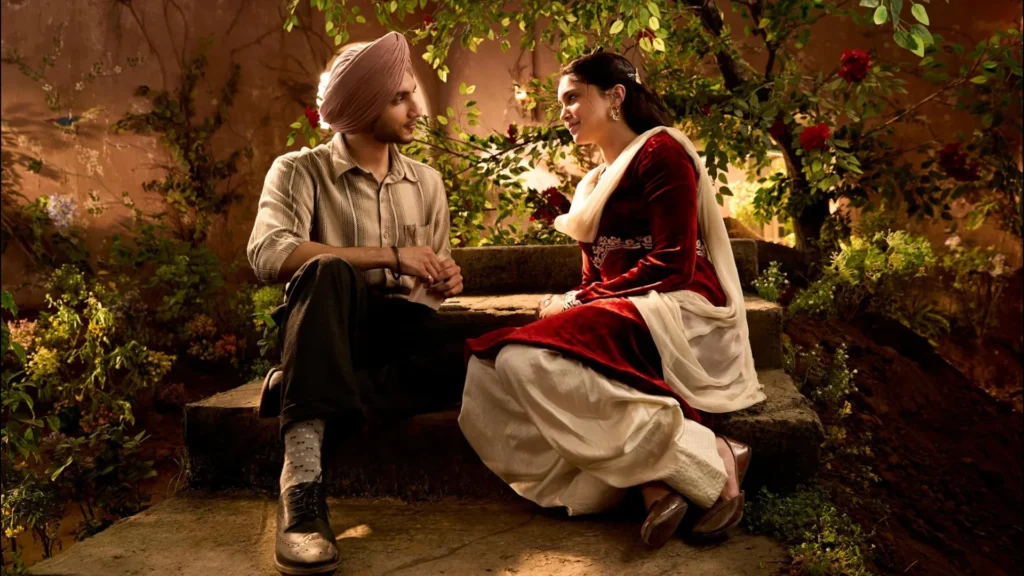
The story is set across two timelines. In pre-Independence India, a young Sikh man falls in love with a Muslim girl. The year is somewhere before 1947. The love between them is unhurried, ethical, and deeply mutual. Then, the Partition arrives, the splitting of India and Pakistan, and the boy makes a promise: Main vaapas aaunga. I will come back.
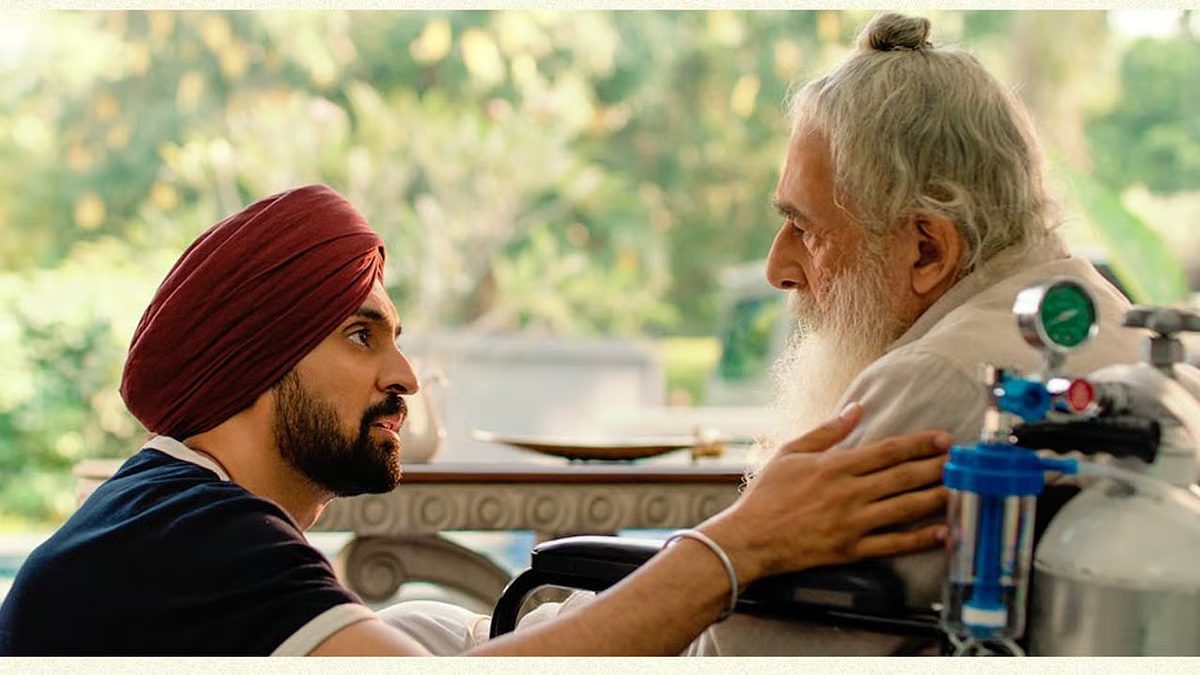
In the present timeline, that same boy is now an elderly man played by Naseeruddin Shah, living with severe dementia. He has forgotten his wife. He has forgotten his family. He has forgotten decades of his own life. But somewhere deep in his subconscious, the face of that one girl, the girl from before Partition, the girl he has not seen in 78 years and has no photograph of, still exists. That one face, that one promise, is the last thing his failing memory is holding onto.
The modern-day thread involves a character played by Diljit Dosanjh who enters Naseeruddin Shah’s world and begins connecting the dots of a story that was never fully told.
Main Vaapas Aaunga Plot Summary and Full Recap
The first half of the film is almost entirely the pre-Partition love story between the young versions of the characters, played by Vedang Raina and Sharvari. Their romance builds the way actual love builds, slowly, with hesitation, with moments of physical restraint and emotional honesty that feel genuinely rare on screen.
Vedang Raina’s character is not a hero in the cinematic sense. He is lanky, slightly awkward, and unsure of how to approach someone he has feelings for. He asks for consent, repeatedly, almost nervously, and when he accidentally oversteps once, he apologizes with the kind of sincerity you almost never see male characters display in mainstream Hindi films. The film positions this not as an exceptional quality but as a baseline standard. That choice, quietly, says everything about the kind of love story Imtiaz Ali is trying to tell.
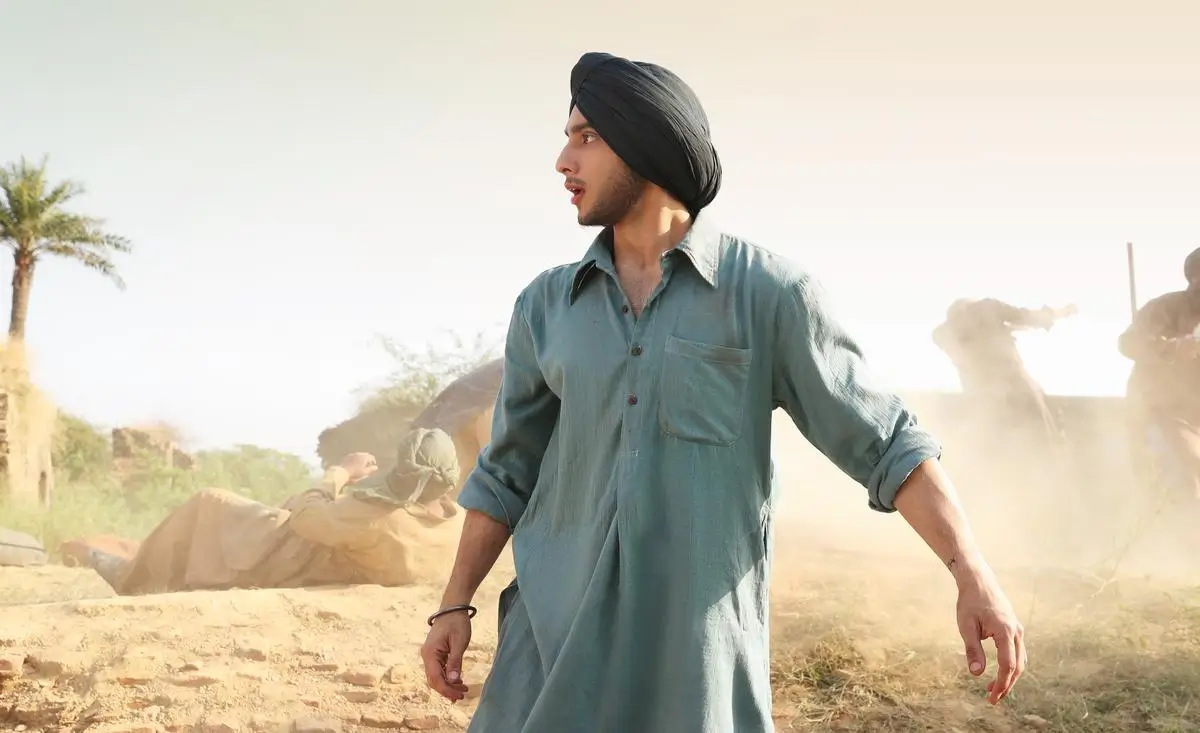
The second half shifts gears completely. Partition arrives. Communal violence erupts. And the film does not flinch.
There is a scene, one of the most disturbing sequences in recent Hindi cinema, where a mob breaks into a household during the riots. The women of the house, understanding what is coming, gather together. The eldest woman takes matters into her own hands in the most devastating possible way. It is filmed with restraint but without softening. You will feel it long after you leave the theatre.
There is another scene, symbolic rather than explicit, involving a khanjir and a pregnant woman. What it implies does not need to be spelled out.
The second half transforms the gentle, slow-burning love story of the first half into something raw and almost unbearable. And that transformation is entirely intentional.
Main Vaapas Aaunga Ending Explained
The ending surprises in one specific way: it is not gimmicky.
Films with this kind of premise, elderly man, lost love, decades-old promise, carry an enormous temptation toward a cinematic-style resolution. A dramatic reunion. A tearful final meeting. The kind of climax that feels “earned” in the blockbuster sense.
Main Vaapas Aaunga refuses that template. The climax is practical, grounded, and quietly devastating. Without spoiling the exact mechanics, the resolution honors the weight of the promise rather than manufacturing a feel-good delivery of it. The film seems to understand that a love story this serious cannot end with a bow tied around it.
When you watch the final scenes, the slowness of the first half will retroactively reframe itself. The gravity of the climax is structurally dependent on how slowly and carefully the first half built its foundation. A love that justifies 78 years of memory retention, through dementia, through Partition, through displacement, has to be shown as something different from what modern romantic cinema offers. That is what the first half is doing. Once you understand that, you stop calling it slow.
Why Main Vaapas Aaunga’s Slow First Half Matters
The single biggest commercial risk Imtiaz Ali took with this film is the first half’s pacing, and it is worth being direct about both sides of it.
The pacing is slow. The narration is linear and unhurried. Several scenes breathe in ways that mainstream audiences have been conditioned not to expect from a romantic film. By the standard template of modern Bollywood romance, app meets, instant chemistry, fast-forward relationship, 2-hour runtime, the first half of Main Vaapas Aaunga will feel like a completely different cinematic language.
But that is exactly the point. The film is not showing you instant noodles. It is showing you slow-cooked biryani, a love story that takes time to bloom because the love itself, and the promise made within it, require that weight to function at the climax.
The cinematography throughout the first half earns it. Location choices, colour palettes, the visual treatment of physical proximity between two people who have not yet told each other how they feel, all of it is doing real work. The film looks beautiful in the way period love stories should look: warm, unhurried, and slightly dreamlike.
Compared to Imtiaz Ali’s own Amar Singh Chamkila, which had a first half that moved with more commercial rhythm, Main Vaapas Aaunga’s opening act will feel considerably more restrained. That is a deliberate artistic choice, and it is the right one for this specific story. Whether mainstream audiences will give it the patience it requires is a different question.
Why Main Vaapas Aaunga Feels Different From Modern Bollywood Romances
Somewhere in the last decade, mainstream Hindi romantic films settled into a formula. A boy and a girl meet via an app or accident. Chemistry is established through banter. A relationship forms within 20 minutes of screen time. The emotions are real but compressed. You absorb the love story the way you absorb a reel, quickly, pleasurably, and without much residue.
That formula is not wrong. It reflects how many people actually experience romantic connections now. But it also means that audiences have been subconsciously trained to expect that speed from every love story they encounter on screen.
Main Vaapas Aaunga is a direct contradiction of that training. The love it shows is not currency. It is not negotiable. It does not move fast because the promise it leads to cannot mean anything if it moves fast. Imtiaz Ali made a bold gamble that a sufficient number of people still long for, even subconsciously, the kind of love that has weight. The kind where holding someone’s hand is not a casual gesture but a covenant.
At the box office, that gamble has not paid off the way it should have. More on that below.
Consent and Ethics in the Romance — What Sets This Film Apart
This needs its own section because it is rare enough to warrant one.
In an era where films like Pushpa justify harassment as romance, where the heroine’s lack of consent is framed as part of the seduction, Main Vaapas Aaunga takes an almost stubbornly opposite position. Vedang Raina’s character asks for consent at nearly every significant moment. When he accidentally oversteps physically, he stops immediately, apologizes, and commits to not doing it again. Not in a performative way. In a way that reads as a person who genuinely believes the other person’s comfort matters more than his own impulse.
Sharvari’s character communicates interest through body language, eye language, and subtle behavioral signals, none of which are treated as passive or secondary. Her desire is active, expressed on her own terms, and the film treats it as equal in weight to his.
A healthy, ethical, mutually respectful romantic relationship is not a novelty. But in contemporary mainstream Hindi cinema, it has become one. The fact that this film’s love story is also its most commercially challenging element says something worth sitting with.
Main Vaapas Aaunga Star Cast & Performances
Naseeruddin Shah is the soul of this film and the most compelling argument for watching it in theatres. His portrayal of a man living with severe dementia, who has forgotten his wife, his children, and most of his life, but cannot shake the face of a woman he loved 78 years ago, is the kind of performance that makes all the words critics use feel inadequate. He sinks into this character completely. There are no actorly flourishes. There is just a person living inside a fractured memory, and somehow communicating through that fracture everything the film needs to say. National Award conversation is not an overstatement.
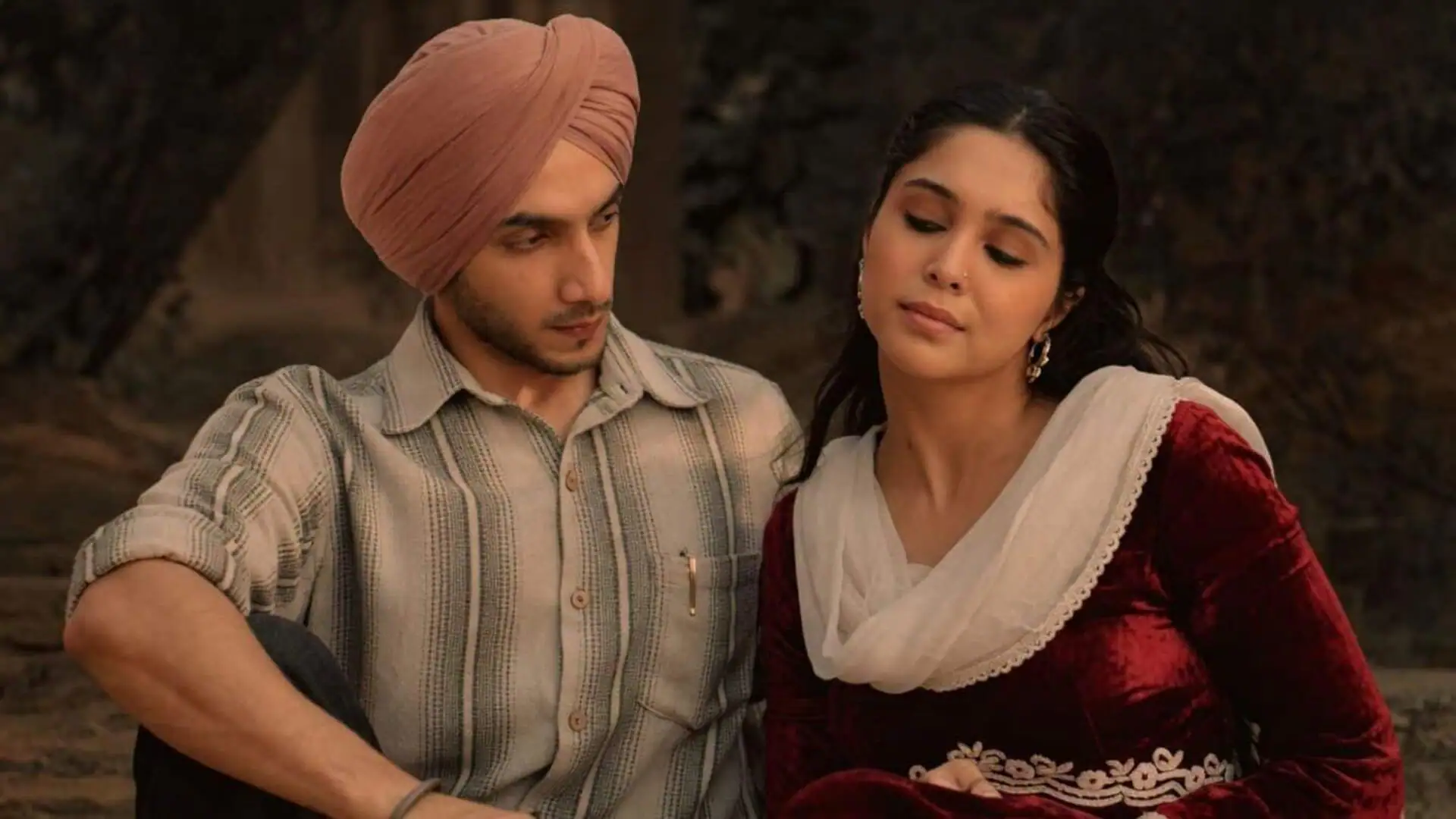
Sharvari is the film’s other revelation. She is visually luminous in the period setting, but what is more impressive is the precision of her performance. The way she communicates reciprocated feeling without a single explicit declaration, through posture, through eye contact, through the timing of a smile, is genuinely accomplished work. Her character is the soul of the pre-Partition timeline in the same way Naseeruddin Shah is the soul of the present one.
Vedang Raina has been somewhat undersold in the marketing and in early discourse, but his work here is quiet and considered. Playing a timid, emotionally earnest young man who does not know how to be bold without being inappropriate is harder than it looks. He does it well.
Diljit Dosanjh is the film’s biggest marketing pull and, somewhat inevitably, not its most significant performance. His character is less a protagonist than a structural device, a vehicle that exists to navigate Naseeruddin Shah’s universe and connect narrative threads. He is good in the role, but the film is not designed for him to be great. His character’s backstory as a rough-around-the-edges aspiring stand-up comedian is established and then essentially abandoned, one of a handful of threads the screenplay sets up and does not carry through.
Main Vaapas Aaunga Review: Strengths and Weaknesses
Strengths
The romanticization of slow, ethical love is handled brilliantly at the screenplay level. The decision to anchor the entire emotional structure of the film in a dementia patient’s subconscious is bold and pays off. The second half’s willingness to show Partition violence without softening it, the mob scene in particular, elevates the film beyond the register of typical period romance. The climax is earned and unmanipulative.
Weaknesses
Diljit’s stand-up comedy subplot is introduced, goes nowhere, and is dropped entirely. His character’s reason for being in the story, beyond functional narrative necessity, is underdeveloped. Naseeruddin Shah’s character never once references his wife, the woman with whom he presumably spent 60 to 65 years of his actual life. The film’s justification, that dementia has erased everyone close to him, holds logically, but the absence still registers as a gap. A single line of acknowledgment would have resolved it.
The film also leaves a few emotional threads on the table that a tighter screenplay would have woven together. For a film this carefully constructed in its first half, the second half’s plotting occasionally feels like it trusts momentum more than it trusts architecture.
Main Vaapas Aaunga Songs & BGM Review
The music will not follow you home the way the film’s emotions will. The songs are decent, warm, period-appropriate, occasionally lovely, without being the kind of compositions that define a film. The background score is similarly competent without being remarkable. It supports the story rather than elevating it. For a film this dependent on emotional texture, a more distinctive sonic landscape could have deepened the experience considerably.
Should You Watch Main Vaapas Aaunga in Theatres or Wait for OTT?
This is genuinely a split answer.
The film does not have a visual scale that demands a large screen. There are no set pieces, no grandeur shots, no sequences that would lose meaning on a smaller display. The emotional architecture of Main Vaapas Aaunga would translate well to an OTT watch, arguably better, because viewers at home can pace themselves through the slower first half without the social pressure of sitting in a theatre feeling impatient.
Had this been released directly to OTT, it would have found its audience within a week. Word of mouth would have spread organically, viewership would have compounded, and the film would have been discussed and recommended the way quiet masterworks get discussed and recommended on streaming platforms.
But for those who want the experience of Naseeruddin Shah’s performance on a large screen, surrounded by the full weight of a theatrical soundscape, go. The second half, especially, with its Partition violence sequences and the emotional release of the climax, plays differently in a dark room with strangers around you.
Main Vaapas Aaunga Hit Or Flop? Box Office Collection Analysis
The numbers are worth confronting directly. Main Vaapas Aaunga reportedly has a budget of approximately ₹70 crore. In its first week, it collected somewhere between ₹3–4 crore. In that same period, Htated 3D, a film with no comparable artistic ambition, collected approximately ₹8–12 crore.
That gap is not a verdict on which film is better. It is a verdict on what Indian audiences currently choose to spend money on in theatres, and that verdict is genuinely complicated.
The good news is that word of mouth is picking up. The film is reportedly now getting more shows, and projections suggest it may reach approximately ₹25 crore by the end of its run. Whether that covers its budget remains uncertain.
Indian cinema is in a strange period right now. Producers, directors, and actors are genuinely confused about what works. A film with legitimate artistic merit and strong performances can be commercially outperformed in the first week by a film with a 3D gimmick, and no one in the industry has found a reliable framework for predicting which story will find its audience and which will not.
Main Vaapas Aaunga is the kind of film that deserves to exist. Whether it gets the commercial outcome it deserves is a question the box office will answer on its own terms.
Is Main Vaapas Aaunga Imtiaz Ali’s Masterpiece?
No. Imtiaz Ali has made deeper, more fully realized films. Rockstar, Tamasha, Jab We Met, these are films where the artistic and emotional ambition is matched by tighter execution. Main Vaapas Aaunga has the ambition but not always the architecture to fully deliver on it.
What it is is a genuinely great watch. A film that respects its audience enough to move slowly, trusts its performers enough to let them breathe, and has the courage to show Partition not as a historical backdrop but as a living wound. In the current landscape of Hindi romantic cinema, it makes it something worth going out of your way to see.
Main Vaapas Aaunga may not be Imtiaz Ali’s strongest film, but it is one of his most emotionally sincere. If you’re interested in how different filmmakers approach love, loss, and relationships, you can also explore our Cocktail 2 Review and The Death of Robin Hood Review, two very different stories that ultimately wrestle with many of the same emotions.
Frequently Asked Questions
Q. Is Main Vaapas Aaunga worth watching?
Ans. Yes, particularly for viewers who appreciate slow-burn love stories and strong performances. Naseeruddin Shah’s portrayal of a dementia patient clinging to a pre-Partition memory is one of the finest performances in recent Hindi cinema. The second half is emotionally devastating.
Q. What is the Main Vaapas Aaunga rating?
Ans. 3.5 out of 5. The film is let down by a few underdeveloped subplots and some narrative threads that are abandoned mid-story. But the core emotional architecture, the performances from Naseeruddin Shah and Sharvari, and the refusal to sentimentalize the climax make it well worth watching.
Q. What is Main Vaapas Aaunga about?
Ans. A Sikh man falls in love with a Muslim girl in pre-Independence India and promises to return to her after Partition separates them. Decades later, now suffering from severe dementia, he has forgotten almost everything except her face. The film moves between these two timelines, with Diljit Dosanjh’s character connecting the narrative threads in the present.
Q. Why is the first half of Main Vaapas Aaunga so slow?
Ans. Intentionally. The promise at the heart of the film, a man saying “I will come back” across the divide of Partition, can only carry its full weight if the love it grows from is shown as deep and unhurried. Imtiaz Ali builds the first half like a foundation. The second half is what collapses onto it.
Q. Is Main Vaapas Aaunga based on a true story?
Ans. The film is not based on documented events but draws heavily on the lived reality of Partition, the communal violence, the displacement, and the millions of personal stories that were shattered when India and Pakistan were divided in 1947.
Q. How is Naseeruddin Shah in Main Vaapas Aaunga?
Ans. Exceptional. His portrayal of a man living with severe dementia who has lost everyone in his present life but retained the subconscious image of a woman he loved 78 years ago is the kind of performance that redefines a film. He is the primary reason to watch.
Q. Does Main Vaapas Aaunga show Partition violence?
Ans. Yes, and without softening it. The second half includes a deeply disturbing sequence in which women in a household facing mob violence make an irreversible choice to protect themselves from rape. There is also an implied scene involving a pregnant woman and a blade. These sequences are not gratuitous; they are the emotional axis around which the second half turns.
Q. Should I watch Main Vaapas Aaunga in theatres or on OTT?
Ans. Either works. The film does not have a visual spectacle that demands a large screen. OTT may actually serve it better; the slower first half plays more comfortably at home, and the emotional payoff of the second half is strong enough to land in any setting. If theatrical, go for Naseeruddin Shah’s performance alone.
Q. Is Diljit Dosanjh the main character in Main Vaapas Aaunga?
Ans. No. Despite being the film’s biggest marketing draw, Diljit Dosanjh’s character functions primarily as a narrative connector. Naseeruddin Shah’s character is the emotional center of the film. This is a heroless film in the traditional sense, which is part of what makes it interesting and part of what likely limited its commercial reach.
Q. How does Main Vaapas Aaunga handle the Hindu-Muslim relationship at its core?
Ans. With care and historical accuracy. The film is set in a period before Partition created the divisions that define present-day India-Pakistan relations. The love story exists in a pre-division India, seen through the lens of a dementia patient whose memory stops at that era. The film is not making a political argument about present-day relations. It is showing what was destroyed.
Main Vaapas Aaunga is currently in theatres. The OTT release date has not been announced.