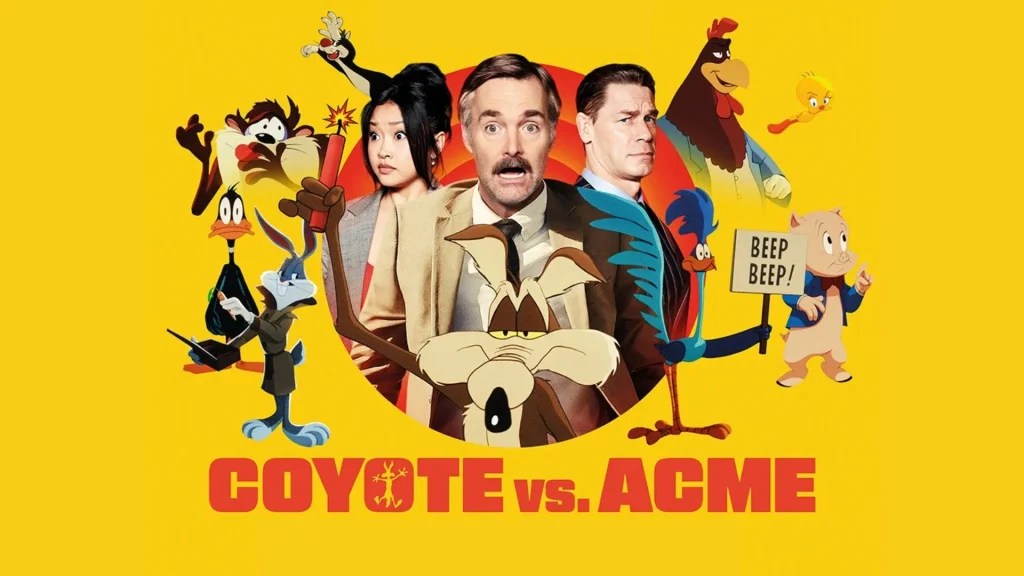
Coyote vs. Acme Review Verdict: Coyote vs. Acme is a genuinely charming, thematically clever, and surprisingly heartfelt film that deserved to exist from the moment it was completed, and the fact that it nearly did not is one of the most grimly ironic stories in recent Hollywood history. It is not the greatest animation hybrid ever made, and the internet’s hyperbolic reaction to its rescue has somewhat inflated expectations. But as a family film with genuine warmth, a sharp central message, and the Looney Tunes back on a big screen where they belong, it more than earns your Friday evening.
Coyote vs. Acme is now in theatrical release from Ketchup Entertainment. Runtime: approximately 105 minutes. Rated PG. This review is based on a theatrical viewing.
Quick Verdict: Is Coyote vs. Acme Worth Watching?
Yes, especially in theaters, and especially with family. It is the kind of film that works across ages in a way that genuinely good animation always has, where the youngest person in your row is laughing out loud, and the oldest person is quietly emotional about something they did not expect to feel.
It is also a film I want to be careful about contextualising correctly, because the internet has been very loud about this movie and some of that loudness has attached to it expectations it cannot meet. It is not the greatest live-action animation hybrid of all time. It is not a masterpiece. It is a good, earnest, creative film that deserved a theatrical release and is now getting one. See it this weekend if you can. That is the whole argument.
Coyote vs. Acme (2026) — Movie Info
| Detail | Info |
|---|---|
| Title | Coyote vs. Acme |
| Original Completion | 2023 |
| Distribution | Ketchup Entertainment (acquired for $50 million) |
| Genre | Live-Action / Animation / Legal Comedy |
| Rated | PG |
| Runtime | Approximately 105 minutes |
| Setting | A world where Looney Tunes characters coexist with humans |
| Core Premise | Wile E. Coyote sues the Acme Corporation for selling him faulty products |
| Our Rating | ★★★½☆ (3.5/5) |
The Story Behind the Film: Why Coyote vs. Acme Almost Never Existed
You cannot talk about this movie without talking about what happened to it, because the real-world story is almost inseparable from the film’s own themes.
After Warner Bros. merged with Discovery and David Zaslav took over, the studio began a series of decisions designed to cut costs and take tax write-offs on completed content. Coyote vs. Acme, a fully completed, entirely finished film that by virtually all accounts from people who had seen it was genuinely good, was going to be shelved. Not given a streaming release. Not sold. Shelved entirely, the same way Warner Bros. had just done with the completed Batgirl film.
When this information reached the public, the internet responded with appropriate fury. A finished movie, made by real people who had poured genuine creative work into it, was going to be wiped from existence so that a corporation could claim a tax write-off. The backlash was significant enough that Warner Bros. reversed their position and allowed the filmmakers to seek their own distribution independently. Ketchup Entertainment eventually acquired the film for $50 million. And now, nearly three years after it was first completed, it is in theaters.
Here is the part that makes your head spin a little: the film’s central theme is corporate greed. It is a movie about a giant corporation causing pain and suffering to the little guy and then justifying it through financial reasoning. The fact that a film with this specific message was almost destroyed for a corporate tax write-off is not irony. It is something stranger than irony. It is the kind of thing where you sit in the cinema watching the story, and you keep thinking about the actual story happening behind the actual story.
You truly cannot make this up.
Coyote vs. Acme Movie Review: What the Film Is Actually About
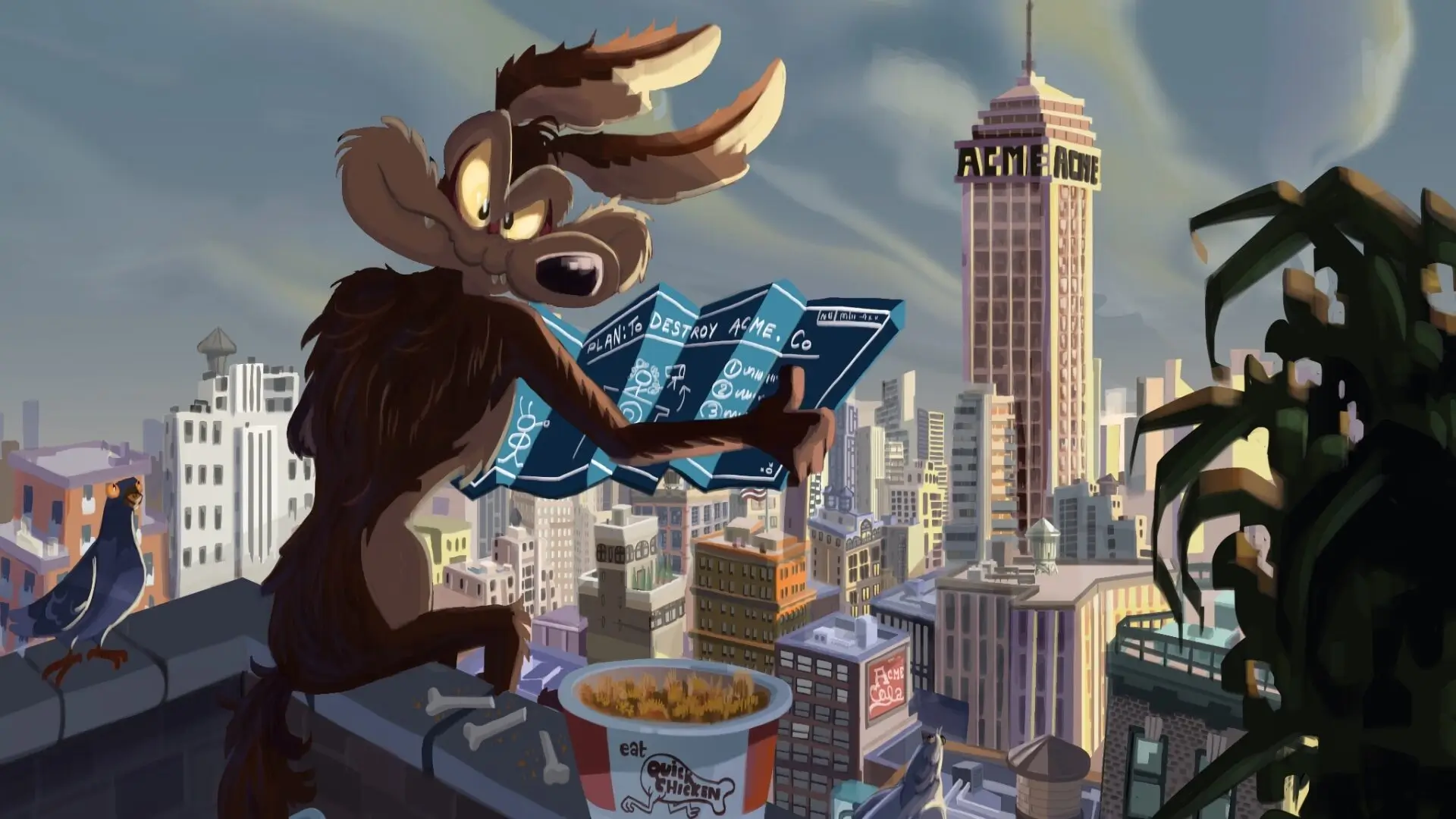
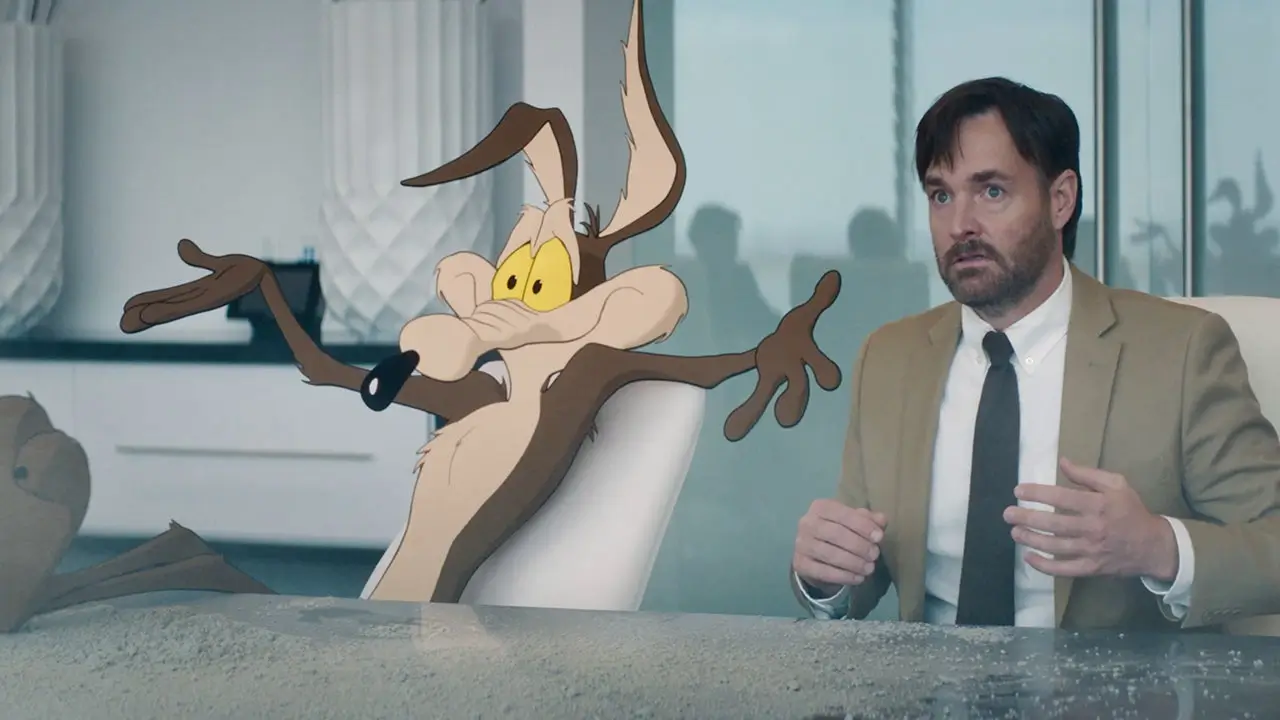
The plot drops you into a world where the Looney Tunes characters exist alongside humans as part of ordinary life. Wile E. Coyote, having spent decades in fruitless pursuit of the Roadrunner and suffering catastrophic injury after catastrophic injury from Acme products that consistently fail, explode prematurely, or otherwise perform the exact opposite of their intended function, has had enough. He hires a billboard lawyer and files a lawsuit against the Acme Corporation for negligence.
What follows is a legal comedy that mixes the classic physical chaos of Looney Tunes with genuine thematic substance about corporate accountability, the cost of human pain dismissed as acceptable collateral damage, and what happens when the most powerless member of a dynamic decides to fight back through the system rather than just absorbing the consequences of that dynamic forever.
That premise works. It is creative, it is relevant, and it gives the film a structure that accommodates both the cartoon mayhem audiences expect and the quieter, more emotionally honest moments that the film earns by the end.
Coyote vs. Acme Review: What It Gets Right
The Animation Style — Who Framed Roger Rabbit Energy
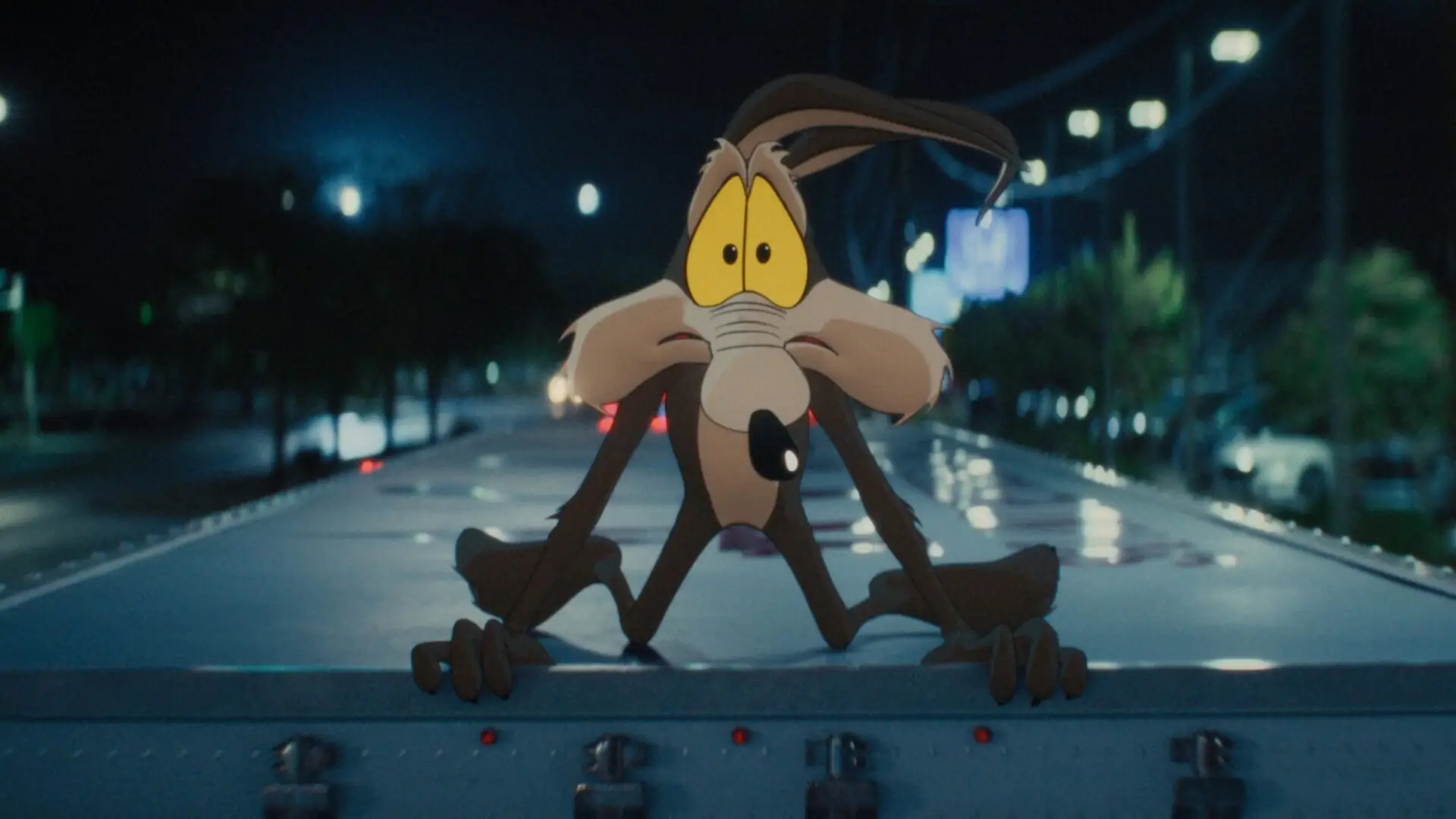
The clearest compliment I can pay to the visual achievement here is that it evoked, genuinely and repeatedly, the feeling of watching Who Framed Roger Rabbit for the first time. Not as an imitation; the technical approach is entirely contemporary, but in terms of the quality of integration between the animated characters and the live-action environment. There is no uncanny valley. The Looney Tunes characters are not flat images composited onto a 3D background. They have depth of field. The camera moves around them with actual spatial logic, accounting for their texture and volume. They inhabit the space rather than being placed inside it.
Who Framed Roger Rabbit is one of the best animation-live-action hybrid films ever made. For a 2026 film to make me feel any version of what that film gave me as a child is nothing. It is actually considerable.
The Looney Tunes Back on the Big Screen
I grew up with these characters. Looney Tunes were a formative part of how I understood comedy, the timing, the physical absurdity, the specific genius of characters who exist to cause and receive chaos in equal measure. Watching Wile E. Coyote on a cinema screen in 2026, with the craft and investment the film clearly brought to making him feel real and present, was unexpectedly moving for a few seconds before it became simply fun.
I do not want to live in a world where these characters are something only people my age remember. I do not want them to become the kind of thing where children nod politely when their parents mention Bugs Bunny but have never actually watched a single cartoon. Coyote vs. Acme makes a compelling case that the Looney Tunes still have life in them, that the comedic DNA of these characters is adaptable, that you can put them in new contexts and new stories without losing what makes them recognisable and beloved.
The Corporate Greed Theme Lands
The film’s central message, about large corporations dismissing the pain of the little guy as an acceptable cost of doing business, is handled with enough lightness to keep it from being a lecture and enough sincerity to make it mean something. The Acme angle is perfect for this. Acme products have always failed in Looney Tunes. The entire running joke has always been that Wile E. buys these weapons and contraptions and they consistently backfire. The film takes that established premise and asks a simple question: what would actually happen if someone decided the joke had gone on long enough?
The answer it arrives at is genuinely satisfying, and the way the human characters, including the lawyer, are woven into the moral fabric of the film is more thoughtful than the premise might suggest.
The Emotional Payoff Between Wile E. Coyote and the Roadrunner
I am not going to spoil the specifics of what the film does with the central Coyote-Roadrunner dynamic in its later stages. But I will tell you that there is a payoff to that relationship that I did not expect, could not have predicted, and that produced a genuine emotional reaction from me in a cinema. The fact that a film about a cartoon coyote suing a cartoon corporation managed to make me feel something sincere about a decades-old rivalry between two animated characters is either a credit to the film’s writing or an indictment of how susceptible I am to nostalgia. Probably both.
A Genuine Family Film — All Four Ages
I watched this with my family. The youngest laughed out loud multiple times, genuine, unprompted, watching-cartoons laughter. The older members of the party were quieter but clearly engaged, particularly in the film’s more emotionally substantial moments. That is the definition of a real family film. Not a children’s film that adults tolerate. Not an adult film with some cartoon characters dropped in for cover. An actual film that gives different members of a multi-generational audience different things to respond to, all within the same story.
That is hard to execute. Coyote vs. Acme pulls it off.
Coyote vs. Acme Movie Rating: Where It Falls Short
The Comedy Could Have More Bite
This is the film’s biggest disappointment for me personally. The story is smart. The animation is impressive. The emotional heart is real. But the comedy, which, given these are Looney Tunes characters, should arguably be the engine running the entire thing, is not quite as funny as the film’s best moments deserve.
There are laughs. Several of them are good, the kind that come from the physical absurdity the characters were built for. My nine-year-old found significantly more to laugh at than I did, which might be an age gap in comedy sensibility or might be something the film could have bridged better. I kept wanting one more joke that only an adult would get, not crude, just something that required the context of having actually lived in the world a little longer. Something that rewarded the older half of the family for their patience.
The physical gags are there but feel slightly restrained compared to the absolute commitment to chaos that defines the classic cartoons. For a film about Wile E. Coyote, a character whose entire existence is defined by spectacular, escalating failure, some of the comedy felt too careful. More genuine Looney Tunes abandon in the set pieces would have elevated the whole.
The Courtroom Drama Sections Go On Too Long
Legal comedy is a specific genre with a specific rhythm, and Coyote vs. Acme leans into it heavily. The courtroom sequences are well constructed and serve the story. They are also the sections where children in any audience are going to start fidgeting, because depositions and lawyer jargon and procedural back-and-forth are inherently a tougher sell to the portion of your audience that came specifically to watch cartoon characters get hit by falling boulders.
This is not a fatal flaw. But there is a version of this film that trusts the courtroom story more and gives it less time, and that version might flow better. When the film leaves the courtroom and leans into the animated mayhem, it breathes. When it settles back into the procedural, some of that air leaves.
A Note on Inflated Expectations
I want to address this directly because it is going to affect how some people experience this film. The internet fought very publicly and very loudly for Coyote vs. Acme to be released. That is appropriate; the decision to shelve it was genuinely wrong, and the reaction against it was justified. But a side effect of three years of internet outrage on behalf of a film is that some corners of the online conversation have elevated it to something approaching legendary status before anyone outside of early screenings had seen a single frame.
Walking in expecting a masterpiece is the wrong move. Walking in expecting a good, fun, emotionally honest family film that makes a pointed comment about corporate behaviour while giving you a solid couple of hours with characters you love, that is the right move. The film delivers on the second set of expectations. It cannot deliver on the first, and it is not fair to it to pretend it was ever going to.
Should Coyote vs. Acme Have Been Deleted? The Warner Bros. Question
I want to be clear on my position here: no. Absolutely not. A completed creative work, made by real people with genuine investment of time and craft, should never be wiped from existence for a tax write-off. That is artistically indefensible and sets a genuinely troubling precedent for how studios might treat content going forward.
At the same time, and I say this with full awareness that some people will find it frustrating, I can understand, purely from a financial risk analysis standpoint, why Warner Bros. Discovery was nervous about distributing a Looney Tunes film in 2023 or 2026. The market for this type of film is genuinely uncertain. Whether the box office proves their concerns wrong or right remains to be seen.
What I am confident of is that the film deserves the chance to find out. Ketchup Entertainment gave it that chance. The fact that it exists at all is worth appreciating before anything else.
Pros and Cons
✓ Pros
- Animation integration is genuinely impressive, Who Framed Roger Rabbit energy without imitation
- The Looney Tunes on a big screen in 2026 is a legitimately magical thing
- The corporate greed theme is handled with lightness and sincerity in equal measure
- An unexpected emotional payoff to the Wile E./Roadrunner dynamic
- Works as a genuine family film across a wide age range
- The real-world story of the film’s near-deletion adds a layer of meaning to its themes
✗ Cons
- The comedy needed more punch, physical gags and adult-oriented jokes both could have been sharper
- Courtroom drama sections drag in the middle
- Internet backlash has inflated expectations the film cannot meet
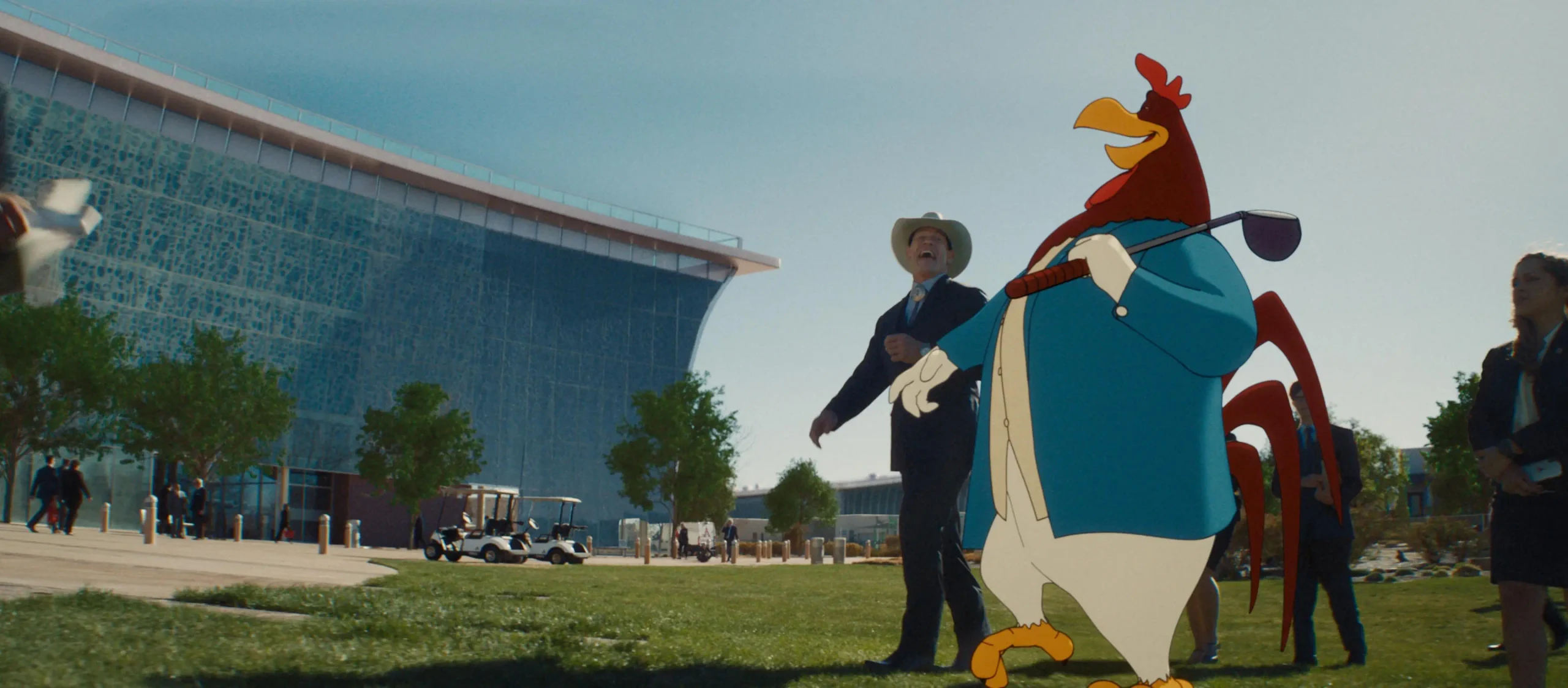
- Some classic Looney Tunes characters are used in ways that may frustrate purists
Final Verdict
| Category | Score |
|---|---|
| Animation / Visual Integration | ★★★★★ |
| Story / Theme | ★★★★☆ |
| Comedy | ★★★☆☆ |
| Emotional Payoff | ★★★★☆ |
| Family Accessibility | ★★★★☆ |
| Pacing | ★★★☆☆ |
| The Looney Tunes Factor | ★★★★★ |
| Overall | ★★★½☆ (3.5/5) |
Coyote vs. Acme is not a great film. It is a good one, one that earns its emotional beats, makes intelligent use of its premise, and delivers the specific pleasure of watching beloved characters rendered with real craft and affection on a cinema screen. It is also a film whose very existence is a small victory against the kind of corporate indifference that the film itself is arguing against, and that is nothing.
Go see it. Take your family. Laugh when your kids laugh. Feel what you feel during the ending. Tell people about it afterward. That is what saving a film from deletion actually looks like in practice, and it matters more than the argument on the internet did.
If you’re deciding which movie to watch next, explore our latest reviews of The Odyssey Review, Insidious: Out of the Further Review, Toxic Review, Spider-Man: Brand New Day Review, Spider-Man: Brand New Day Post-Credits Scene Explained, Hanuman Ansh Review, and Mutiny Review. At NexaFeed, we publish spoiler-free movie reviews, OTT series reviews, ending explained articles, hidden details, and streaming guides covering Disney, Pixar, Marvel, Netflix, Prime Video, Apple TV+, HBO Max, and the biggest theatrical releases from around the world.
Frequently Asked Questions
Is Coyote vs. Acme a good movie?
Yes, with calibrated expectations. It is a charming, visually impressive, and genuinely heartfelt live-action animation hybrid that works as a family film across ages. It is not a masterpiece, and internet discourse has somewhat inflated expectations for it. Approached as a good family film with a clever premise and the Looney Tunes back in a cinema, it fully delivers. Our rating: 3.5 out of 5.
Why was Coyote vs. Acme cancelled?
After Warner Bros. merged with Discovery, the new leadership under David Zaslav decided to shelve the completed film for a tax write-off, the same approach they took with the fully completed Batgirl film. Public backlash prompted Warner Bros. to reverse that decision and allow the filmmakers to seek independent distribution. Ketchup Entertainment acquired the film for $50 million.
Is Coyote vs. Acme a kids’ film?
It is a genuine family film, not purely a children’s film. Younger children will find the physical comedy and cartoon characters engaging. Older viewers will connect with the film’s thematic depth, emotional payoff, and the specific nostalgia of seeing Looney Tunes characters handled with real craft. All ages can find something in it.
What is the story of Coyote vs. Acme?
In a world where Looney Tunes characters coexist with humans, Wile E. Coyote, fed up with decades of injury caused by consistently faulty Acme products, hires a lawyer and sues the Acme Corporation. The film combines live-action courtroom drama with animated chaos, built around a central theme of corporate accountability and what happens when the little guy decides to fight back through the system.
Coyote vs. Acme is now in theatrical release from Ketchup Entertainment.