Minions and Monsters Review Verdict: Minions and Monsters is the most legitimately good Minions film since the original Despicable Me, a movie with an actual plot, actual characters, and an actual love of cinema baked into its DNA. It has real structural problems, and the potty humor never fully disappears. But for a franchise that recently delivered Despicable Me 4, this is a genuine step forward. Even confirmed Minions haters are walking out surprised. That says something.
This review is based on theatrical screenings of Minions and Monsters (2026), the third standalone Minions film and seventh entry in the Despicable Me franchise. It synthesizes analysis from multiple critics including a self-described lifelong Minions hater, a franchise skeptic, and kid audience feedback. Mild spoilers are discussed.
Quick Verdict
Two kinds of people reviewed Minions and Monsters ahead of its release: people who already liked the Despicable Me franchise and were hoping for better than Despicable Me 4, and people who actively loathed every previous Minions film and went into this screening prepared for the worst. Both groups came out saying roughly the same thing: this one is actually pretty good. Not great.
Not a masterpiece. Not going on any year-end lists. But legitimately, surprisingly, unmistakably better than what came before, and better because it made choices that previous Minions films consistently refused to make: it has a plot, supporting characters with actual arcs, a creative visual identity rooted in a genuine love of classic cinema, and a musical score that replaces random pop song insertions with actual composition. For a franchise that has spent years coasting on the goodwill of its yellow creatures, that counts as a meaningful achievement.
Minions and Monsters (2026) — Movie Info
| Detail | Info |
|---|---|
| Title | Minions and Monsters |
| Also Known As | Minions 3 |
| Release Year | 2026 |
| Director | Pierre Coffin |
| Writers | Pierre Coffin & Brian Lynch |
| Studio | Illumination / Universal Pictures |
| Franchise Entry | 7th Despicable Me Universe film, 3rd standalone Minions film |
| Runtime | Approx. 90 minutes |
| Genre | Animated, Family, Comedy |
| Our Rating | ★★★☆☆ (3/5) |
Is Minions and Monsters a Sequel to Rise of Gru?
Not directly. Minions and Monsters is set in 1920s Hollywood and follows James and Henry, new Minion characters, not previously prominent in the franchise, who stumble upon the silent film era while searching for a new evil master. The film functions as a standalone adventure within the broader Despicable Me universe rather than as a direct narrative sequel to Rise of Gru. Gru himself does not appear as a significant presence in the film.
Why Is Gru Not in Minions 3?
Minions and Monsters follows a new central pair of Minions, James and Henry, who predate Gru’s involvement with the Minions in the franchise’s internal timeline. The film is set in 1920s Hollywood, well before Gru’s era in the story’s chronology. The framing device of the film implies this is a historical chapter in Minion lore rather than a contemporary Gru story, which is part of what gives the film its distinct feel compared to the Despicable Me-centered entries.
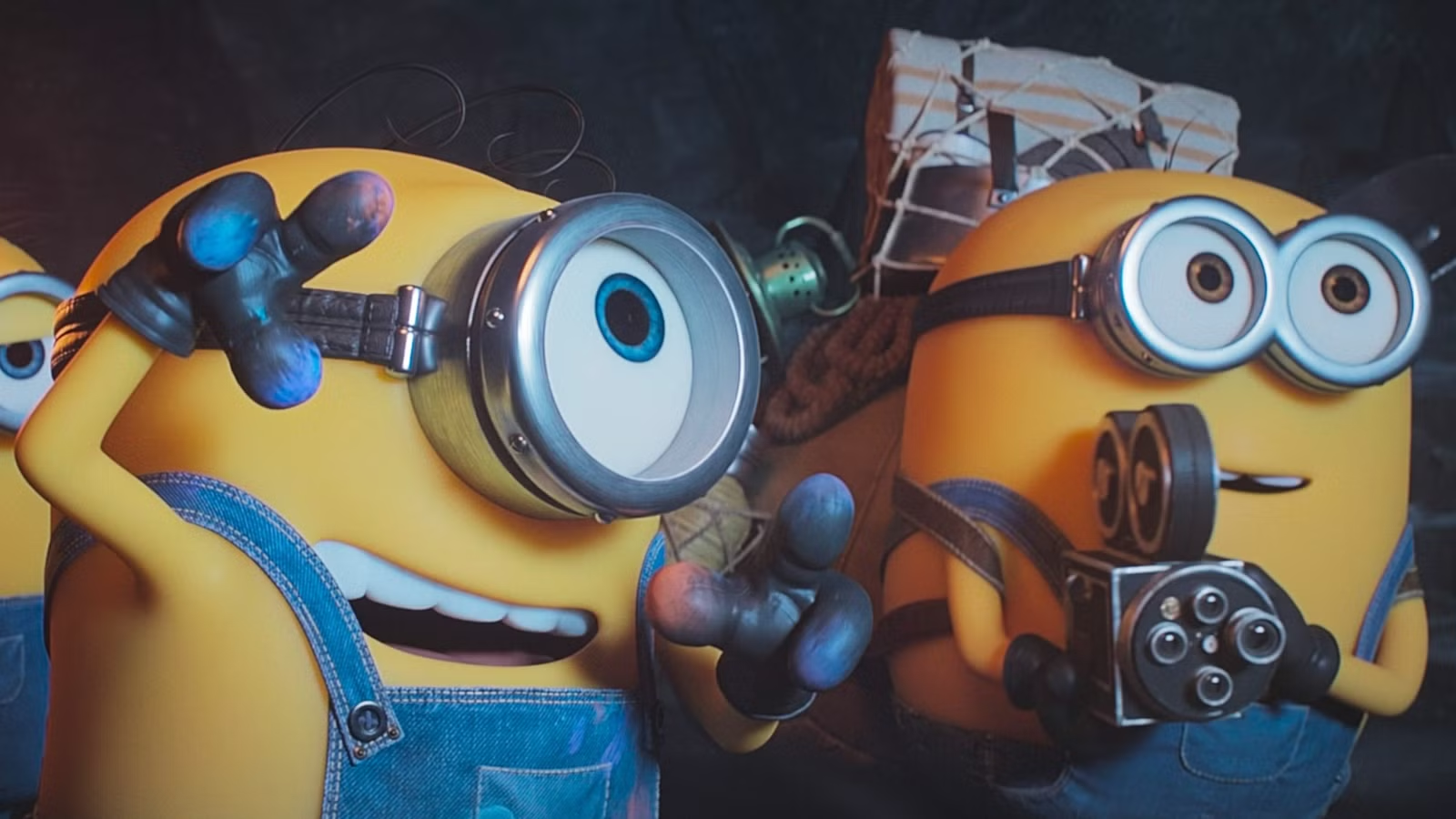
Minions and Monsters 2026 Cast
| Voice Actor | Role |
|---|---|
| Pierre Coffin | The Minions (as always) |
| Christoph Waltz | Hollywood director who discovers the Minions |
| Jeff Bridges | Twin studio executives (dual role — good cop / bad cop) |
| Jesse Eisenberg | Dort — a space robot/conqueror with a romance arc |
Minions and Monsters Story & Plot
The film opens with a framing device set in the present day, inside a film museum. The exhibits include a nod to Jaws, E.T., and other classic films, and the framing device establishes that James and Henry, the film’s two new lead Minions, became among the most influential figures in Hollywood history. This setup is cited by multiple critics as the film’s most immediately clever sequence and its best single joke, a contained gag about a particular character in the museum that serves as the film’s standout comedic moment.
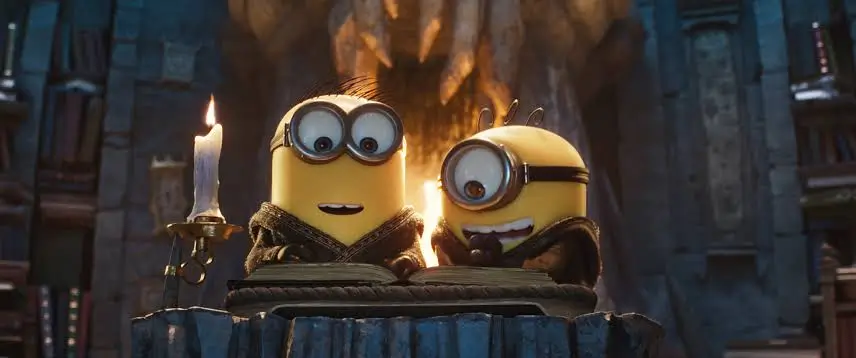
From there, the film moves into the Minions’ familiar origin-era prologue, the extended montage of Minions across time seeking the most evil master available. The actual plot then kicks in: James and Henry discover 1920s Hollywood while searching for a new master, become silent film stars under the direction of a filmmaker played by Christoph Waltz, and eventually decide to make their own movie, titled Minions and Monsters, making the whole thing meta. To populate their monster film, they summon a baby Cthulhu-type creature named Goomy.
A separate character named Dort (voiced by Jesse Eisenberg) enters the story in the film’s second half and becomes the narrative’s most memorable new addition. The monster plot, the literal Minions and Monsters of the title, does not arrive until approximately 60% of the way through the 90-minute runtime. This is the film’s most significant structural flaw and the most consistent note across all critical responses.
Minions and Monsters Review: Why This One Actually Works
The answer, surprisingly, is Pierre Coffin. The director who created and voices the Minions did not direct or write either Rise of Gru or Despicable Me 4, the two most recently criticized entries in the franchise. He returns here as director and co-writer alongside Brian Lynch (who also co-wrote the original Minions and wrote The Secret Life of Pets films, which are considerably better than most Despicable Me entries). The difference in creative ownership is palpable.
Previous Minions films were criticized for having plots that were essentially excuses for the Minions to sing, dance, show their butts, deploy a fart bomb, and otherwise perform lowbrow chaos with no narrative through-line. Minions and Monsters has an actual story. It has an A-plot and a B-plot. It has characters with goals, hopes, and something resembling development. It has a defined end goal. It has, and this is the most shocking sentence anyone has written about a Minions movie in years: narrative structure.
One confirmed longtime Minions hater described sitting in the theatre during the Hollywood chase sequence and realizing, to genuine confusion: “Oh my god, I don’t hate this.” His explanation is specific: “It wasn’t just that there were movie references. It was the fact that the movie had a story.”
The film’s Hollywood era setting generates a specific kind of humor that works on two separate levels simultaneously. For young children in the audience, the Chaplin bits and Keaton physical comedy register as classic slapstick. For adults and film enthusiasts, the same material is packed with deep-cut cinema references that function as a separate joke layer, one that children simply do not need to access for the sequence to be funny. The Citizen Kane gag, specifically, is cited by one critic as genuinely making him laugh despite himself. A Minions movie is making a Citizen Kane joke. We are living in unusual times.
The musical score by John Powell, the composer behind How to Train Your Dragon, is another significant upgrade. Previous Minions films are noted for their reliance on inserted pop songs every few minutes, which critics describe as disruptive to pacing and tonal coherence. Minions and Monsters has an actual orchestral score that serves the film’s emotional beats rather than interrupting them. Multiple critics note they cannot recall a single moment where a random pop song intrudes on the film. This is, for the franchise, a minor revolution.
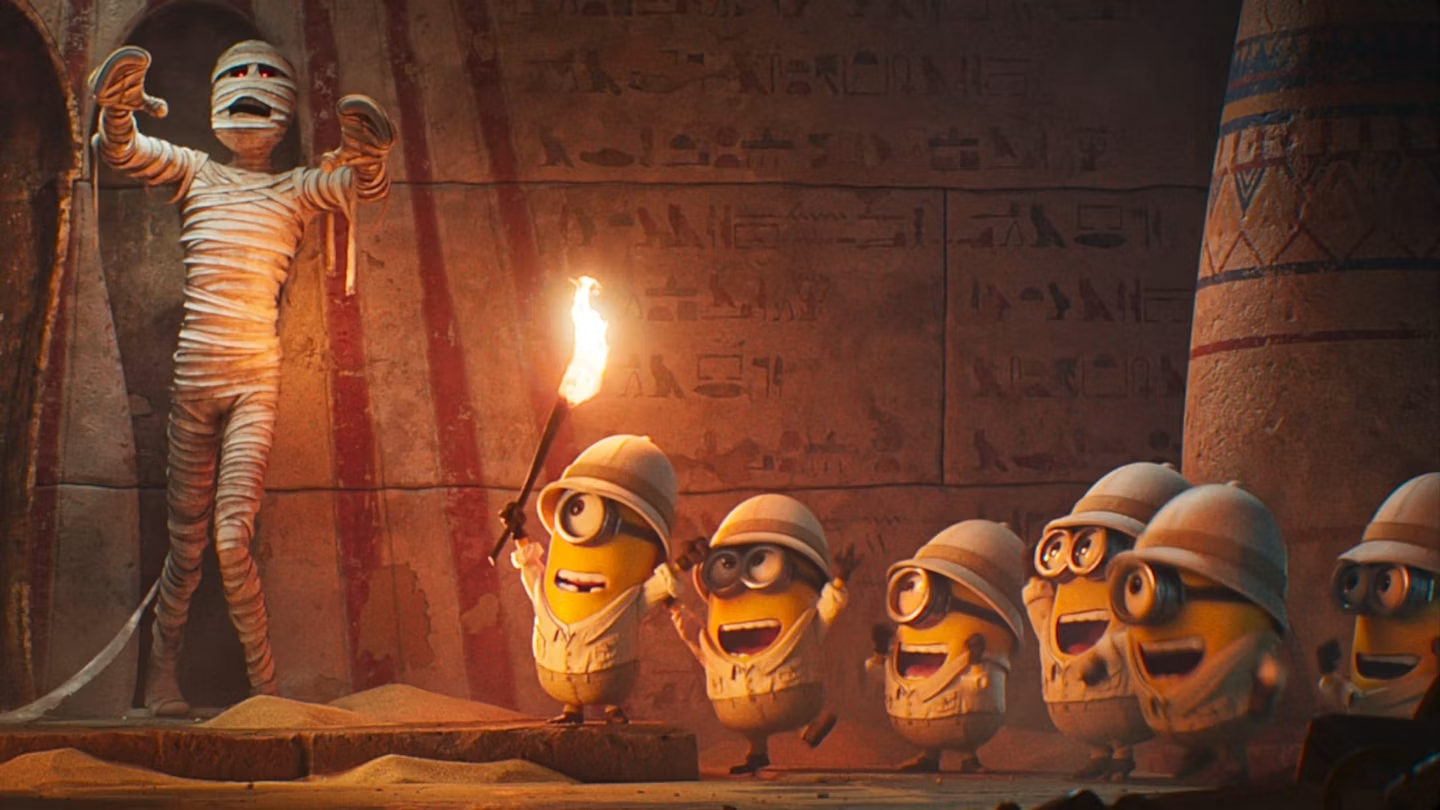
Jesse Eisenberg’s Dort: The Best New Character in the Despicable Me Universe in Years
The film’s most universally praised creative decision is Jesse Eisenberg’s Dort, described variously as a space robot, a conqueror, and a love interest, all simultaneously, which is accurate and also just barely adequate to convey how strange and charming the character is.
Dort enters the film’s back half and becomes its emotional engine. He has a romance arc, “a bizarro romance,” in one critic’s words, “of course, because it’s an Illumination movie”, that provides the kind of character development the Minions themselves cannot have by virtue of being the Minions. The Minions, by their very nature, are locked into a specific personality register. They cannot grow, cannot fundamentally change, cannot be the vehicle for emotional depth. What they can do is surround themselves with characters who can, and Dort is that character in Minions and Monsters.
The lightning round of a television interview produced a unanimous verdict from both adult critic and child critic: best new character, funniest character, and the character they would most want to see return. Jesse Eisenberg’s vocal performance contributes significantly; he finds exactly the right register for a character that could easily have been grating and instead lands as genuinely endearing.
Jeff Bridges playing dual roles as twin studio executives, one good cop, one bad cop, is a supporting highlight, though significantly less prominent than Eisenberg’s role.
What Doesn’t Work: The Structural Problem
Minions and Monsters has one significant flaw that every critical voice, every adult viewer, and even the pre-teen audience member consulted for this review identified independently: the monsters arrive too late.
The film is 90 minutes long. The monsters, the “Monsters” in Minions and Monsters, do not appear until approximately the 60-minute mark. This means 60% of the film passes before the element the title promises and the audience expects as its central hook has actually materialized on screen. The film’s first hour is the Hollywood/filmmaking storyline, Goomy’s arrival, the Charlie Chaplin bit, and the silent film star arc. None of this is bad.
The critical consensus is that it is actually quite enjoyable. But it is a very long first act by any standard, and when the monsters and the Dort romance subplot finally arrive, they feel rushed because only 30 minutes remain for the film to do what its title told you it would do.
The most honest framing of this problem comes from a 12-year-old audience member who saw the film on opening weekend: “It ended too quickly for what it was, because that should have been the whole plot of the movie.” Structural criticism does not get more precise than that.
The solution feels obvious in retrospect: either extend the runtime to give the monster content more space, or trim the Hollywood first act. The film, as it exists, is genuinely fun, but it is a film that needed either 20 more minutes of content or 20 fewer minutes of setup.
Goomy (Baby Cthulhu) and the Monster Mythology
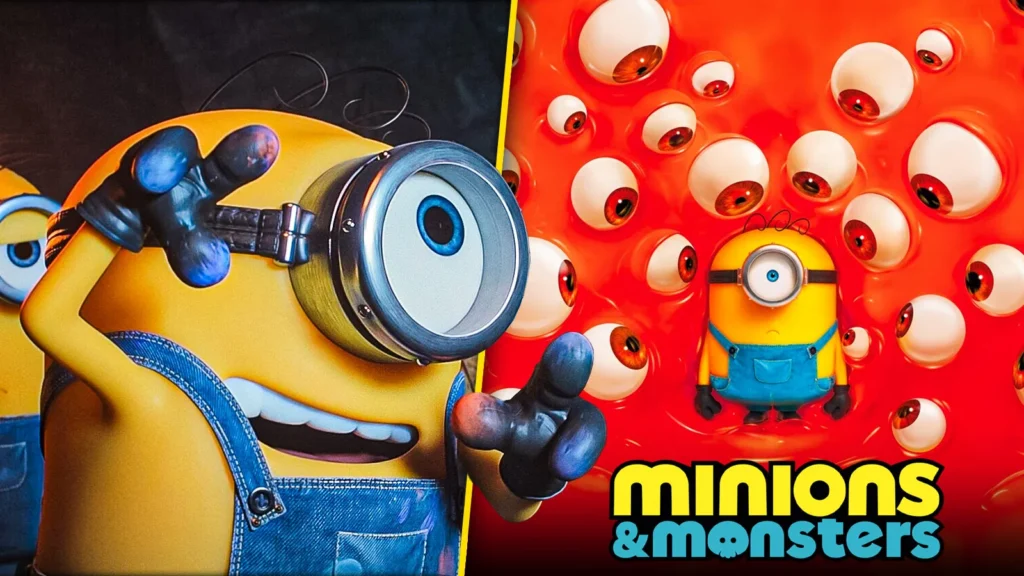
The creature design for Goomy, a baby Cthulhu-type demon the Minions summon to populate their monster film, is one of the season’s more charming animated creations. The character works because the film gives it a genuine personality rather than deploying it as pure spectacle.
The monster mythology connected to Goomy ties into a sorcerer character introduced earlier in the film, whose magic book is the source of the monster summoning. The sorcerer’s floating beard, specifically cited by one critic as a moment where the animation quality surprised him, represents a visual detail that stands above the franchise’s usual approach.
The comment “I don’t usually watch a Despicable Me movie and go, ‘Oh, that looks cool,’ but I had a couple of those moments in this film” is the clearest indicator that the animation team brought more intentionality to this entry than the franchise’s recent output.
The giant orange slime ball covered in eyes, a separate monster encounter, provides the film’s most kinetic action sequence, again benefiting from cleaner animation and more creative visual thinking than Despicable Me 4 demonstrated.
The Hollywood Setting and Cinephile Humor: Does It Work for Kids Too?
The clever answer the film found to its dual audience problem, children who are there for Minion gags, adults who are there because they drove the children, is that the 1920s Hollywood material works on separate joke levels for each group.
A child watching the Chaplin physical comedy bits sees slapstick. An adult watching the same sequence recognizes the specific reference and gets an additional layer of humor from its application to Minions. The film does not break into footnotes explaining its references. The jokes land as pure comedy for viewers who do not know what they are referencing, and as pointed, knowing comedy for viewers who do.
The Citizen Kane gag is the clearest example. A child in the audience sees a funny moment. An adult, including a critic who has spent years despising the Minions, hears a lowbrow Citizen Kane joke and laughs out loud. This is sophisticated comedic layering for an Illumination film, and its presence here is one of the clearest signs that someone with genuine film love was involved in this screenplay.
Is Minions and Monsters Better Than Despicable Me 4?
Yes. Decisively. Both adult critics surveyed for this review identified Despicable Me 4 as the franchise’s recent low point, a film that “couldn’t pick a plotline, couldn’t pick a theme, couldn’t pick any one thing and was just rushing through little sequences so fast”, and both independently placed Minions and Monsters well above it in franchise rankings.
One critic’s provisional franchise ranking: Despicable Me 1 (best), Minions and Monsters (second tier, alongside Despicable Me 3 and Rise of Gru), well above Despicable Me 4 and the first standalone Minions film. Given that this critic actively disliked most of the franchise before this entry, that placement is significant.
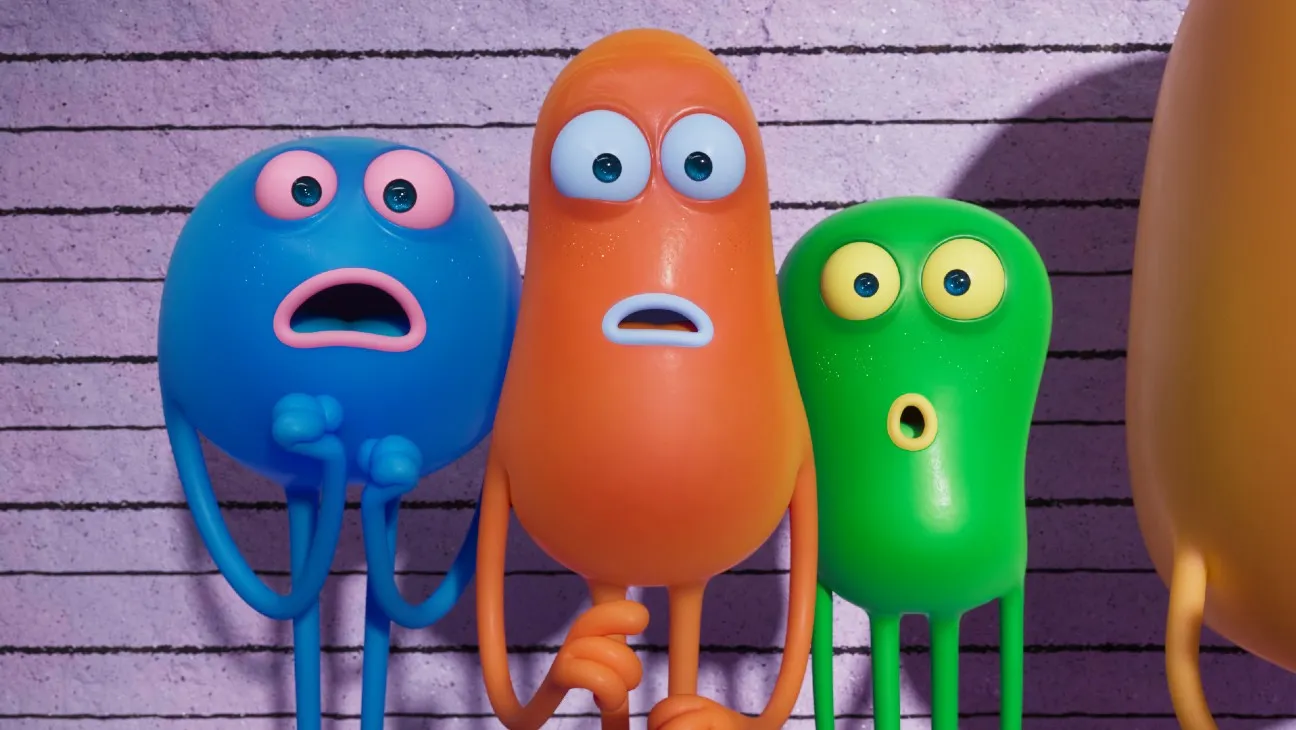
Minions and Monsters vs. Other Despicable Me Universe Films
| Film | Rating |
|---|---|
| Despicable Me (2010) | ★★★★☆ (4/5) |
| Despicable Me 2 (2013) | ★★★☆☆ (3/5) |
| Minions (2015) | ★★☆☆☆ (2/5) |
| Despicable Me 3 (2017) | ★★★☆☆ (3/5) |
| Minions: The Rise of Gru (2022) | ★★☆☆☆ (2/5) |
| Despicable Me 4 (2024) | ★★☆☆☆ (2/5) |
| Minions and Monsters (2026) | ★★★☆☆ (3/5) |
Minions and Monsters sit in the franchise’s second tier, better than the previous two Minions films and significantly better than Despicable Me 4, while not reaching the heights of the original Despicable Me or the emotional resonance of Despicable Me 2.
What Minions and Monsters Get Right
An actual plot. Unprecedented for the standalone Minions series. An A-plot, a B-plot, characters with goals, and a defined endpoint. This sounds like a minimum bar, but for this franchise, it represents a meaningful creative upgrade.
Jesse Eisenberg’s Dort. The year’s most surprising animated character addition, charming, funny, and emotionally functional in ways the Minions cannot be.
John Powell’s score. No random pop song insertions. An actual orchestral score serves the film’s emotional beats. This alone distinguishes the film from its predecessors.
The cinephile joke layer. References that work as straight slapstick for children and as deep-cut cinema humor for adults simultaneously, exactly the dual-audience strategy that the best Pixar films perfected.
The animation quality. Specific visual moments, the floating beard, the Hollywood chase sequence, demonstrate more creative investment than the franchise’s recent entries.
The opening sequence. Universally cited as the film’s best single segment and its most effective hook.
Goomy. A genuinely charming creature design with actual personality.
What Could Be Better
The 60% structure problem. Monsters in a film called Minions and Monsters should not arrive at the 60-minute mark of a 90-minute film. The Hollywood setup, while enjoyable, is too long. The monster content, while fun, is too compressed.
The potty humor. Never fully disappears. Reduces the film’s comedy ceiling in sequences that could have been sharper.
The lowbrow Minion gags. Not the film’s strongest moments. The film is best when it trusts its Hollywood setting and new characters; it is least compelling when it defaults to the franchise’s established Minion behavior template.
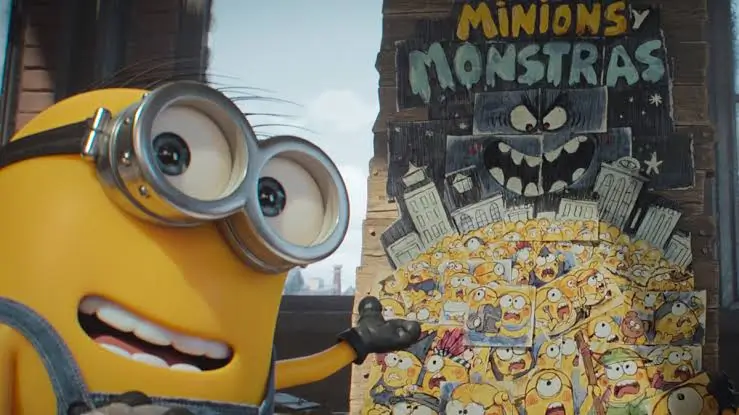
Minions and Monsters Pros & Cons
✓ Pros
- First Minions film with a genuine narrative structure and a coherent plot
- Jesse Eisenberg’s Dort is the franchise’s best new character in years
- John Powell’s orchestral score replaces random pop songs with actual compositions
- 1920s Hollywood setting generates clever dual-audience comedy
- Cinephile references land as funny for both adults and children
- Goomy/baby Cthulhu is charming and well-designed
- Animation quality is a noticeable step up from Despicable Me 4
- The opening museum sequence is the film’s best single stretch
- Even confirmed Minions haters found things to enjoy
✗ Cons
- Monsters don’t appear until approximately 60% of the way through a 90-minute film
- The third act feels rushed as a direct consequence of the long first act
- Potty humor never fully disappears, a franchise staple that not everyone finds funny
- Standard Minion lowbrow gags are the film’s weakest segments
- The film would benefit from either 20 more minutes of runtime or 20 fewer minutes of setup
Is Minions and Monsters the Last Movie?
No confirmed information suggests that Minions and Monsters is the final entry in the Despicable Me franchise. The film functions as a standalone adventure rather than a conclusion, and Illumination’s ongoing commercial commitment to the franchise makes a future continuation extremely likely, particularly if this entry performs well at the box office over the holiday weekend.
Where to Watch Minions and Monsters
Minions and Monsters is currently in theatrical release. As a Universal Pictures / Illumination release, its eventual streaming home will be Peacock, which has been the destination for Illumination’s recent theatrical releases after their theatrical window closes. A Peacock streaming date has not been announced. Check Peacock for availability updates after the theatrical run concludes.
Final Verdict
| Category | Score |
|---|---|
| Story / Script | ★★★☆☆ |
| Character (Minions) | ★★☆☆☆ |
| Character (Supporting — Dort, Goomy) | ★★★★☆ |
| Comedy | ★★★☆☆ |
| Animation Quality | ★★★★☆ |
| Music / Score | ★★★★☆ |
| Pacing / Structure | ★★☆☆☆ |
| Cinephile Value | ★★★★☆ |
| Overall | ★★★☆☆ (3/5) |
Minions and Monsters is not a great animated film. It is not going to be anyone’s favorite movie of the year. It will not make a Minions skeptic into a franchise convert. But it is legitimately, surprisingly, measurably better than what this franchise has delivered recently, and it achieves that by doing the thing that sounds simplest and has apparently been the hardest thing for Illumination to manage: making a Minions movie that is also, straightforwardly, a movie. With a plot.
And characters. And a composer who wrote How to Train Your Dragon. If you are taking kids to the cinema this Fourth of July weekend, this is a reasonable and occasionally quite charming choice. If you are a confirmed Minions hater attending under duress, you may exit the theatre somewhat dazed, not from how bad it was, but from how bad it wasn’t.
If you enjoyed our Minions and Monsters Review, don’t miss our latest movie and TV coverage on Nexafeed. We regularly publish honest reviews, ending explained guides, cast breakdowns, and streaming recommendations for the biggest new releases. You can also check out our reviews of The Bear Season 5, Silo Season 3, Elle, Couture, and many more trending movies and shows to help you decide what’s worth watching next.
Frequently Asked Questions
Q. Is there going to be a Minions 3?
Ans. Yes. Minions and Monsters is the third standalone Minions film, currently in theatres. It releases over the Fourth of July 2026 holiday weekend and is the seventh overall film in the Despicable Me franchise. It features two new lead Minions, James and Henry, rather than the previously established Minion group.
Q. Is Minions 3 release date July 1, 2026?
Ans. Minions and Monsters (Minions 3) is in theatres now for the Fourth of July 2026 holiday weekend. Check your local cinema listings or Fandango for exact showtimes and the confirmed release date in your region.
Q. Why is Gru not in Minions 3?
Ans. Minions and Monsters is set in 1920s Hollywood, in the era before Gru’s involvement with the Minions in the franchise’s chronology. The film follows James and Henry, two new Minions, in a standalone adventure that predates Gru’s story. This is a deliberate creative choice that gives the film a distinct identity from the Despicable Me-centered entries.
Q. Is there a new Minion movie coming out in 2026?
Ans. Yes. Minions and Monsters is the new Minions movie for 2026. It is in theatres now and is the third standalone Minions film and seventh entry in the Despicable Me universe.
Q. Will Minions 3 be called Minions and Monsters?
Ans. Yes. The official title of the third Minions film is Minions and Monsters. It is also referred to informally as Minions 3.
Q. Where can I watch Minions and Monsters?
Ans. Minions and Monsters is currently in theatrical release at cinemas worldwide. As a Universal / Illumination release, it will eventually stream on Peacock after the theatrical window closes. A streaming date has not been confirmed, check Peacock for updates after the film’s theatrical run.
Q. Is Minions and Monsters good?
Ans. Better than expected, particularly compared to recent franchise entries like Despicable Me 4. The film has an actual narrative structure, a strong supporting character in Jesse Eisenberg’s Dort, a proper orchestral score by John Powell (How to Train Your Dragon), and clever cinephile humor layered into its 1920s Hollywood setting. Its main flaw is that the monster content arrives too late in a 90-minute film. Our rating: 3 out of 5. A solid family film and the franchise’s best entry in several years.
Q. Is Minions and Monsters the last movie?
Ans. No confirmed plans indicate that Minions and Monsters is the final entry in the franchise. The Despicable Me universe shows no signs of concluding, and Illumination’s commercial model makes future entries highly likely, particularly if this film performs strongly at the holiday box office.
Minions and Monsters is in theatres now. Streaming on Peacock to follow after theatrical release. Runtime approximately 90 minutes.