
Human Vapor Review Verdict: Human Vapor is exactly the kind of international co-production Netflix exists to deliver, a morally complex, visually stunning, emotionally devastating thriller that refuses to be reduced to its genre premise. Dark, poignant, and brilliantly performed. One of the best new shows of 2026.
This review is based on advanced screener access to all eight episodes of Human Vapor, provided ahead of its Netflix premiere. No major spoilers are included. What follows is a full analysis of the series’ strengths, minor weaknesses, and why it is essential viewing.
Human Vapor Quick Verdict
Human Vapor could have been a straightforward Japanese sci-fi thriller about a man who turns into gas and kills people. The trailers suggested exactly that, and if that is what you came for, you will get it. What the series actually is, beneath the high-concept premise, is a slow-burning conspiracy drama about injustice, systemic corruption, abandonment, and the terrifying moral grey zone between victim and villain. The VFX is gritty and unsettling.
The performances are outstanding across the board, including a debut screen performance from the lead actor that is genuinely remarkable. The writing, from the Korean screenwriters behind some of the most ambitious genre television in recent years, brings structural intelligence and emotional weight that elevate every episode. Do not miss this one.
Human Vapor Netflix Series Info
| Detail | Info |
|---|---|
| Title | Human Vapor |
| Platform | Netflix |
| Release Year | 2026 |
| Episodes | 8 |
| Director | Shinzo Katayama |
| Writers | Yeon Sang-ho & Ryu Yong-jae |
| Based On | The Human Vapor (1960 Japanese film) |
| Country of Origin | Japan / South Korea (co-production) |
| Language | Japanese |
| Genre | Sci-Fi, Thriller, Mystery, Drama |
| Our Rating | ★★★★½ (4.5/5) |
Human Vapor Story & Plot Summary
Human Vapor opens with an image that makes an immediate and indelible statement about what kind of show it intends to be: a person swells and explodes on live television. The cause is the Human Vapor, a man with the ability to transform his body into gas, slip through any physical barrier, enter a person, and kill them from inside.
He announces his killings in advance. He carries them out with precision. He appears to be mocking the authorities publicly, demonstrating that their systems cannot contain him, and generating a formless, pervasive fear across society with each new incident. The surface read is a genre thriller about a superpowered killer and the cops hunting him. That read is accurate but incomplete.
The deeper story is about what created the Human Vapor. As Detective Kenji Okamoto and investigative journalist Kiyoko Kono close in on the killer, the investigation peels back layers of institutional failure, personal tragedy, and systemic injustice that explain, not excuse, but explain what this man became. The flashbacks to who he was before the transformation are the series’s emotional core.
The mystery of why he became what he became, and who is ultimately responsible for it, is what keeps the series compulsively watchable across eight episodes. It is significantly more ambitious than its premise suggests. That ambition is fully realized.
Human Vapor Netflix Cast
| Actor | Role |
|---|---|
| Uta | The Human Vapor — the transformed man (acting debut) |
| Shun Oguri | Detective Kenji Okamoto — the investigator hunting him |
| Yu Aoi | Kiyoko Kono — investigative journalist |
| Kento Hayashi | Online content creator (brother) — caught in the story |
| Suzu Hirose | Online content creator (sister) — caught in the story |
| Yutaka Takenouchi | Supporting — significant role in the conspiracy layer |

Is Human Vapor Based on a True Story?
No. Human Vapor is based on a 1960 Japanese science fiction film of the same title (Gasu Ningen Dai Ichigo, also known as The Human Vapor), directed by Ishiro Honda, the filmmaker best known for the original Godzilla. The 2026 Netflix series is a modernized adaptation of that source material, reimagined as a sprawling eight-episode conspiracy thriller with significantly expanded character depth and thematic ambition beyond the original film’s more straightforward sci-fi premise.
The 2026 version is a Japan-South Korea co-production: the director and cast are Japanese, while the screenwriters, Yeon Sang-ho and Ryu Yong-jae, are South Korean. Yeon Sang-ho is best known internationally for directing Train to Busan (2016), which explains immediately why the emotional and structural sophistication of Human Vapor’s writing exceeds standard genre expectations.
Human Vapor Netflix: Episode Count and Structure
Human Vapor runs eight episodes on Netflix. All eight episodes are available at the premiere. The series is structured in a way that balances two timelines, the present-day investigation and the past tragedy that created the Human Vapor, without the flashback structure feeling distracting or disproportionate. The ratio of past to present is well-calibrated across the season: enough flashback to build emotional investment in the villain’s humanity, not so much that it slows the investigative momentum.
Episode length allows for genuine character development in a way that a feature film adaptation of the same material could not have managed. The eight-episode structure is essentially the right length, long enough to develop the conspiracy’s moving parts properly, tight enough to avoid the mid-season padding that undermines many streaming series.
One episode, the one that introduces the content creator siblings, is flagged by early viewers as running slightly long and feeling less essential than the surrounding episodes. It is the series’s only pacing stumble, and it is minor. The episode has a post-credits music video that is charming if not strictly necessary.
The Human Vapor Character: A Villain You Will Not Be Able to Simply Hate
The most significant creative achievement of Human Vapor as a series is what it does with its antagonist, not in the sense of making him sympathetic enough to root for, but in the sense of making him human enough that you cannot simply settle into comfortable contempt for him.
The Human Vapor announces his killings in advance. He follows through with surgical precision. He appears to enjoy the demonstration of his impunity. By every surface measure, he is a monster, and the series never entirely asks you to forget that.
What the series does insist on is that you understand the architecture of the person who became this monster. The flashbacks reveal a life shaped by specific institutional failures, by abandonment at a systematic level, by a chain of events that cannot be reduced to individual malice but that nonetheless produced this outcome. The line between victim and villain is not erased.
It is drawn in a way that implicates everyone who failed to intervene at the points where intervention was still possible. This moral complexity is the series’s thematic core. It speaks, with genuine purpose, not as decorative genre texture, about injustice, systemic corruption, and what happens to people when institutions designed to protect them consistently fail them. The Human Vapor is what abandonment looks like when it finds a power source.
Human Vapor Performances
Uta as the Human Vapor
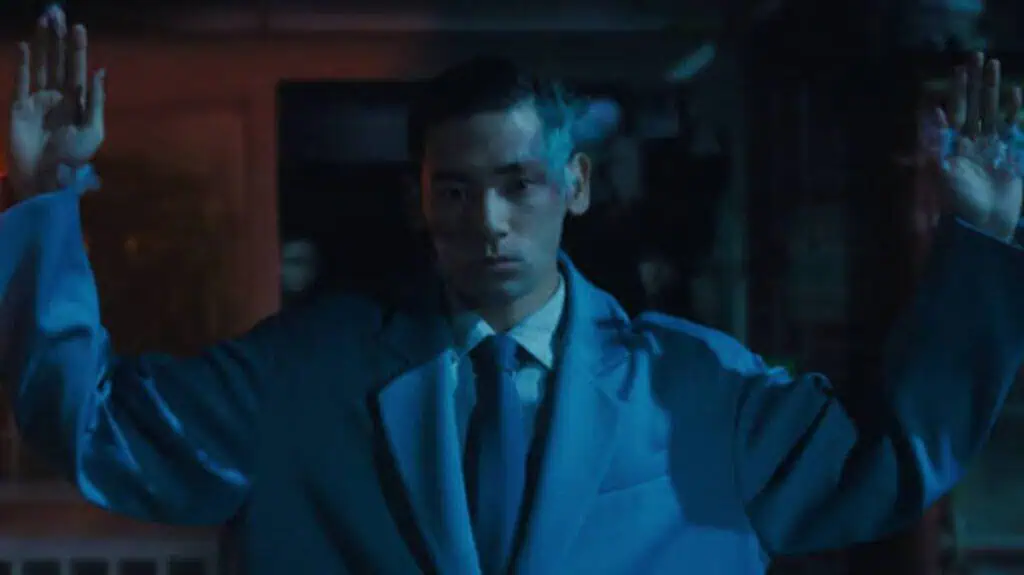
This is apparently Uta’s acting debut. That information makes his performance here essentially inexplicable by conventional logic. As the Human Vapor, both in the pre-transformation flashback sequences and in the cold, calculating present-day version, Uta delivers a performance that is simultaneously terrifying, elusive, and heartfelt.
The cold register he maintains as the transformed killer never tips into one-note menace; there is always something leaking through the edges, some residual human signal beneath the gas. His physical transformation sequences, when he disperses into vapor on screen, are among the series’ most unnerving images, and the way Uta plays the moment just before and just after each transformation carries genuine craft. For a debut performance in a lead role of this complexity, it is remarkable.
Shun Oguri as Detective Kenji Okamoto
Oguri is one of Japan’s most respected actors, and he brings exactly the kind of anchoring professional solidity the series needs in its investigative lead. Okamoto is fierce and undeterred, a detective who follows the case wherever it goes, including to places that implicate the systems he represents. Oguri gives him enough humanity to function as a moral compass for the series without making him a simplistic hero. His scenes with Yu Aoi are the series’s best dialogue sequences.
Yu Aoi as Kiyoko Kono
The investigative journalist character is the series’s other point-of-view anchor, and Yu Aoi brings her to life with an intelligence and drive that make Kiyoko one of the most compelling journalist characters in recent genre television. She is fierce, undeterred, and willing to pursue the truth into territory that is professionally and personally dangerous. Her scenes with the Human Vapor, when they occur, are the series’s most emotionally charged sequences.
Kento Hayashi and Suzu Hirose as the Sibling Content Creators
The online content creator siblings represent the series’ most self-consciously contemporary layer, a commentary on how social media and viral content interact with real criminal investigation. Both actors are committed and capable. The issue is that their episode, the one dedicated to establishing them and their role in the larger mystery, runs longer than it needs to and is less tightly constructed than the rest of the series. In the episodes where they are integrated into the main investigative thread, they work. As the subjects of a standalone episode, they are slightly too much.
Yutaka Takenouchi
The supporting cast delivers throughout, with Takenouchi providing pivotal weight in the series’ conspiracy layer. His role is better experienced than summarized, but he represents the kind of institutional authority figure the series is most interested in indicting, someone who should have intervened, did not, and whose choices form part of the chain that created the Human Vapor.
Human Vapor Direction: Shinzo Katayama’s Visual Language
Katayama directs Human Vapor with a command of tone and visual grammar that keeps eight episodes consistently atmospheric without sacrificing pace. The series never settles into the kind of visual monotony that undermines streaming drama; each episode has a distinct tonal emphasis that reflects its position in the mystery’s unfolding, and the shift between present-day investigation and past flashback is handled with enough visual distinction that the timeline transitions never disorient.
The action sequences and chase scenes are the director’s weakest moments; a handful of decisions in these sequences do not fully land logically, and the choreography is occasionally less coherent than the series’ dramatic material. This is minor in the overall context. The series is fundamentally a mystery thriller, not an action vehicle, and the dramatic scenes, conversations, confrontations, and revelations are directed with precision and genuine emotional intelligence.
The balance of tone across the series is one of its most impressive achievements: Human Vapor is dark without being nihilistic, morally ambiguous without becoming relativistic, and emotionally heavy without losing the propulsive mystery-thriller energy that makes it compulsively watchable.
Human Vapor Visual Effects: Gritty, Unsettling, and Impressively Non-Campy
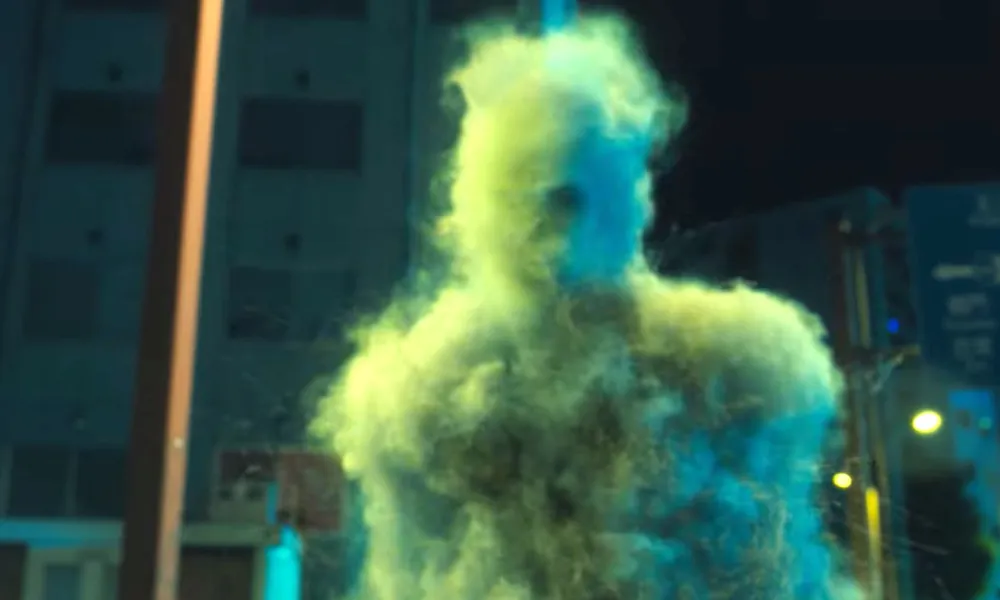
The visual effects work in Human Vapor is the series’s most technically impressive element and one of its most important creative choices. A show about a man who transforms into gas could easily tip into camp; the concept is inherently unstable, and cheap or poorly conceived VFX would destroy the premise entirely.
The series avoids this completely. When the Human Vapor transforms, the effect is gritty rather than slick; there is a physical, almost biological quality to the transformation that grounds it in the thriller register rather than the superhero one. The gas has texture and movement that feel genuinely threatening. The kill sequences, in which the vapor enters a victim’s body, are the series’s most unnerving visual set pieces, designed to produce chills through implication and suggestion as much as direct depiction.
The VFX quality across eight episodes remains consistent, which matters more than in a feature film; a single weak effects shot can undermine the premise’s credibility, and Human Vapor does not have weak shots. The production investment in making the supernatural element feel grounded and real is visible in every transformation sequence.
Human Vapor Screenplay Analysis: What Yeon Sang-ho and Ryu Yong-jae Built
Yeon Sang-ho’s fingerprints are all over the structural DNA of Human Vapor in ways that viewers familiar with his work on Train to Busan and its sequel will recognize: the specific interest in systemic failure as a driver of horror, the commitment to emotional weight in what could be purely genre material, the refusal to let any character be simply a type.
The screenplay’s primary structural achievement is the flashback management. In a mystery series where the audience is gradually learning who the Human Vapor was before his transformation, the temptation is to over-deploy the past timeline, to spend so much time building sympathy that the present-day horror loses its edge. Human Vapor calibrates this exactly right. The past sequences are given enough space to develop emotional investment without overwhelming the investigative present.
The mystery’s moving components, and there are many, are all ultimately connected, which is the most demanding thing a conspiracy thriller can promise its audience. The series delivers on that promise. The revelations in the final episodes recontextualize earlier scenes in ways that reward attentive watching and that generate the kind of retrospective coherence that distinguishes well-plotted serialized fiction from the kind that makes things up as it goes.
The show does stir strong audience reactions, particularly around its themes of institutional failure and abandonment. This is intentional. The screenplay is not interested in easy villains or comfortable resolutions. It wants you to sit with the discomfort of a system that created something it cannot contain.
How Human Vapor Compares to Other Netflix International Thrillers
| Show | Country | Rating |
|---|---|---|
| Squid Game (Season 1) | South Korea | ★★★★★ (5/5) |
| Dark (Season 1) | Germany | ★★★★★ (5/5) |
| Money Heist (Season 1-2) | Spain | ★★★★½ (4.5/5) |
| Human Vapor (2026) | Japan / South Korea | ★★★★½ (4.5/5) |
| All of Us Are Dead | South Korea | ★★★★☆ (4/5) |
| Alice in Borderland | Japan | ★★★★☆ (4/5) |
Human Vapor enters the upper tier of Netflix international thriller content, not quite at the generational level of Squid Game Season 1 or Dark, but comfortably alongside Money Heist in terms of ambition, execution, and the capacity to cross language barriers through sheer quality of storytelling. It is significantly more complex than Alice in Borderland, which occupies similar J-sci-fi territory on Netflix, and benefits from the additional emotional and thematic sophistication that the Korean screenwriters bring to the Japanese premise.
What Human Vapor Gets Right
The villain’s humanity. The series never lets the Human Vapor become simply a monster. The gradual revelation of what he was before the transformation, and what created him, is handled with genuine moral intelligence and emotional weight.
The VFX. Gritty, consistent, and genuinely unsettling. The transformation sequences are among the year’s best visual effects work in streaming television.
The international collaboration. The combination of Japanese direction and cast with Korean screenwriting is not just a co-production convenience. The two creative traditions are genuinely complementary here, and the result is something neither country might have produced alone.
The pacing and tone balance. Eight episodes with consistent atmospheric weight, no significant dead patches, and a flashback structure that enhances rather than interrupts the main narrative.
Uta’s debut performance. For a first-time actor in a lead role of this emotional and physical complexity, it is an extraordinary achievement.
The thematic ambition. A show willing to say something substantive about systemic corruption and institutional abandonment, using genre mechanics as the delivery system for serious ideas.
What Could Be Better
The sibling content creator episode. The standalone episode dedicated to establishing Kento Hayashi and Suzu Hirose’s characters runs longer than its material justifies. The musical post-credits segment is charming, but underscores that the episode needed trimming rather than extending. In a series this precisely calibrated elsewhere, this episode stands out as the one place where the editorial discipline wavers.
Some action sequence logic. A handful of decisions in the chase and action sequences do not fully cohere, characters do things that serve the scene rather than their established intelligence, and the choreography in a few sequences is less logically grounded than the dramatic material surrounding it. These moments are minor in the context of eight episodes, but are noticeable.
Human Vapor Pros & Cons
✓ Pros
- Uta’s debut performance as the Human Vapor is genuinely extraordinary
- VFX is gritty, consistent, and genuinely unsettling, never campy
- Moral complexity around the villain elevates the show above genre conventions
- Thematic depth: systemic corruption, injustice, and abandonment handled with intelligence
- Excellent Japan-South Korea creative collaboration, the best of both traditions
- An eight-episode structure is exactly the right length
- Flashback timeline is calibrated precisely, and builds emotion without losing momentum
- All four lead performances are excellent
- Mystery’s moving parts are all genuinely connected, and the ending rewards attentive watching
- Shinzo Katayama’s direction is tonally consistent and atmospherically commanding
✗ Cons
- The sibling content creator episode is the series’ pacing low point, bloated and slightly dispensable
- Some action sequences and chase scene logic do not fully cohere
- Viewers who came for straightforward sci-fi action will need to adjust to the series’ actual emphasis on mystery and character drama
Is Human Vapor Worth Watching?
Yes, unequivocally, for audiences who engage with subtitled international drama. Human Vapor is the kind of series that reminds you why streaming platform international acquisitions matter: a co-production that neither Japan nor South Korea might have created independently, combining Japanese atmospheric direction with Korean structural and emotional intelligence, delivering something genuinely distinctive in both premise and execution.
The show is not comfortable viewing. It is dark, emotionally demanding, and morally uncomfortable in ways that are clearly intentional. It asks you to feel sympathy for a man who kills people on live television, not because it is excusing him, but because it is insisting on the full complexity of how someone becomes that. Viewers willing to engage with that complexity will find Human Vapor to be one of the best new shows of 2026.
Human Vapor Netflix Rating: What Audiences and Critics Are Saying
The series carries a reviewer rating of 4.5 out of 5, reflecting strong critical consensus around its performances, VFX, thematic ambition, and the quality of the Japan-South Korea creative collaboration. The single area of consistent minor criticism is the bloated content creator episode, which most reviews flag without treating as a significant overall deficit.
Audience response, based on early viewer reactions, has been enthusiastically positive, particularly for Uta’s debut performance and the series’s emotional and moral complexity. The supernatural premise draws in viewers expecting genre thrills; the depth of the writing and character work is what retains them and drives word of mouth.
Where to Watch Human Vapor?
Human Vapor is exclusively available on Netflix globally. All eight episodes are available at the premiere. The series is in Japanese with subtitle options available in all major Netflix markets. No other streaming platform carries the series.

Final Verdict
| Category | Score |
|---|---|
| Story / Screenplay | ★★★★★ |
| Direction | ★★★★☆ |
| Performances | ★★★★★ |
| Visual Effects | ★★★★★ |
| Pacing / Structure | ★★★★☆ |
| Thematic Depth | ★★★★★ |
| Emotional Resonance | ★★★★★ |
| Rewatchability | ★★★★☆ |
| Overall | ★★★★½ (4.5/5) |
Human Vapor is what happens when a high-concept sci-fi premise is placed in the hands of writers who care more about what it means than what it looks like. A man who turns into gas is a comic book premise. What Yeon Sang-ho and Ryu Yong-jae have made of it is something closer to tragedy, a story about the specific human cost of systematic failure, told through the conventions of a thriller but with the moral seriousness of genuine drama. Director Shinzo Katayama gives it a visual register worthy of the writing. Uta gives it a face that will stay with you. Watch it.
If Hungry left you wanting more creature-feature thrills, don’t miss our reviews of Jackass: Best and Last, Hungry, and The Invite, where we break down everything from unforgettable monster attacks to shocking endings and standout performances. At NexaFeed, we’re always covering the latest horror movies, creature features, Hollywood blockbusters, streaming releases, and hidden gems, so there’s always something new to add to your watchlist.
Human Vapor Frequently Asked Questions
Q. What is Human Vapor about?
Ans. Human Vapor is a Netflix sci-fi thriller series from Japan and South Korea in which a man with the ability to transform his body into gas begins killing people and announcing his murders in advance, seemingly mocking authorities who cannot stop him. As Detective Kenji Okamoto and journalist Kiyoko Kono close in, the investigation reveals a conspiracy rooted in systemic injustice and institutional failure that explains, without excusing, what created the Human Vapor. The series runs eight episodes and is available on Netflix globally.
Q. What is the Human Vapor Netflix rating?
Ans. Human Vapor receives a rating of 4.5 out of 5 stars from NexaFeed. It is one of the best international series on Netflix in 2026. The series’ strengths, a debut performance of extraordinary quality, gritty and consistent VFX, moral complexity in its villain, and thematic depth around systemic corruption, outweigh its minor weaknesses, primarily a bloated episode involving the content creator siblings.
Q. How many episodes does Human Vapor have on Netflix?
Ans. Human Vapor has eight episodes on Netflix. All eight episodes are available at premiere, making it suitable for binge-watching. The episode introducing the content creator siblings has been noted as the series’ weakest in terms of pacing, though this is a minor issue in the context of the full eight-episode run.
Q. Who plays the Human Vapor in the Netflix series?
Ans. The Human Vapor is played by Uta, reportedly in his acting debut. His performance has been one of the most praised elements of the series: cold, terrifying, elusive, and surprisingly heartfelt in the flashback sequences. For a first-time actor in a lead role of this complexity, the performance is considered extraordinary by early reviewers.
Q. Is Human Vapor based on a true story?
Ans. No. Human Vapor is based on a 1960 Japanese science fiction film of the same title (The Human Vapor, directed by Ishiro Honda). The 2026 Netflix series is a modernized adaptation of that source material. The premise, a man who can transform his body into gas, is fictional science fiction.
Q. Is Human Vapor in Japanese or Korean?
Ans. Human Vapor is primarily in Japanese. The series is a Japan-South Korea co-production: the director (Shinzo Katayama) and cast are Japanese, while the screenwriters (Yeon Sang-ho and Ryu Yong-jae) are South Korean. Netflix provides subtitles in all major languages.
Q. Who are the screenwriters of Human Vapor?
Ans. Human Vapor is written by Yeon Sang-ho and Ryu Yong-jae. Yeon Sang-ho is best known internationally for writing and directing Train to Busan (2016), as well as its sequel Peninsula and the Netflix series Hellbound. His involvement explains the screenplay’s structural sophistication and emotional weight.
Q. Is Human Vapor suitable for all audiences?
Ans. Human Vapor is not suitable for young children or audiences sensitive to violent content. The series contains scenes of people being killed in disturbing ways (including on live television), dark themes of systemic corruption and personal tragedy, and moral complexity that requires mature engagement. It is recommended for adult audiences comfortable with dark, emotionally demanding international thriller content.
Human Vapor is now streaming on Netflix globally. All 8 episodes are available. In Japanese with subtitles.