Stranger Things Season 5 Volume 2 Ending Explained: I didn’t jump up cheering when Volume 2 ended. I didn’t feel satisfied either. What I felt was… heavy. That strange, quiet pressure you get when a story stops right before something irreversible happens. Stranger Things Season 5 Volume 2 isn’t trying to wow you with nonstop action or flashy reveals. It’s doing something riskier. It’s tightening the knot.
Everything in these episodes feels like it’s leaning forward. Characters. Themes. Even time itself. This isn’t a victory lap. It’s a long walk toward the edge. And the closer you look, the more you realize this season isn’t really about Vecna at all.
This Season Isn’t About Power — It’s About Control
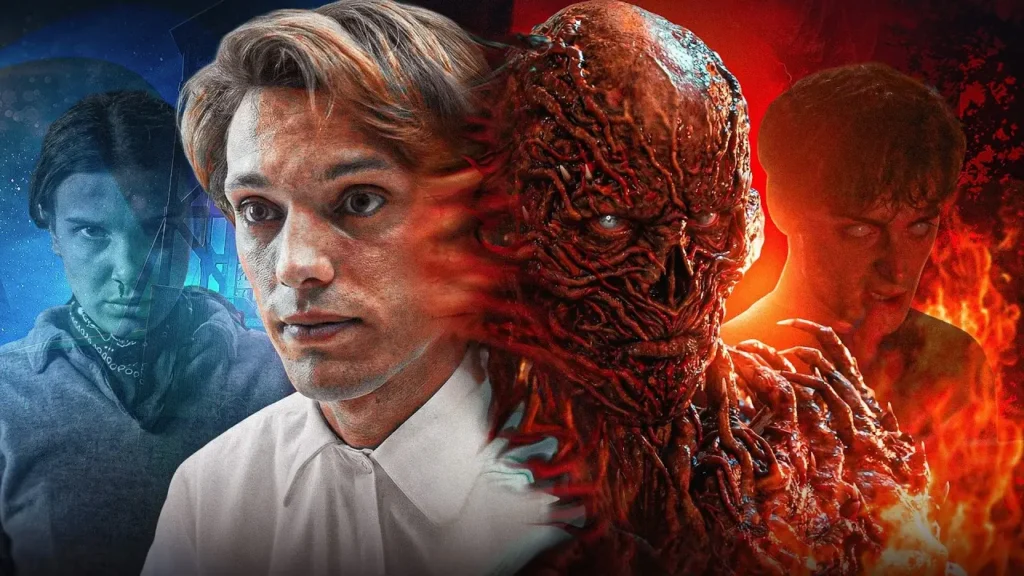
Let’s start with Vecna. On the surface, his plan seems familiar: merge worlds, reshape reality, rule what’s left. We’ve seen versions of this before. But Volume 2 quietly reframes something crucial. Vecna doesn’t want domination.
He wants order. He hates time. He hates randomness. He hates the idea that life unfolds in ways he can’t dictate. That’s why clocks, cycles, dates, and patterns dominate his worldview. Everything he does is about imposing structure on chaos. That’s also why children matter so much to him.
Children are moldable. Vulnerable. Open. They’re not just victims. They’re vessels.
Will Byers Was Never “Just the Kid Who Went Missing.”
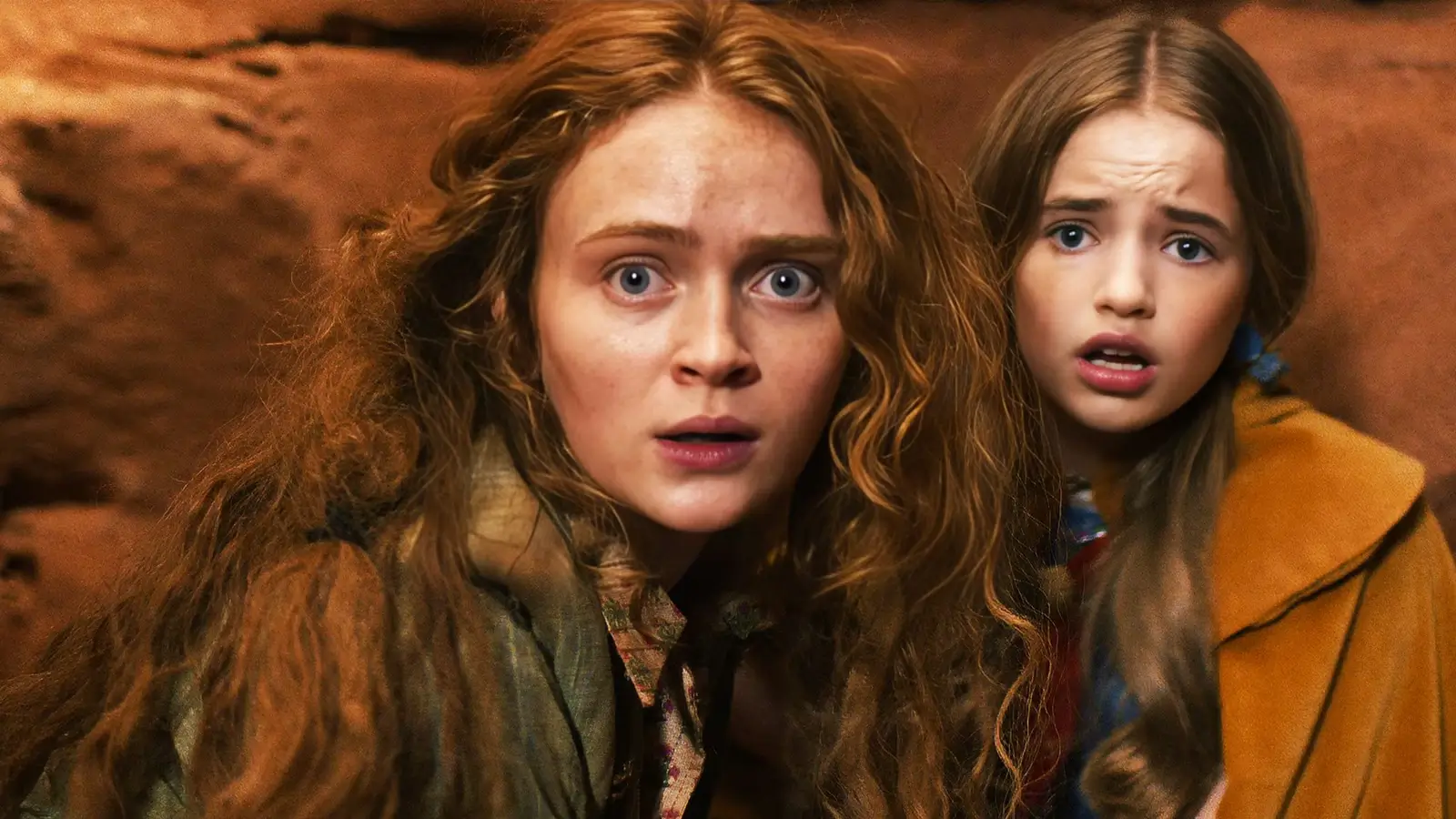
Here’s the thing that really landed for me: Will’s story finally makes sense in full. From season one, Will has always been connected to the Upside Down in a way no one else is. Not like Eleven. Not like Max. Will didn’t just survive the Upside Down.
He absorbed it. Volume 2 confirms that Will isn’t creating power—he’s siphoning it. That distinction matters. He’s not a source. He’s a conduit. And that’s why Vecna sees him as both weak and essential.
But here’s the irony: Vecna misunderstands Will completely. Vecna believes strength comes from isolation. From cutting ties. From standing alone above everyone else. Will’s strength comes from the opposite. His survival isn’t tied to anger or revenge. It’s tied to memory. Love. Identity. The things Vecna actively rejects. And that’s why Will terrifies him.
The Upside Down Is Not What We Thought It Was
For years, the Upside Down felt like a shadow version of Hawkins—a corrupted reflection. Volume 2 finally clears that up. It’s not a mirror. It’s a bridge. The Upside Down connects the real world to something older and far more dangerous: what the show now strongly implies is Dimension X, or the Abyss.
A place that existed long before Hawkins, before Henry Creel, before humans ever tried to name it. That massive organic barrier—the “meat wall”—isn’t a boundary. It’s scaffolding. It’s what holds the bridge together. And Vecna’s plan isn’t to cross it. It’s to erase the difference between worlds entirely.
Is Vecna Even the Real Villain?
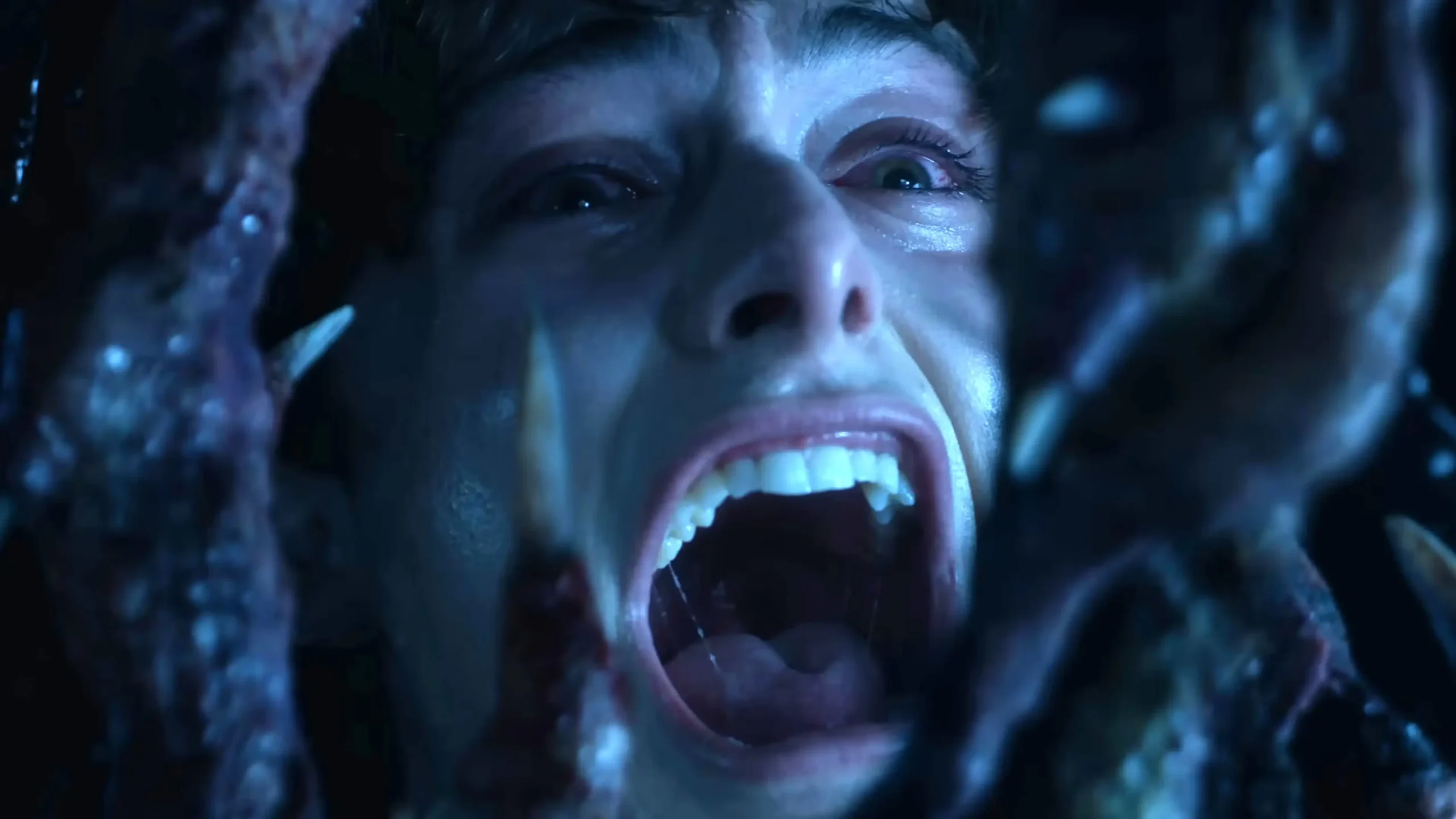
This is where things get uncomfortable. The show drops just enough information to make one theory impossible to ignore: Vecna might not be in control at all. The Mind Flayer particles—the living, hive-like intelligence from the Abyss—may have shaped Henry long before he ever shaped them. His exposure didn’t create a monster. It activated one.
Henry didn’t invent the darkness. He was chosen by it. And that changes everything. If Vecna is just a mouthpiece for something older, then killing him won’t end the threat. It’ll only silence one voice.
Why Time Keeps Repeating (And Why November 6 Matters)
Stranger Things has always played with time, but Season 5 turns it into a weapon. Look at the pattern:
- 1959 – Henry’s family is murdered
- 1983 – Will disappears
- 1987 – Vecna attempts the merge
Twenty-four years apart. Twenty-four hours in a day. Twelve hours on a clock face. Twelve children on pillars. Vecna isn’t just attacking Hawkins. He’s trying to complete a cycle. To close a loop that started when he was a child. Time, to him, is a prison. And the only escape is breaking reality itself.
The Kids Aren’t the Future — They’re the Lock
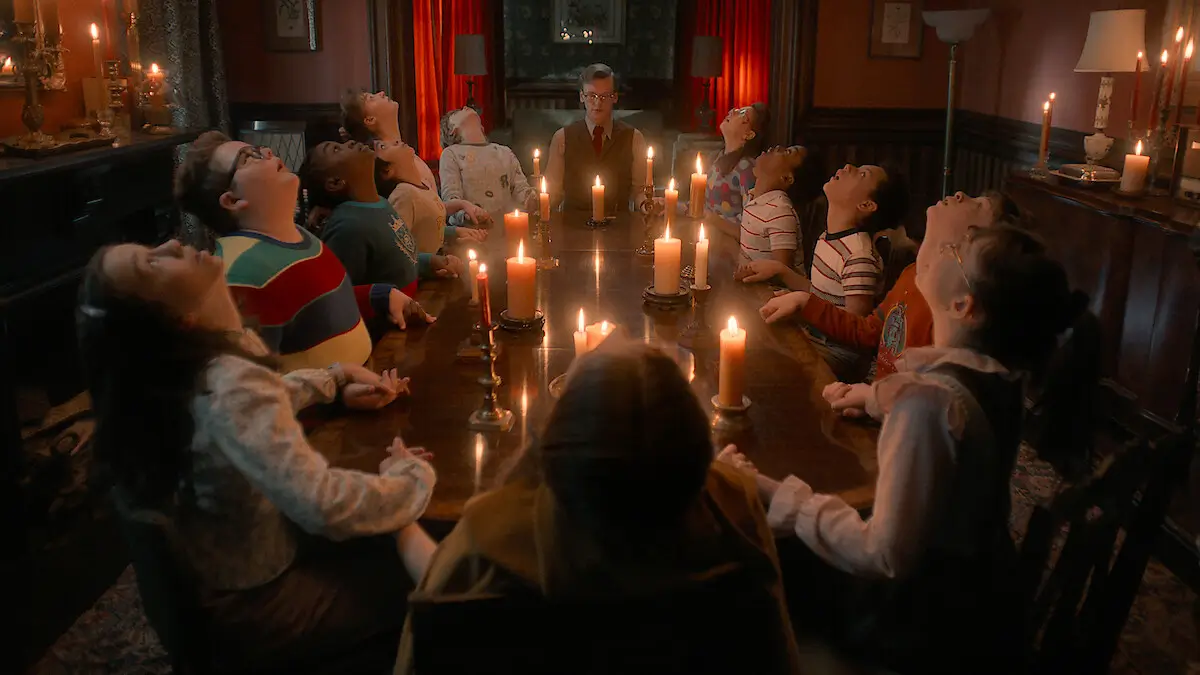
The twelve abducted children aren’t random. They’re structural. Each one strengthens the bridge between worlds. This is where Dustin’s wormhole theory stops being a fun science analogy and starts becoming terrifyingly literal.
The Upside Down is a stabilized wormhole. The children act as anchors. Exotic matter—something physics barely understands—is what keeps it open. Destroy the anchors, and the bridge collapses.
But here’s the catch: Destroying the bridge might mean destroying what’s holding people inside it.
Also Read: Stranger Things Season 5 Volume 2 Review: I Loved It… But Something Felt Off
Operation Beanstalk Is Brilliant — And Absolutely Going to Break
Let’s talk about the plan. On paper, it’s classic Stranger Things chaos:
- Let the worlds align
- Use a radio tower as a ladder
- Hack Vecna’s mind
- Extract the kids
- Blow the bridge
It’s clever. It’s desperate. It’s exactly the kind of plan that works… until it doesn’t. Two things make me deeply uneasy:
- Will stays behind.
That’s not caution. That’s foreshadowing. - The bomb is treated like a backup plan.
Stranger Things never lets the backup plan work cleanly.
And then there’s Hopper’s unused explosive vest. The show didn’t linger on it by accident.
Hopper’s Story Feels Like It’s Heading Somewhere Final
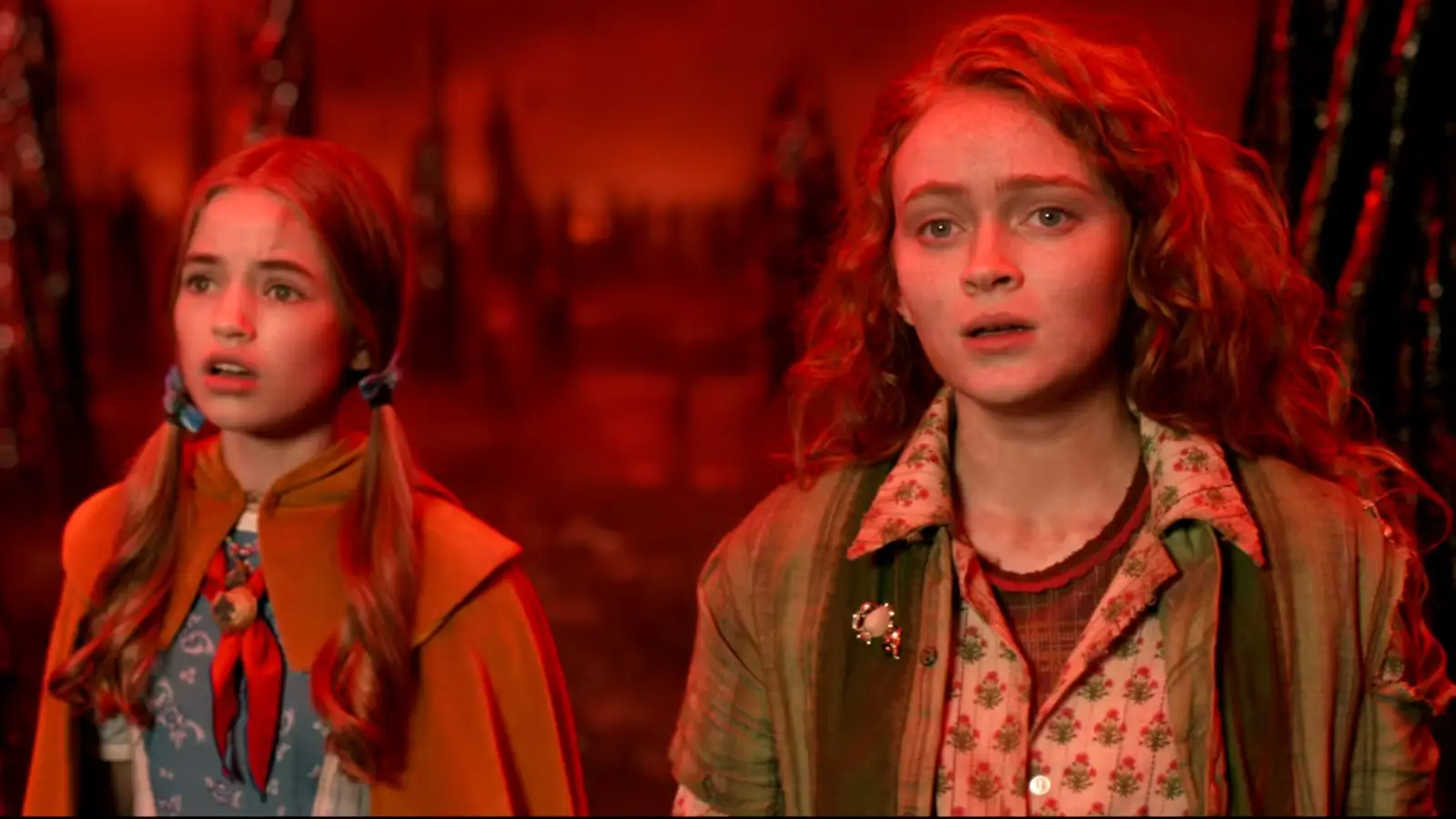
Hopper has always lived with guilt. Losing Sarah broke him. Saving Eleven gave him purpose—but not peace. Volume 2 subtly positions him back into the role of a protector who might have to choose between survival and sacrifice.
If Hopper gives his life to save Eleven, it wouldn’t feel random. It would feel tragically complete. And I hate how much sense that makes.
Max, Holly, and the Real Meaning of “Hero”
One of the smartest things Volume 2 does is redefine heroism. Holly believes she’s weak. That she freezes. That she fails. But the show quietly proves the opposite. She acts when she’s scared. She trusts others. She keeps going when she shouldn’t.
That’s bravery—not fearlessness. Breaking the “hero” figurine isn’t symbolic fluff. It’s the show saying this out loud: You don’t become heroic because of objects, powers, or destiny. You become heroic because you choose to act anyway.
Love Keeps Winning — And Vecna Still Doesn’t Understand Why
Every major survival moment in this series comes back to connection:
- Max and Lucas
- Will and his family
- Eleven and her found family
Music isn’t magic. Objects aren’t magic. Powers aren’t magic. Memory is. Love is. Vecna sees these things as weaknesses. That’s why he keeps losing.
What Happens to Eleven?
This is the question that hurts the most. Volume 2 plants a quiet, unsettling idea: even if Vecna is defeated, Eleven may never be free. Someone will always want her power. Someone will always hunt her.
The idea that she might choose distance—disappearing to protect the people she loves—feels heartbreakingly possible. Not death. Isolation. And that’s a very Stranger Things kind of ending.
Final Thoughts: This Feels Like Goodbye, Even Before It Is
Volume 2 doesn’t resolve much—and that’s intentional. It’s about acceptance. About realizing that saving the world doesn’t mean everything goes back to how it was. These characters are older now. Changed. Scarred.
And that’s why the ending matters so much. If Volume 3 gets this right—not just the spectacle, but the emotional truth—Stranger Things won’t just end as a great show. It’ll end as a story that grew up alongside its audience.
One episode left. And honestly? I’m not sure I’m ready to let it go.