

Canon EOS R6 Mark III Review: If you’ve been keeping an eye on the mirrorless market lately, you probably know that the real competition isn’t happening at the top with $6,000 pro bodies or the entry-level beginner kits. The real battlefield, where brands like Canon, Sony, and Nikon fight tooth and nail, is the mid-range enthusiast zone. That’s where you get cameras powerful enough for professionals yet affordable enough for serious hobbyists.
And right now, Canon just dropped a serious contender, the Canon EOS R6 Mark III.
Let’s break down what this camera brings to the table and whether it actually puts pressure on the Sony A7 IV and Nikon Z6 III.
Design & Handling — Familiar, But Refined
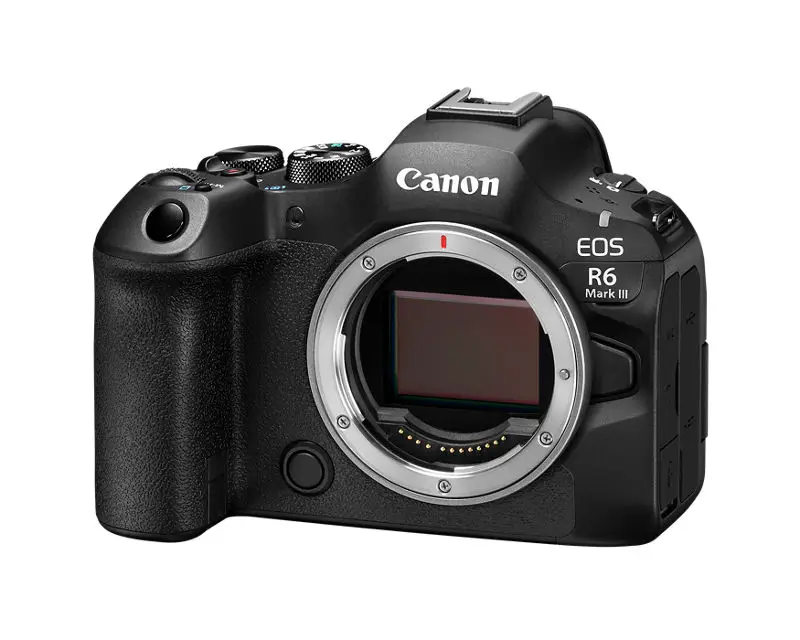
The first thing you notice when you pick up the R6 Mark III is how familiar it feels. It’s basically the R6 Mark II with some subtle but meaningful refinements. The grip is identical, deep, comfortable, and very Canon. The control layout feels natural, especially for anyone coming from another Canon mirrorless body.
You get dual card slots, one CFexpress Type B and one UHS-II SD, which is a smart move. It’s a solid setup for anyone shooting both stills and video. And yeah, Canon added support for the new LP-E6P battery, which gives slightly better life than the older packs. You can use older ones, but you’ll lose some features like Wi-Fi and advanced video modes.
Build quality? Exactly what you’d expect at this price point, solid, reliable, with that signature Canon ergonomics.
The Sensor — 32 Megapixels of Sweet Spot Magic
Canon’s put a brand-new 32-megapixel full-frame sensor inside the R6 Mark III. It’s not stacked, but it’s fast, fast enough that rolling shutter is minimal for a sensor of this resolution. This chip comes straight from Canon’s cinema line (the C50), which says a lot about its video chops.
Compared to the R6 Mark II’s 24MP sensor, this is a noticeable upgrade. It hits a really nice balance, enough resolution for detailed landscape and portrait work, but not so high that you choke your workflow with massive RAW files.
Burst shooting remains the same as before, 12fps mechanical and 40fps electronic, which is still lightning quick. You also get Canon’s new pre-capture burst mode, a trickle-down feature from their pro bodies that lets you grab moments just before you press the shutter.
Autofocus — Confident, Smart, and Dead Simple
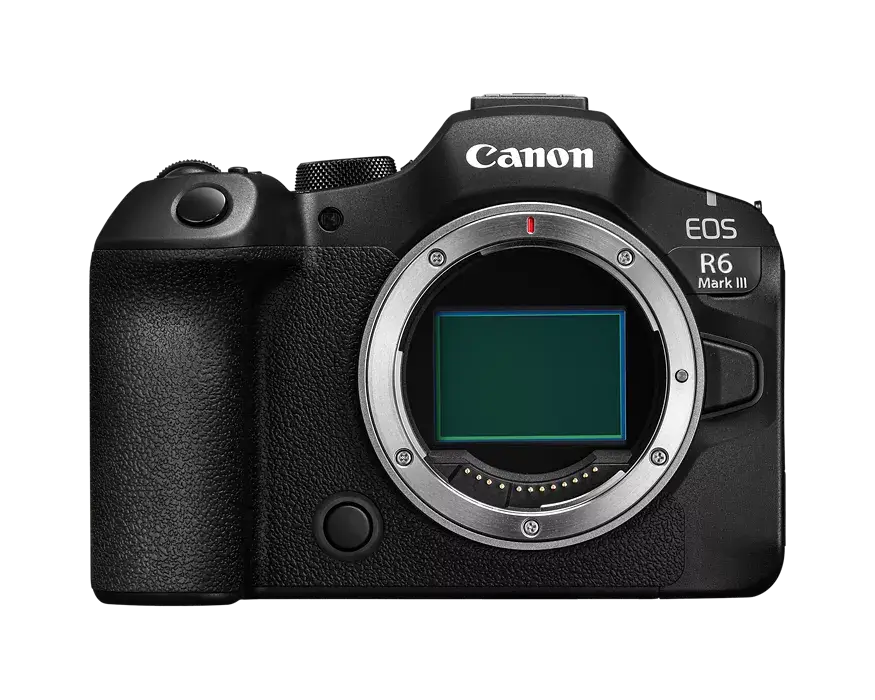
Canon’s autofocus system here is just… dependable. It tracks faces, eyes, animals, and vehicles with ease. You don’t have to fight with menus or endless AF area options; Canon keeps it simple, and it just works.
Whether I was tracking people or random objects, it stayed locked and sticky. It’s the kind of autofocus that fades into the background; you stop thinking about it, which is how you know it’s doing its job right.
Image Stabilization — Now Up to 8.5 Stops
Canon pushed the in-body stabilization to a claimed 8.5 stops. The R6 Mark II had 8 stops, so it’s a small improvement, but I’ll take it. If you’re using non-stabilized or adapted lenses, it makes a real difference in handheld shots and low light.
Video ( Canon EOS R6 Mark III )— The C50’s DNA Shows
If you shoot video, this camera is going to make you smile. The R6 Mark III borrows heavily from Canon’s C50 cinema camera, and it shows. You get full-size HDMI, waveform monitors, open-gate recording, and oversampled 4K up to 60p.
You can choose between regular 4K or “4K Fine” (which uses oversampling for more detail). The latter looks beautiful, crisp, rich, and full of texture.
Thermals? Surprisingly solid. Shooting in 4K Fine for over an hour didn’t trigger an overheat warning in my testing. Only when I pushed 4K 60 for extended takes did it shut down after around 28 minutes. For typical short clips, it’s perfectly fine.
Canon’s IBIS also shines in video mode, smooth and usable even when walking shots push it a bit.
Also Read: Apple Watch SE 3 Review: The Smartest Apple Watch for Most People (Seriously)
Image Quality & Dynamic Range In Canon EOS R6 Mark III
The files coming out of this sensor are sharp, clean, and have plenty of latitude for editing. Dynamic range is improved, and Canon’s color science, as always, gives skin tones that just look right.
Compared to the R6 Mark II, the dynamic range in mechanical shutter is roughly the same, but the electronic shutter now holds up better. You lose maybe a stop, which is totally workable.


Performance & Battery Life Of Canon EOS R6 Mark III
Buffer performance has doubled thanks to the CFexpress slot, over 300 JPEGs or 150 RAW+JPEGs before it slows down. The new battery easily clears 500 shots per charge, which is a nice step up.
In real-world use, this camera feels effortless. It never lags, never feels constrained, and it’s versatile enough to handle both high-end photo work and professional video projects.
How Canon EOS R6 Mark III Stacks Up
Here’s where things get interesting:
- vs Sony A7 IV: The A7 IV is still great, but it’s aging. Canon’s autofocus feels faster and more intuitive, and the R6 III’s sensor matches Sony’s resolution while scanning quickly.
- vs Nikon Z6 III: Nikon’s partially stacked sensor gives slightly faster bursts, but Canon wins on AF and color science.
- vs Canon R6 Mark II: $500 cheaper, yes, but the Mark III’s better sensor, video tools, battery, and buffer make it worth the extra spend.
Final Thoughts On Canon EOS R6 Mark III— The Most Balanced Camera in Its Class
After spending time with the Canon EOS R6 Mark III, here’s the takeaway:
It doesn’t reinvent the wheel, but it refines everything that mattered.
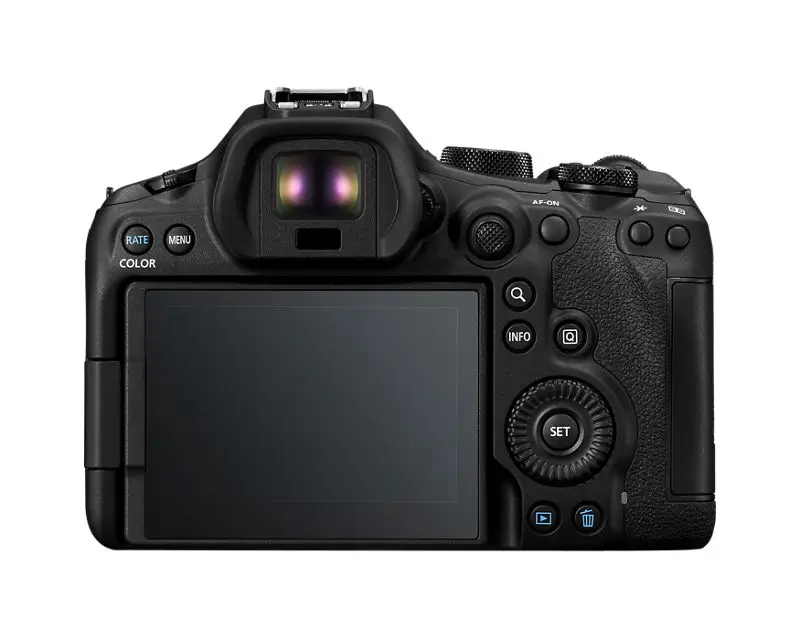
It’s fast, dependable, beautifully built, and nails both stills and video. It feels like Canon finally struck that perfect balance between power and practicality, the kind of camera that fits into any workflow without compromise.
Whether you’re a working professional who doesn’t want to lug a flagship body or an enthusiast ready to step up your game, the R6 Mark III is a camera that can truly do it all.
My Verdict:
⭐ Rating: 4.8 / 5 — Canon’s best hybrid camera yet in the mid-range lineup.