
Cashero Review: I finally finished **A Shop for Killers… wait, no — A Killer’s Shopping List… nope — this one’s Cashero (aka The series everyone online is arguing about). Eight episodes. No skipping. No background scrolling. I actually sat with it.
And honestly? I walked away entertained, confused, impressed, and annoyed, sometimes all in the same episode. Let me break this down the way I’d explain it to a friend who asked, “Is this worth my time or not?”
My Rating: 3.5/5
| Detail | Information |
|---|---|
| Series Title | Cashero |
| Original Language | Korean |
| Genre | Superhero, Action, Comedy, Romance, Fantasy |
| Total Episodes | 8 Episodes |
| Season | Season 1 |
| Episode Runtime | Approx. 45–55 minutes per episode |
| Story Status | Season 1 has a complete ending |
| Platform | Streaming (region-wise availability) |
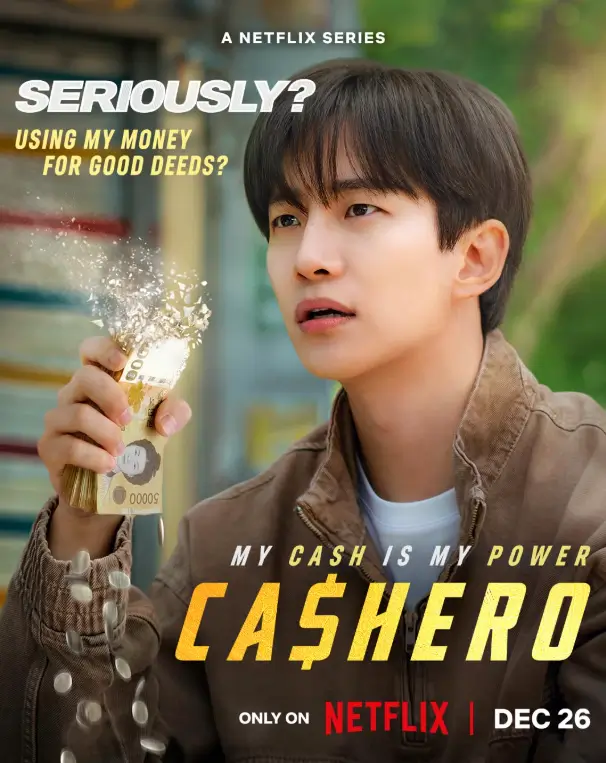
| Core Concept | A man gains superpowers that activate only when he spends real cash |
The Core Idea (And Why It Instantly Hooks You)
The premise is wild, and that’s why it works. Our main character suddenly gets superpowers. But there’s a catch. Every time he uses them, money disappears from his pocket. More cash = more power. No cash = you’re just a regular guy watching people die
Strength, speed, healing, everything is tied directly to how much physical money he’s carrying. Not credit. Not digital. Actual cash. At first, it sounds ridiculous. Then it starts making uncomfortable sense. If you’ve ever heard someone say, “money isn’t everything, this show quietly laughs in their face.
Here, money isn’t just comfort or security; it’s survival. It decides who lives, who saves others, and who collapses helplessly. And the Cashero series commits to that idea hard.
What I Loved (And Why It Kept Me Watching)
1. The Concept Is Fresh
Superhero stories are exhausted. We’ve seen every variation, trauma, responsibility, chosen ones, and multiverses. But tying power directly to spending money? That’s new. And they actually explore it instead of just using it as a gimmick. There are moments where the hero hesitates, not because he’s afraid, but because he’s calculating the cost. That tension works.
2. Twists, Twists, and More Twists
This Cashero show refuses to move in a straight line. Just when you think you understand who the villain is, nope. Just when you trust someone, double nope. Everyone has motives. Everyone hides something.
Some twists genuinely caught me off guard, especially in the later episodes. The show constantly pulls the rug just as you start getting comfortable.
3. Surprisingly Effective Action
No, this isn’t Marvel or DC-level spectacle, and it doesn’t try to be. But the action works for this story. The powers feel grounded, limited, and risky. Every fight costs something. That alone makes the action more engaging than half the CGI-heavy superhero content out there.
4. A Love Story That Actually Matters
I didn’t expect this, but the emotional core lands. The relationship isn’t just decoration. It affects decisions, risks, and consequences. And by Episode 8, that emotional thread becomes central to the biggest twist in the show.

The Viral Scenes (Yes, Those Scenes)
Let’s not pretend this didn’t blow up online. There are a few adult-leaning moments, nothing explicit, but heavily implied. One particular conversation about whether spending 50 million won could make everything stronger… yeah, you know exactly why that scene exploded on social media.
It’s awkward. It’s funny. It’s absurd. And it fits the show’s slightly unhinged tone. That said, not a family watch. Watch it solo first.
Also Read: Stranger Things Season 5 Volume 2 Ending Explained: Vecna’s Real Plan Is Terrifying
Where the Show Stumbles (And Sometimes Faceplants)
Now for the frustrating part.
1. The Writing Is… Messy
This is the Cashero show’s biggest weakness. After Episode 4, it sometimes feels like the writers weren’t sure who the real villain was. One episode says it’s this character. The next episode shifts the blame. Then suddenly someone else is pulling the strings. Instead of feeling layered, it starts feeling confused.
2. Villains With No Backstory
The Cashero show introduces multiple powered characters… and barely explains where their abilities come from. Why do they have powers? Who gave them? Why now? The show shrugs and moves on. That lack of depth hurts, especially when the concept itself had so much potential.
3. That Ending
Let’s talk about Episode 8. Some people will love it. Mature viewers might roll their eyes. There’s a tonal shift near the end that leans into silliness when the story really needed clarity. It doesn’t ruin the series, but it does stop it from being great.

The Good & Bad In Cashero
| What Works | What Doesn’t |
|---|---|
| Original money-based superpower concept | Weak, inconsistent writing |
| Strong lead performance | Poor villain development |
| Entertaining action moments | Confusing villain motivations |
| Engaging twists | Slightly silly ending |
| Emotional love story | Lore not fully explained |
Final Verdict (Who Should Watch Cashero?)
If you’re someone who:
- Enjoys Korean dramas
- Likes superhero stories with a twist
- Doesn’t mind flawed but fun storytelling
- Values entertainment over perfect writing
You’ll have a good time.
If you’re a hardcore plot purist who needs airtight logic, deep lore, and flawless character arcs, this will annoy you. For me? Despite the flaws, I was entertained. I stayed engaged. I finished it without forcing myself. That matters.
My Rating: 3.5/5
Not groundbreaking. Not garbage. Just a genuinely fun, chaotic, imperfect series that could’ve been amazing with better writing. If you’ve already watched Cashero, I’m curious, did the ending work for you, or did it lose you, too? Either way, this one’s definitely worth the conversation.