The Ballad of a Small Player Review: Another day at TIFF, another film from a director who rarely misses. Edward Berger, the mind behind All Quiet on the Western Front and last year’s Conclave, is back with his latest, The Ballad of a Small Player, based on Lawrence Osborne’s novel of the same name. And as someone who read the book and admired Berger’s last two films, I walked into this one with sky-high expectations.
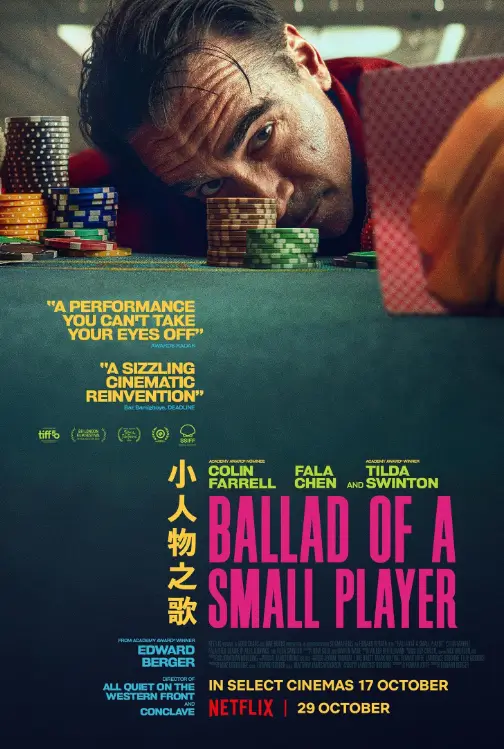
My Rating: 3.0/5
| Title | The Ballad of a Small Player |
|---|---|
| Director | Edward Berger |
| Based On | The Ballad of a Small Player by Lawrence Osborne |
| Genre | Drama / Thriller |
| Main Cast | Colin Farrell, Chik-Ka Lai, Alan K. Chang |
| Cinematography | James Friend |
| Runtime | 1h 41m |
| Language | English |
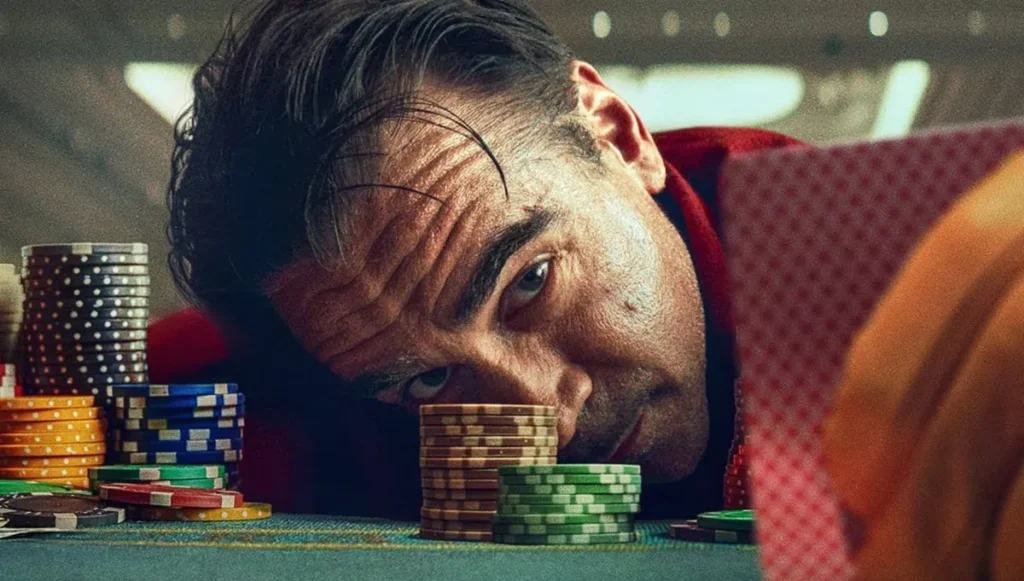
The setup is immediately intriguing: Colin Farrell plays Lord Doyle, a con man on the run who spends his nights drifting through the casinos of Macau, gambling away what’s left of his luck and sanity. He’s an Irishman pretending to be an upper-class British lord, a fraud hiding from his past and from himself. Farrell dives into the role like a feral dog, tearing through scenes with raw, desperate energy. There’s a moment where he’s shoveling food into his mouth, feeding this insatiable hunger that defines his character, the “hungry ghost” the story keeps circling back to. It’s one of those performances where you can’t look away, even when the film around him starts to wobble.
The Ballad of a Small Player looks incredible. Berger and cinematographer James Friend shoot Macau like a fever dream, drenched in neon, reflective surfaces, and chaos. The film’s visual style is intoxicating, full of bold camera work and vibrant compositions that echo The Wolf of Wall Street or even Baz Luhrmann’s Moulin Rouge! in their excess. It’s loud, it’s showy, and at times, it’s thrilling.
But the problem is, the story underneath gets lost in all that noise.
The book wasn’t plot-heavy, but it had mood, atmosphere, and quiet melancholy. Berger tries to fill that void with pure style, but the emotional center doesn’t land. Especially when the film introduces Da Ming (played by Faa Chin), a character who’s supposed to be Doyle’s salvation, his mirror, or maybe his redemption. But their scenes together just… don’t connect. It’s not the actors’ fault; both Farrell and Chin do their best, but it’s the direction. The movie never slows down long enough to let intimacy breathe.
I couldn’t help but imagine what a filmmaker like Celine Song (Past Lives) could’ve done with those moments, bringing stillness, vulnerability, and tension to the table. Berger, on the other hand, keeps everything at full volume. That works in the casino scenes, not so much when two broken souls are supposed to find meaning in each other.
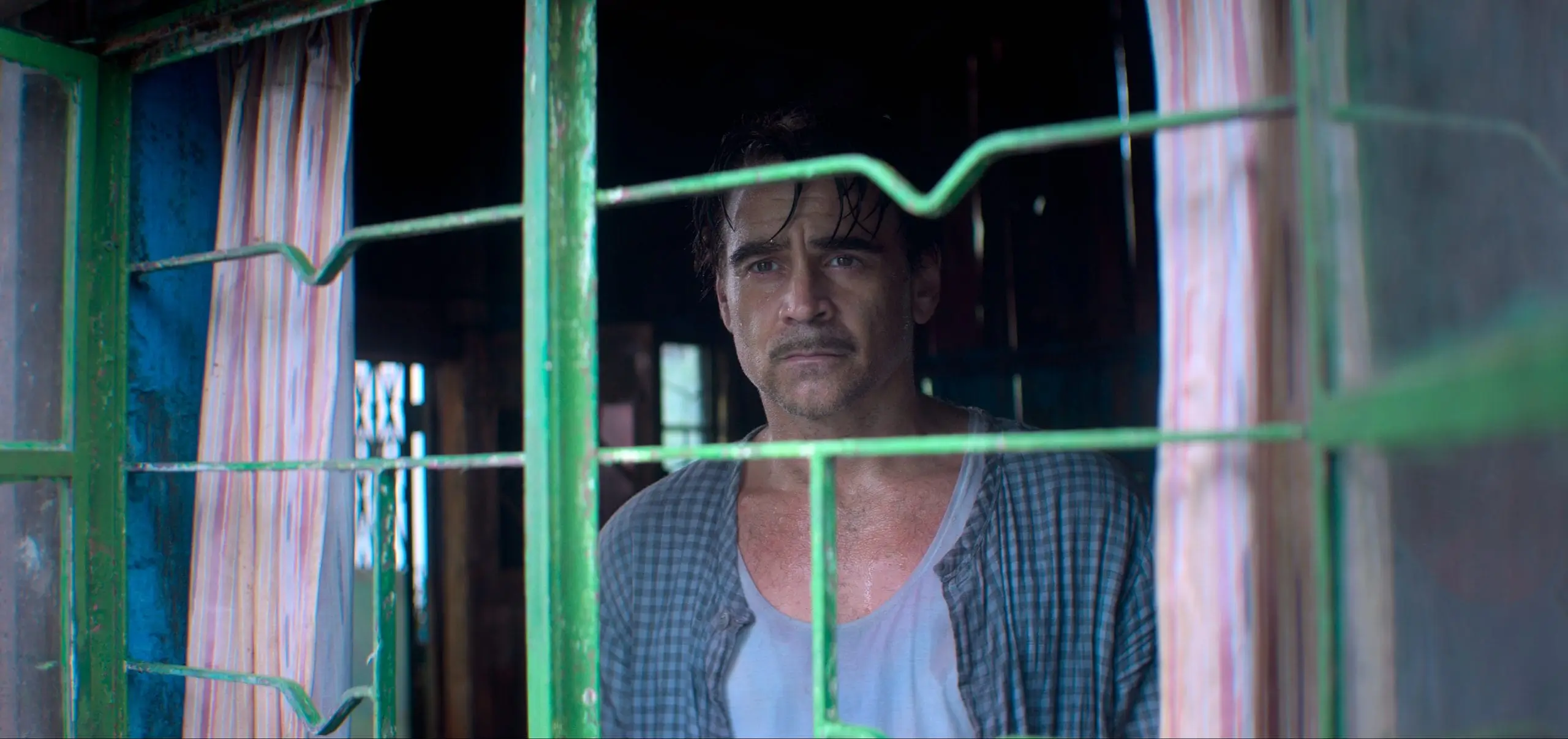
And that’s where the film misses the point of Osborne’s story. In the book, Macau isn’t just a backdrop; it’s alive, spiritual, and suffocating all at once. You can feel the humidity, the superstition, the ghosts that linger in every alleyway. The film, for all its polish, feels oddly detached from that world. It glows, but it doesn’t breathe.
Thematically, there’s gold buried in here, greed, addiction, the emptiness of never feeling satisfied. But the movie only scratches the surface. It’s the same problem Al Pacino described in Two for the Money: gamblers don’t play to win, they play to lose. It’s about chasing that moment of loss, the only time they actually feel something. That line should’ve been the heartbeat of this movie, but Berger doesn’t dig deep enough.
Now, don’t get me wrong, The Ballad of a Small Player isn’t a bad movie. It’s stylish, confident, and often mesmerizing to look at. But it’s also emotionally hollow. It wants to say something profound about addiction and identity, yet it keeps getting distracted by its own reflection.
By the end, I walked out impressed by the craft, but not moved by the story. The film had all the ingredients: a great actor, strong source material, and visual flair, but it left out the poetry.
Also Read: A House of Dynamite Ending Explained: What Really Happened When the Screen Went Black
Good and Bad in The Ballad of a Small Player
| What Works | What Doesn’t |
|---|---|
| Colin Farrell delivers a ferocious, layered performance. | Emotional depth between the leads never lands. |
| Stunning cinematography by James Friend — pure visual candy. | Too much style, not enough soul. |
| Macau’s neon chaos is beautifully realized. | Lacks the cultural texture and atmosphere of the novel. |
| Strong themes of addiction and identity beneath the surface. | Script strips away the poetic heart of the source material. |
| Bold direction in gambling scenes — full of energy and tension. | The quieter moments fall completely flat. |
Final Thoughts on The Ballad of a Small Player Review
The Ballad of a Small Player is a film that dazzles the eyes but not the heart. Edward Berger is still a filmmaker worth watching; few directors can shoot excess and obsession with this kind of control. But this time, his signature style smothers the subtlety the story needed.
Colin Farrell, though, is reason enough to watch. He throws himself into Lord Doyle with complete abandon, messy, desperate, and magnetic. He’s the film’s saving grace, even when the rest of it feels like a losing hand.
If you’re in it for the visual spectacle, you’ll have a good time. If you’re looking for the haunting, poetic experience of Osborne’s novel, you might walk away feeling a little empty, like Doyle himself, chasing a win that never comes.
Verdict: Beautifully shot, brilliantly acted, but emotionally thin. A stylish gamble that doesn’t quite pay off.
My Score: 3.0/5