
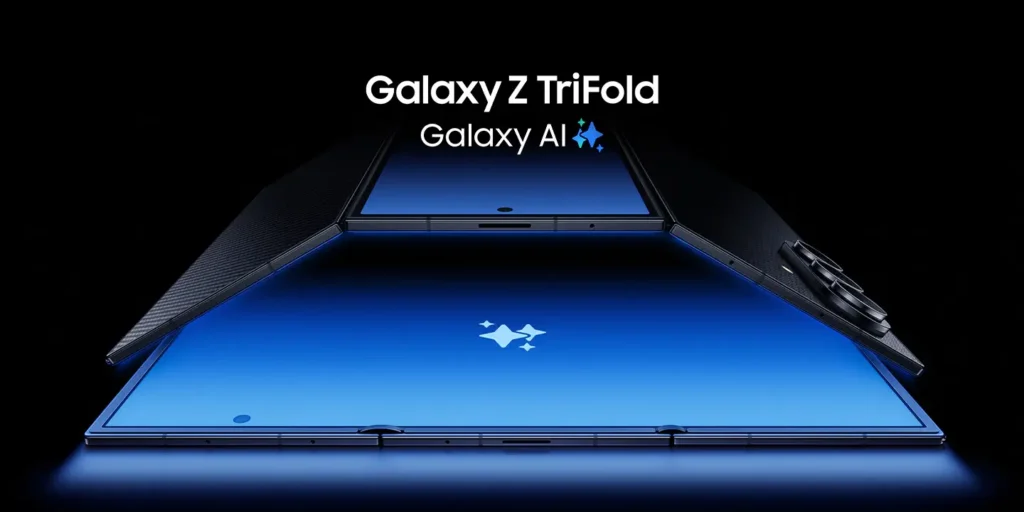
Samsung Galaxy Z Trifold Review: I walked into this expecting the Galaxy Z Trifold to be another cool-but-impractical concept device. You know—fun to play with for five minutes, then reality kicks in. But the more time I spent unfolding this insane double-hinge contraption, the more I started thinking… “Wait, I actually want this.”
Let’s start with the unboxing because Samsung clearly wanted this to feel special. The box is massive, like old-school “first-gen foldable” massive. Inside, you get a SIM tool, a USB-C cable, and a case that feels more like a polite suggestion than real protection. It barely covers the phone, but the little spine-like lip that hides the hinge is actually smart.
And then, shock of the century, you get a 45W charger. Samsung ditching chargers for “eco reasons”… except here. I’m not complaining, though. Most people don’t have a 45W Samsung brick lying around.
The Hardware in Samsung Galaxy Z Trifold: A Foldable Tank
From the outside, the Samsung Galaxy Z Trifold looks basically identical to the Z Fold 7. Same 6.5″ cover display, same bezel situation. But you pick it up once, and the illusion breaks instantly. This thing is heavy. We’re talking 309 grams, roughly 50% heavier than most foldables. And thick. Not “slightly thick.” Proper thick. Folded, it’s nowhere near passing as a normal phone.
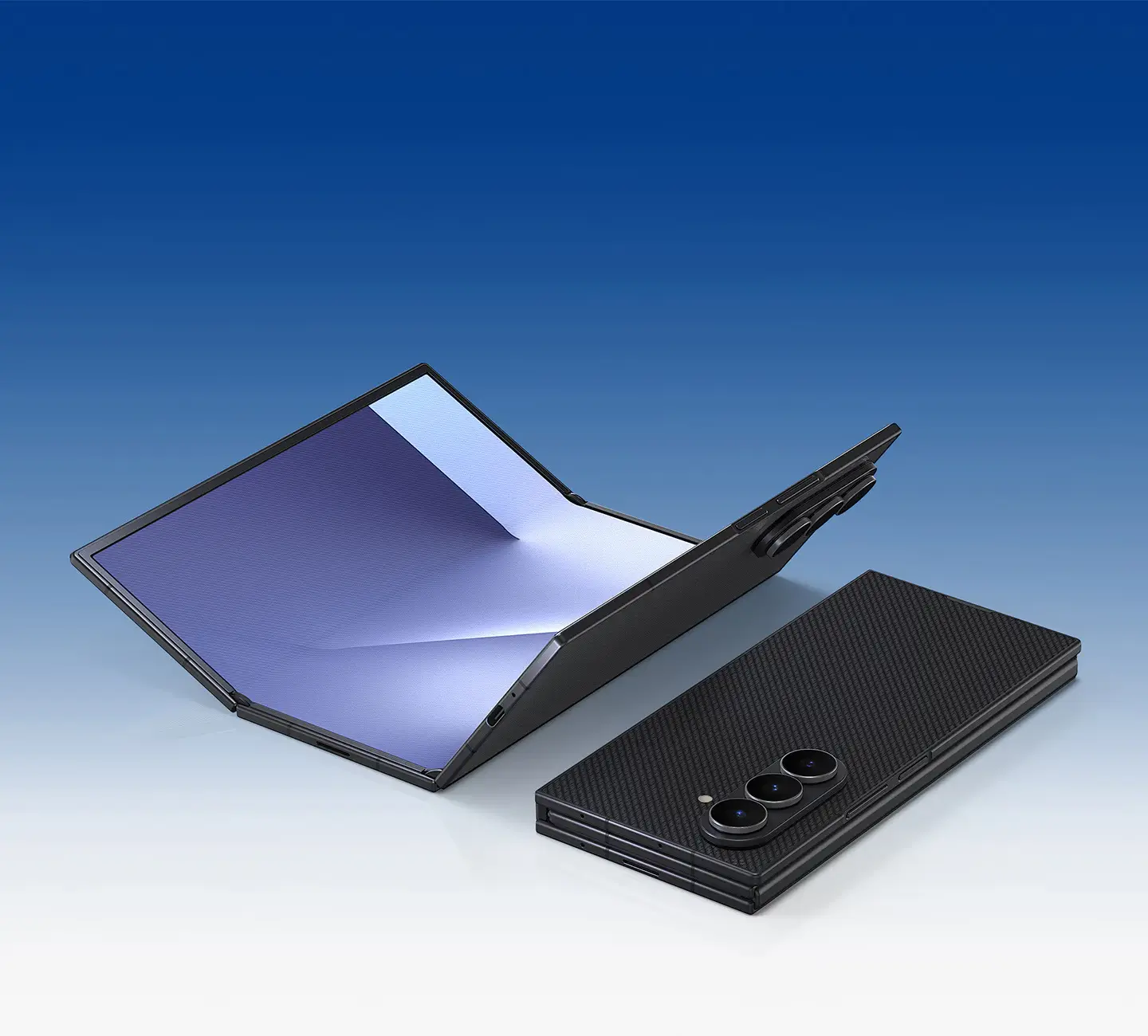
Now, opening it is where the magic and engineering come alive. Two layers fold out, then the middle pops slightly thanks to a hidden magnet, making it easier to grab. It feels weird for the first 20 minutes, then suddenly it’s second nature. And honestly? For something that folds twice, it feels absurdly solid.
The magnets snap confidently, the whole thing lies flat when fully opened, and you get a crazy thin 3.9 mm profile when it’s spread out. That’s thinner than any Samsung phone ever.
The Crease Problem… Doubled
But yeah, let’s talk creases. Because now you get two. Both are obvious the moment light hits the screen. If creases bother you on a normal foldable, just know: this is a whole new level.
Also, nobody is ready for this; the maintenance is brutal. The outer material is some fiberglass composite with a shiny, almost vinyl-like texture. It picks up fingerprints like it’s being paid for it.
All six surfaces smudge constantly. And the inner screen? One accident, one grain of dust, one wrong angle, and you’re offering thoughts and prayers. The protector is soft enough that leaning it against a vase left a deep scratch. A vase.
This is not a phone for casual people. This is a relationship.
Specs: Good Enough, Not Groundbreaking
Samsung didn’t go crazy with specs. Inside is the Snapdragon 8 Elite, not the newer Elite Gen 5, which some brands have already jumped to. It’s still fast—don’t worry—but not bleeding-edge.
You get 16GB RAM, 512GB storage, and the same camera setup as the Fold 7:
- 200MP main (excellent)
- 10MP 3x telephoto (mid)
- 12MP ultrawide (fine)
No special camera perks for the trifold form factor.
But the battery? That’s a win. Samsung squeezed in 5600mAh using three separate cells, one per panel. It charges at 45W wired, 15W wireless. For a device this thin, that’s impressive.
Still IP48 rated, fine for a foldable, not great compared to bar phones.
The Reason Samsung Galaxy Z Trifold Exists: The 10-Inch Tablet Display
This is where everything flips. Once you open the device, the screen transforms the experience. The UI doesn’t just scale, it changes. Apps actually behave like proper tablet apps, not stretched phone apps.
Examples:
- Files app: full directory on the left, subfolders on the right.
- Gallery: cleaner, more useful sidebar.
- Samsung Health: way more visible data at once.
- YouTube: you get suggestions + comments + the video, all without shrinking the playback window.
The 16:11 aspect ratio means you get a way bigger video experience too, almost 50% more usable space compared to the Fold 7. And yes, portrait mode on a tablet-sized display is fantastic for doomscrolling. The big win here is clarity: folded, it’s a phone. Unfolded, it’s a tablet. Not some awkward in-between.
Dex Mode: Now Actually Useful
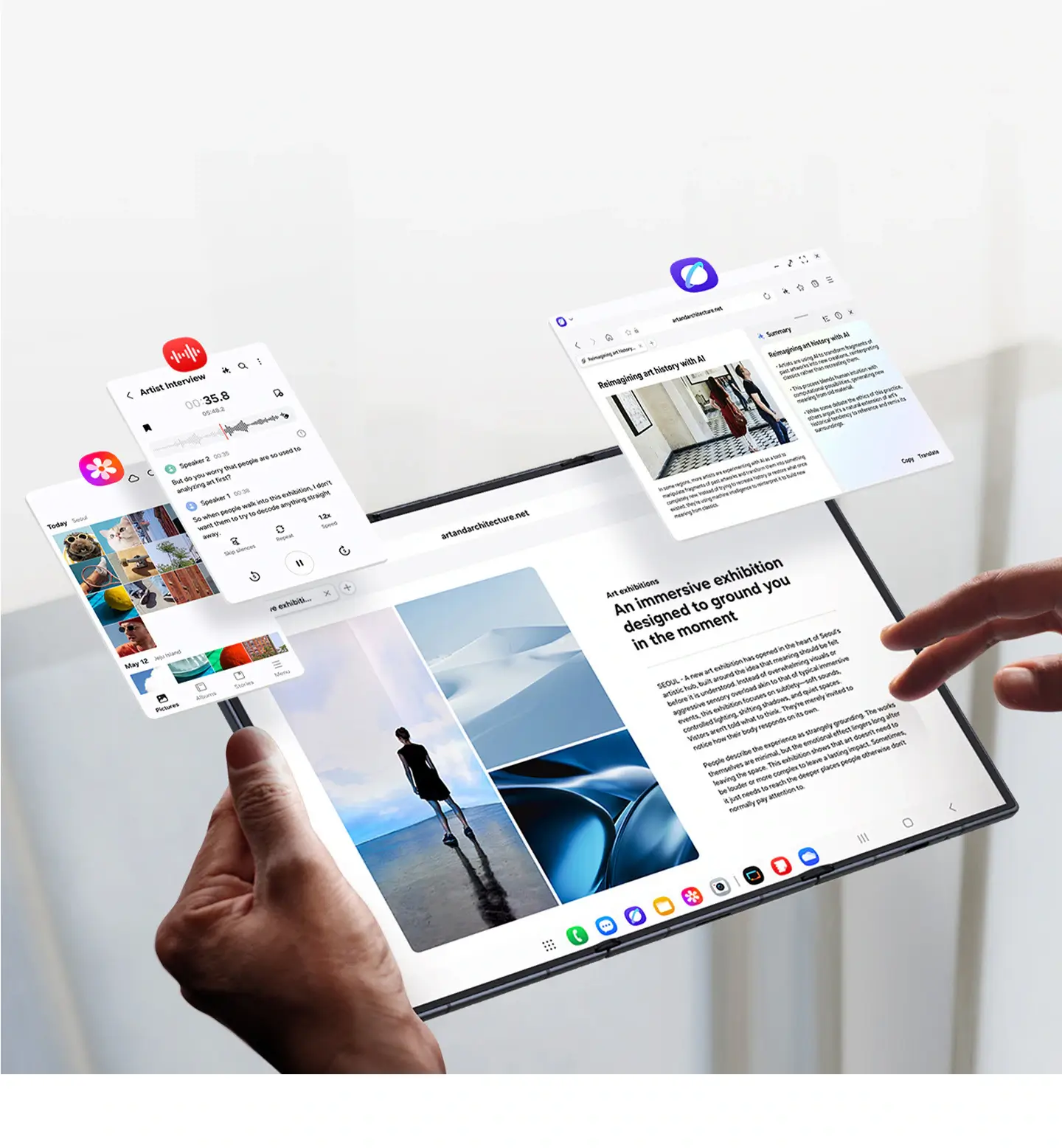
Tap a button, and Dex takes over the entire 10-inch display. Suddenly, you’ve got windows, draggable apps, multiple desktops… and none of this requires an external monitor.
But if you do plug it into one? The Samsung Galaxy Z Trifold becomes a secondary monitor. A phone. Acting as your second display. In your pocket. That’s absurdly cool.
Multitasking in Samsung Galaxy Z Trifold: Three Apps, Zero Pain
This is where Samsung flexes. You can use three apps side-by-side and actually enjoy it. Netflix + browser + VPN? Smooth. You can resize windows, swap positions instantly, and even save app trios as custom layouts.
The Samsung Galaxy Z Trifold remembers exactly how you like them arranged. Genuinely useful.
Only Real Display Weakness: Brightness
Inner display maxes out at 1600 nits. Fold 7 hits 2600 nits. Is it dim? No. But outdoors, yes, you’ll notice.
Also Read: Realme P4X 5G Review – Don’t Buy This Phone Until You See THIS — Shocking Results
Good & Bad in Samsung Galaxy Z Trifold
| Good | Bad |
|---|---|
| Stunning 10-inch tablet experience | Heavy (309g) |
| Smooth triple-app multitasking | Two very visible creases |
| Built-in Dex windowed mode | High maintenance, fingerprint magnet |
| 5600 mAh triple-cell battery | Inner screen scratches easily |
| Excellent performance | Not the newest chip |
| Solid build, strong magnets | Cameras unchanged from Fold 7 |
| Secondary monitor support | 1600 nits brightness only |
| Included 45W charger | Expected ~$3000 price |
Price Samsung Galaxy Z Trifold: Brace Yourself
Korean pricing converts to about $2400. Which means US pricing will likely be $2800–$3000. This is luxury tech. No way around it.
So… Is Samsung Galaxy Z Trifold Worth It?
If you want practical, buy a normal phone. If you want a foldable experience without the stress, buy a Fold 7. If you want a portable tablet, buy an iPad Mini.
But if you want all of those things in one, in a way no other phone currently offers, the Samsung Galaxy Z Trifold is the most exciting device Samsung has made in years. It’s flawed. It’s fragile. It’s heavy. It’s expensive. And yet? It’s impossible to ignore.