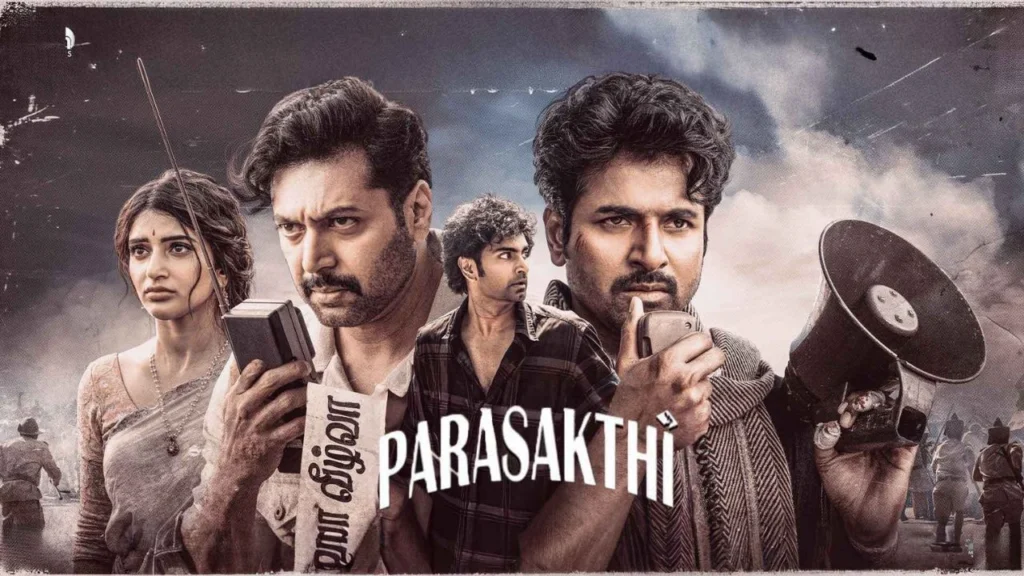
Parasakthi Movie Review: This film hit me harder than I expected. I didn’t walk in looking for a political sermon. I didn’t walk in thinking about parties, banners, or vote banks. I walked in, curious. I walked out quietly. And that silence stayed with me for a while.
That’s usually how you know a film has done something right. This Parasakthi movie doesn’t scream ideology. It doesn’t beg you to agree with it. Instead, it calmly reminds you why language, identity, and memory matter. And that’s where Sudha Kongara absolutely nails it.
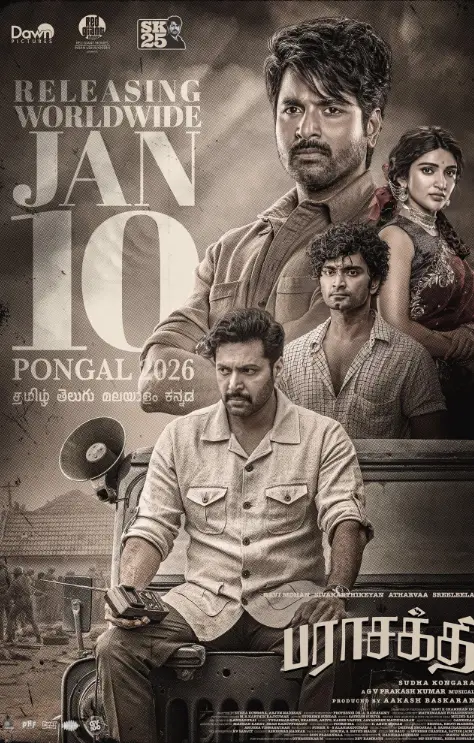
My Rating: 3.5/5
| Movie Title | Parasakthi |
| Language | Tamil |
| Director | Sudha Kongara |
| Producer | Don Pictures (in association with Red Giant) |
| Main Cast | Sivakarthikeyan, Atharvaa, Jayam Ravi, Sri |
| Genre | Historical / Drama |
| Release Date | 2026 |
| Runtime | 2h 35m |
What This Parasakthi Film Is Really About (And What It’s Not)
A lot of people will rush to label this film as political just because of who produced it or who acted in it. That’s lazy thinking. This isn’t a DMK film. This isn’t an anti-Hindi film. This isn’t propaganda. This is a film about where people come from, and what they had to lose to protect it.
The language movement shown here isn’t framed as hatred toward another language. In fact, the film is very clear about one thing: Learn any language you want. Just don’t force it on someone else. That line alone tells you the mindset behind the film.
What this really explores is a simple question: Why do some regions still hold tightly to their mother tongue, while others slowly let it slip away? And it doesn’t answer that with speeches. It answers it with loss. With sacrifice. With people who paid a price long before we were born.
Performances That Carry Real Weight
- Sivakarthikeyan
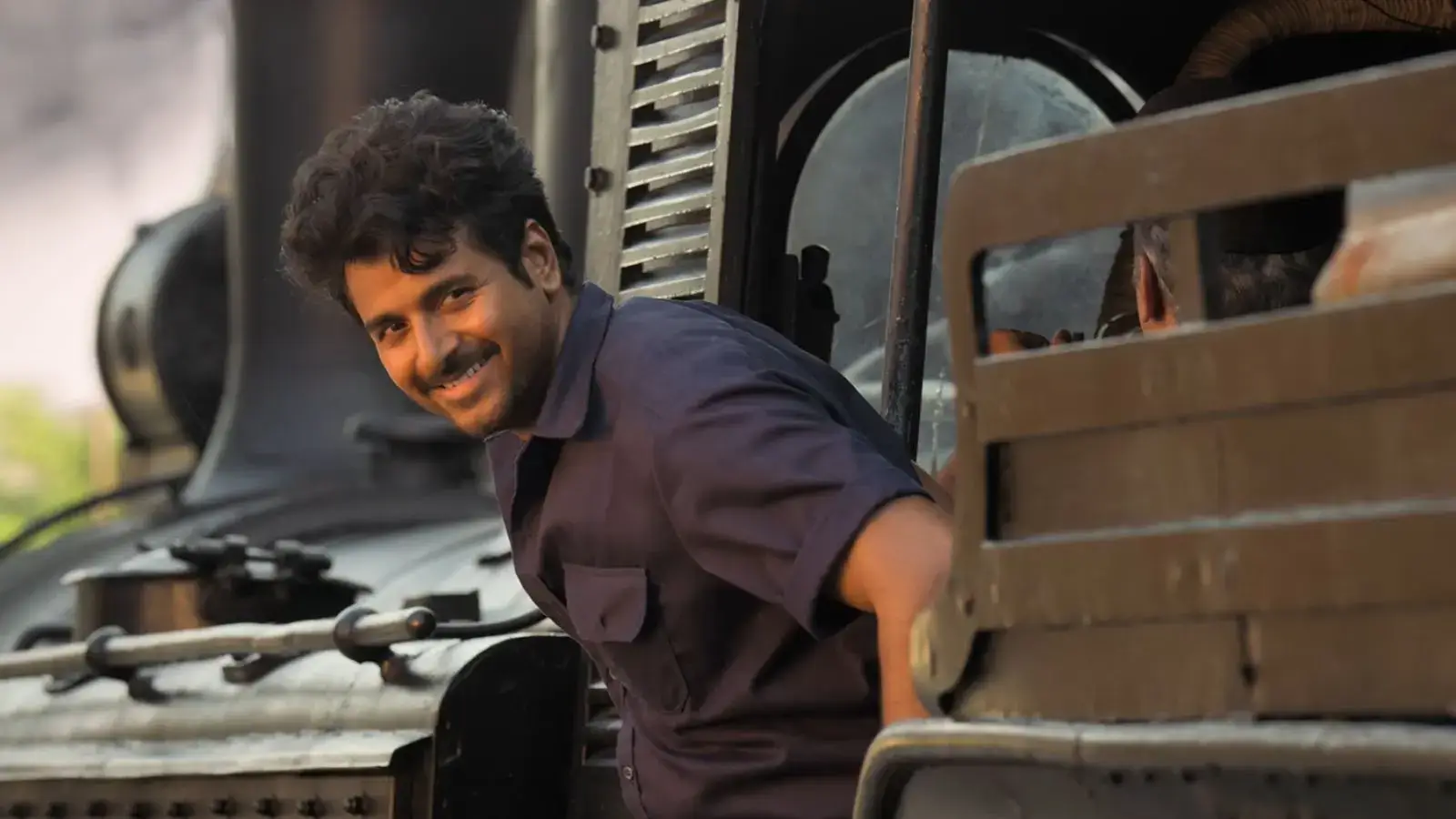
This might be one of his most grounded performances so far. He’s not playing a loud revolutionary from the first frame. He’s playing an elder brother. A man with responsibilities. A man who knows that rebellion has consequences.
What works is the shift.
He doesn’t jump into the movement for hero points. He joins when he realizes that staying silent is just another way of losing everything. That internal conflict feels real.
- Atharvaa
Atharvaa is the heart of the film. Energetic, impulsive, idealistic, the kind of younger brother you both worry about and admire.
There’s an innocence to his rebellion. You can feel that he hasn’t been worn down by reality yet. And that contrast between the two brothers gives the film emotional depth.
- Jayam Ravi (Ravi Mohan)
This performance surprised me the most. He doesn’t play a villain who twirls his mustache. He plays a system. Cold. Ruthless. Detached. No guilt, no hesitation.
That’s what makes it unsettling. He isn’t evil in a dramatic way. He’s evil in a bureaucratic way. And honestly, that’s far more disturbing. If this role hadn’t worked, the entire film would’ve collapsed. Thankfully, it lands hard.
Direction, Craft, and the Feel of the Parasakthi Film
Sudha Kongara’s biggest strength here is restraint. This story could have easily turned into a loud, angry, slogan-heavy film. It doesn’t. She knows exactly where to pull back. The filmmaking is strong across the board:
- The cinematography makes period settings feel lived-in, not staged.
- The crowd scenes feel authentic, not artificial.
- The editing during the interval and climax is tight and emotional without manipulation.
There’s a particular reveal toward the end involving a military character that gave me actual goosebumps. No background score screaming at me. Just presence. That’s confidence.
And credit where it’s due, every single junior artist matters here. Even characters who appear for seconds feel sincere. That sincerity is why Sivakarthikeyan’s role works as well as it does.
The One Area Where It Falters
The love track in the first half drags. It’s not terrible, but it slows the film at a point where momentum matters. You feel it. The film recovers, but that dip is noticeable.
Sri, as a newcomer, is decent. Not bad, not standout. The dance works better than the dramatic scenes. But she’s young, and you can see the potential.
Also Read: The Raja Saab Review: How a ₹450 Crore Prabhas Film Went Completely Off the Rails
The Bigger Idea the Parasakthi Film Leaves You With
One thing I appreciated deeply: The Parasakthi film never attacks another language. It simply asks for respect. You see examples across the world—Japan, Germany, South Korea, countries that operate entirely in their mother tongue and still dominate globally. The film doesn’t spell this out like a lecture. It lets you connect the dots.
And the reminder hits quietly: If a language disappears, a culture slowly follows. The people who fought these battles weren’t party symbols. They were just people who refused to let something die. That’s the emotion the Parasakthi film carries.
Good vs Bad In Parasakthi
| What Works | What Could Be Better |
|---|---|
| Sivakarthikeyan’s restrained, mature performance | The love track slows in the first half |
| Jayam Ravi’s chilling, system-driven antagonist | A few pacing dips before the interval |
| Emotional weight without loud propaganda | Some side characters deserved more depth |
| Strong cinematography and authentic crowd scenes | Sri’s performance is uneven in places |
| Clear respect for all languages, no forced agenda | — |
Final Thoughts On Parasakthi
This is not a film you watch casually and forget by the weekend. It stays with you, not because it shouts, but because it reminds you of something uncomfortable and important. You don’t need to belong to any party to connect with this story. You just need to understand what it means to belong somewhere.
Watch it with your family. Talk about it afterward. And maybe, just maybe, think about the people who made it possible for us to speak freely in the language we do today. That alone makes this film worth your time.