
Baramulla Review: There are some films that don’t just entertain you, they crawl under your skin, sit there quietly, and make you think long after the credits roll. Baramulla, now streaming on Netflix, is exactly that kind of movie.
I watched Baramulla expecting a horror film. That’s what the trailer made it look like, a creepy, atmospheric ghost story set in the snow-clad mountains of Kashmir. But here’s the twist: it’s not horror in the traditional sense. It’s a supernatural thriller woven with real historical pain, the kind that doesn’t rely on jump scares, but on the terror of truth.

My Rating: 3.0/5
| Title | Baramulla |
|---|---|
| Platform | Netflix |
| Genre | Supernatural Thriller, Drama |
| Director | Aditya Subhash Jambhale |
| Writer | Aditya Dhar |
| Main Cast | Manav Kaul, Arista Mehta, Bhasha Sumbli, Ashwini Kaul, Shahid Latif |
| Language | Hindi |
| Runtime | Approx. 2 hours |
| Release Year | 2025 |
The Story That Hurts Because It’s Real
Directed by Aditya Subhash Jambhale and written by Aditya Dhar (yes, the mind behind Uri and the upcoming The Immortal Ashwatthama), Baramulla mixes supernatural fiction with the raw wounds of reality.
The film uses the Kashmiri Pandit exodus and killings as its emotional foundation. But instead of turning it into another political narrative, it pulls us into the human side of the tragedy, the fear, the loss, and the haunting memories that never really leave.
There’s horror, yes, but it’s not about ghosts. It’s about what human beings are capable of when hate and violence take over.
The Characters That Carry the Weight
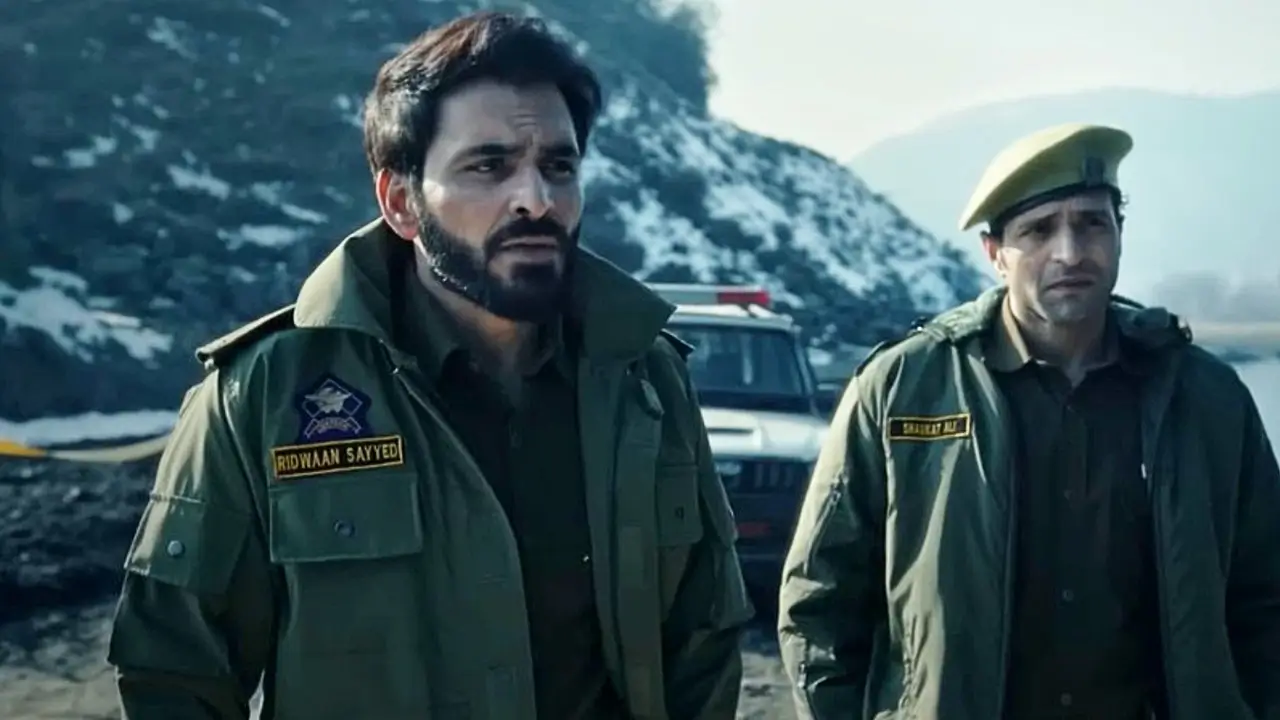
Manav Kaul leads the film, and honestly, he’s the soul of Baramulla. I’ve always admired him as a performer who never overacts, and here he delivers one of his most restrained, broken, and believable performances yet.
He plays a Kashmiri officer battling PTSD after years of anti-militancy operations. You can see that trauma in every twitch, every silence, every time he looks away instead of speaking.
Then there’s Arista Mehta, the child actress who plays his daughter, and she completely steals the film. No exaggeration, she gives a performance most trained adult actors couldn’t pull off. She’s innocent, terrified, and strong all at once. You’ll remember her face long after the film ends.
The supporting cast, Bhasha Sumbli, Ashwini Kaul, and Shahid Latif, each adds a layer of authenticity that keeps the story grounded.
Cinematography & Feel — Beautifully Bleak
The film was shot in Baramulla, and every frame looks like it’s breathing the cold air of the valley. The snow, the mist, the narrow lanes, it’s all captured with such quiet precision that you almost feel like you’re there.
The lighting is intentionally gloomy, almost gray-washed, to keep you in that constant state of unease. It’s not flashy cinematography, it’s emotional cinematography. Every color, every shadow means something.
The massacre scene of a Pandit family is one of the hardest things to watch. It’s not sensationalized, it’s slow, deliberate, and painfully human. You don’t just see it, you feel it.
Direction & Writing — A Bold Attempt
Aditya Subhash Jambhale’s direction shows huge promise. You can sense the influence of Aditya Dhar’s storytelling style, but that’s not necessarily a bad thing. The tension builds gradually, never rushing, letting you breathe in the unease.
Yes, it’s a slow-burning film, and that might test some viewers. But if you let it unfold naturally, it rewards you with emotional depth and quiet shock.
There are moments when the PTSD storyline feels like something we’ve seen before, but it’s handled with such sincerity that it still works.
What Worked (and What Didn’t)
Let’s be honest, no film is perfect. Baramulla isn’t either. But its flaws never overshadow its courage.
| The Good | The Bad |
|---|---|
| Manav Kaul’s career-best performance | Slightly slow-paced in parts |
| Arista Mehta’s stunning child performance | Uses a familiar PTSD trope |
| Breathtaking visuals of Kashmir | Some may find it emotionally heavy |
| Realistic depiction of trauma | Minor directorial influence from Dhar is noticeable |
| Story blends supernatural with history seamlessly | Needs tighter editing in the middle act |
Also Read: Haq Review: Yami Gautam Shines, But Bollywood Fails the Real Shah Bano Story
Final Thoughts: Why Baramulla Matters
Baramulla isn’t a film you “enjoy.” It’s a film you experience. It holds a mirror to pain, personal, political, and psychological. It’s not trying to shock you with effects; it’s trying to haunt you with truth.
For me, this film felt like a quiet revolution in Indian OTT storytelling, a reminder that we can tackle sensitive, painful subjects without losing artistic depth.
If you appreciate slow-burn thrillers like Prisoners, The Sixth Sense, or The Night House, this one will stay with you.
Rating: 3 out of 5 — not perfect, but powerful, thought-provoking, and definitely worth your time.
Final Line
If we don’t support films like Baramulla, then the OTT space will be left with nothing but flashy, hollow “masala” movies that say nothing. This one dares to say something, and it says it beautifully.
Go watch Baramulla on Netflix. Let it unsettle you. Let it remind you that storytelling still has the power to heal, and to haunt.