


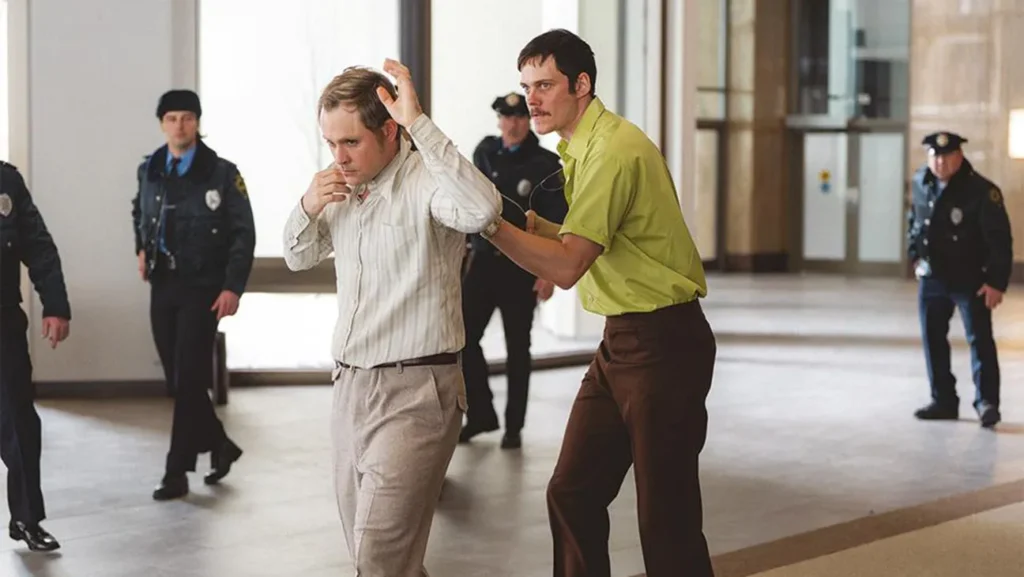
Dead Man’s Wire Review: I went into Dead Man’s Wire expecting something sharper. Gus Van Sant is coming back after a long gap, a wild true story from the late ’70s, Bill Skarsgård unhinged with a shotgun wired to a man’s neck, that’s not a small setup. This premiered at Venice, got the prestige buzz, and on paper, it sounds like it should sting.
What I got instead was… entertaining, odd, sometimes frustrating, and way more campy than I expected. Not bad. Not great. Just strangely watchable. And honestly? I enjoyed it more than I thought I would, even when it clearly wasn’t firing on all cylinders.

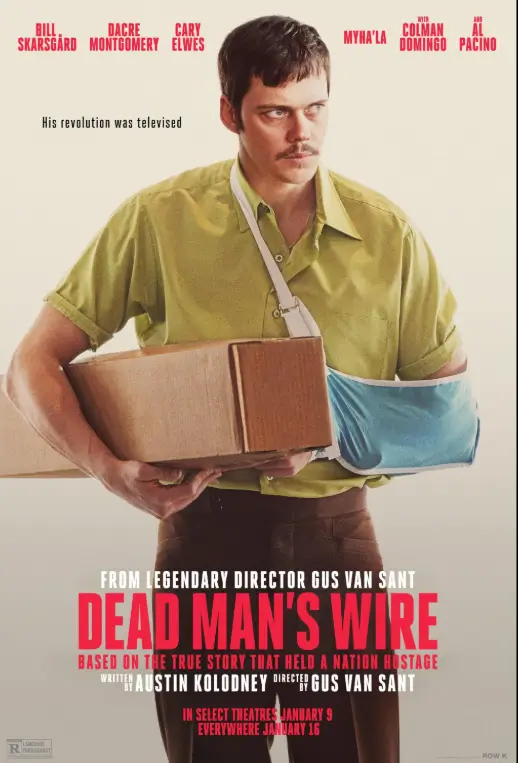
My Rating: 3.0/5
| Detail | Information |
|---|---|
| Movie Title | Dead Man’s Wire |
| Director | Gus Van Sant |
| Genre | Crime, Drama, Dark Comedy |
| Based On | Real-life 1977 hostage incident involving Tony Kiritsis |
| Lead Cast | Bill Skarsgård, Al Pacino, Dacre Montgomery, Coleman Domingo, Mahala, Cary Elwes |
| Runtime | Approx. 1h 45m |
| Language | English |
| Premiere | Venice Film Festival 2025 |
What the Movie Is Really About (Beyond the Crime)
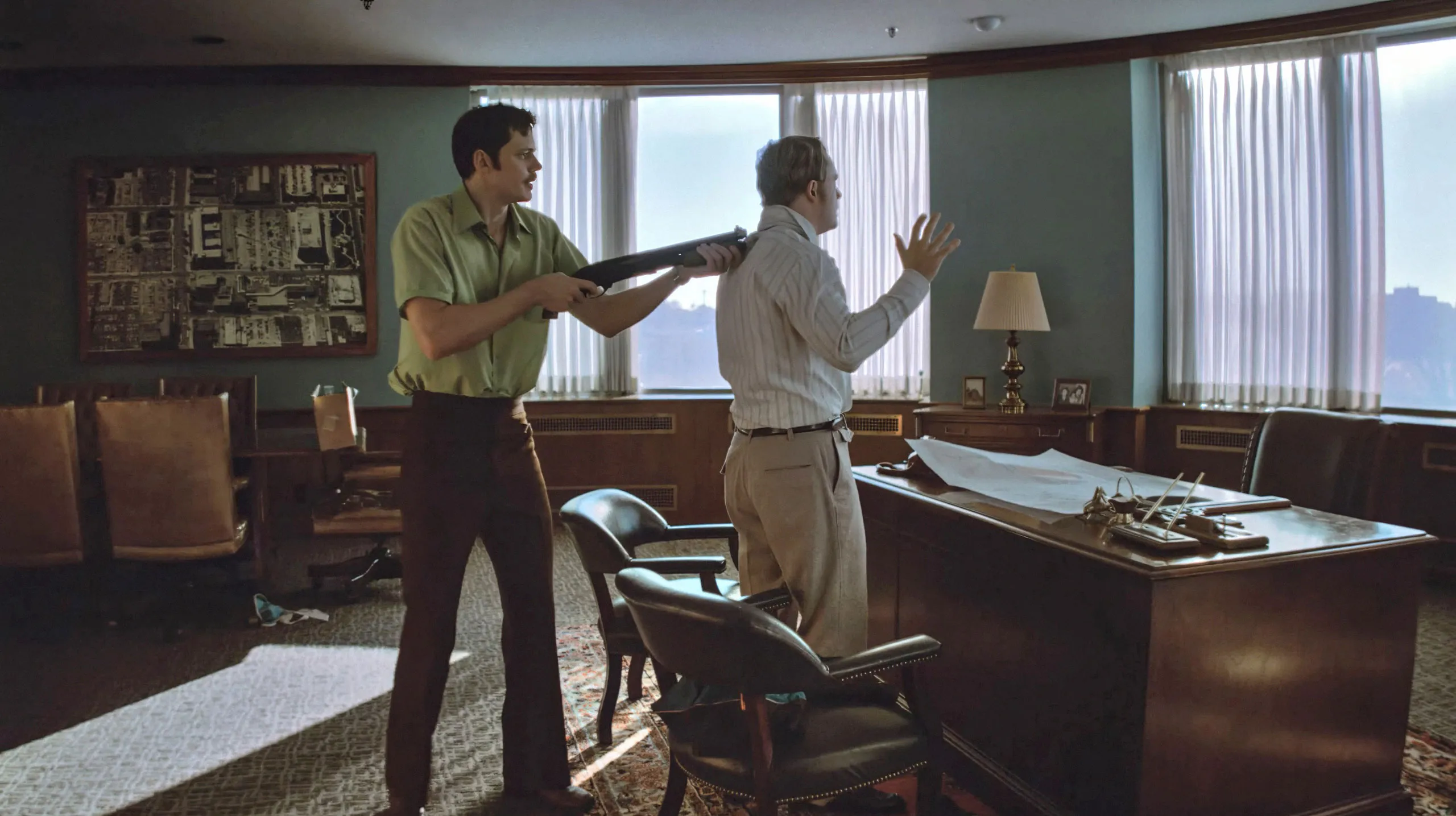
Yes, it’s based on a real 1977 hostage situation. Tony Kiritsis storms into a mortgage company, takes the president’s son hostage, and rigs a sawed-off shotgun to a literal “dead man’s wire” — if either of them moves wrong, the hostage dies.
That’s the hook.
But the movie isn’t actually interested in the mechanics of the crime or the legal madness that followed. It’s more interested in how this situation turns into public entertainment, reporters circling like vultures, locals treating it like a festival, radio DJs becoming negotiators, and authority figures quietly losing control of the narrative.
The problem is that Van Sant has explored this idea much better before. Here, it feels lighter. Sometimes too light.
Bill Skarsgård Is the Dead Man’s Wire Movie (For Better and Worse)
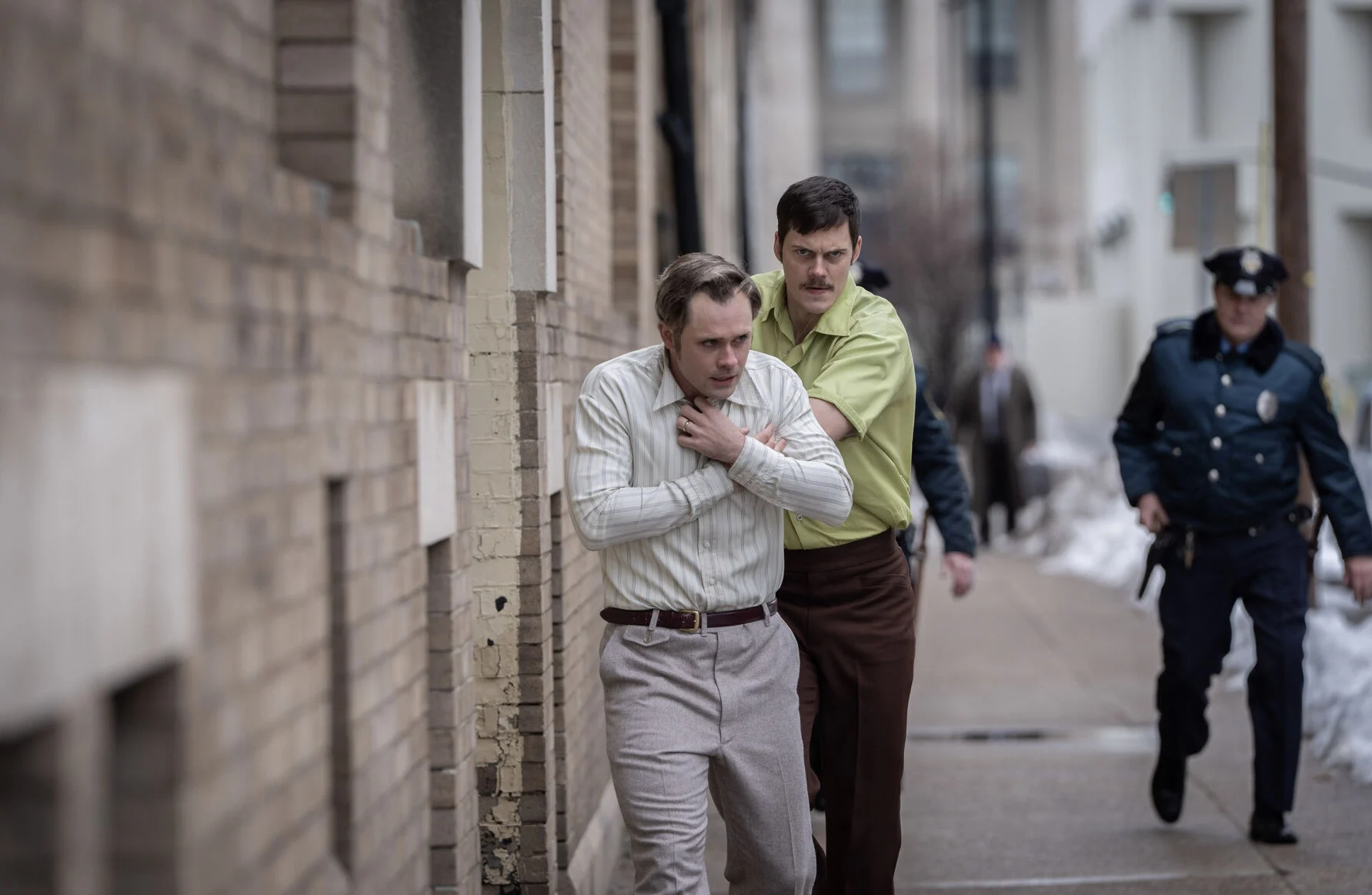
Bill Skarsgård’s Tony Kiritsis is completely unhinged, wide-eyed, jittery, loud, unpredictable. At times, I couldn’t stop watching him. At other times, I couldn’t take him seriously at all. There were moments where he felt less like a desperate man and more like Jim Carrey doing Ace Ventura… with a shotgun.
And yet, it works more often than it should. Tony is angry in a very American way. He feels cheated. He feels invisible. He believes the system is rigged against him, and the movie lets you sit in that rage without fully endorsing it.
That’s where the anti-hero thing kicks in. You don’t root for him, but you understand why the crowd does. That’s unsettling in a good way.

The Supporting Characters Are… A Mixed Bag
- Al Pacino (Having Way Too Much Fun)
Pacino shows up with a full-blown Southern accent, holed up in Florida, refusing to apologize to save his own son. At first, it’s laughable. Then it weirdly clicks. He looks like a retired soap opera villain who wandered into a hostage movie, and somehow, that becomes part of the charm.
- Dacre Montgomery as the Hostage
This is the character I felt the worst for.
Strapped to a gun, begging his father to swallow his pride, realizing in real time that his life means less than corporate ego, he’s the most emotionally grounded person in the film. That scene alone gives the movie more weight than most of its plot choices.
- Coleman Domingo (Stealing Scenes as a DJ)
Coleman Domingo as radio DJ Fred Temple is easily the smartest use of the script. The idea that this is the one man Tony trusts, not cops, not lawyers, says a lot.
There’s a scene where the FBI realizes the entire negotiation hinges on a local DJ, and it’s genuinely funny in a dark, “how did we get here?” way.
- The Weak Link: The Reporter
Mahala’s Linda Paige should have been crucial. A Black female reporter in the ’70s trying to break through? That’s rich territory. But the movie never commits.
She talks the same way on-air and off-air. She never feels sharper behind the scenes than she does in front of the camera. Instead of coming across as ambitious and strategic, she often just feels oddly flat, and that’s a missed opportunity.
Also Read: Greenland 2: Migration Review — The Sequel That Forgot Why the First One Worked
The Tone: Campy, Chaotic, and Sometimes Confused
This is where Dead Man’s Wire really divides itself. One minute, it’s tense. The next it’s borderline absurd. Then suddenly, it’s a dark comedy about media spectacle.
There’s a priest scene early on where Tony snaps in a way that made me go, oh, this movie isn’t playing it straight. From that point on, I stopped expecting realism and started judging it on vibe. Once I did that, it got better.
Still, the film undercuts its own most unsettling moments with jokes, musical cues, or strange character beats. The final café encounter between Tony and his former hostage should have been chilling, but it’s softened by a throwaway gag about muffins. That sums up the movie perfectly.

The 1970s Vibe (This Part Works)
The music, the grainy footage, the TV interruptions during the Oscars, especially cutting away from John Wayne, all of that lands. The public treating a hostage crisis like a block party feels disturbingly real.
Crime as entertainment isn’t a new idea, but Dead Man’s Wire captures how easily outrage turns into spectacle.
Good vs Bad In Dead Man’s Wire
| What Worked | What Didn’t |
|---|---|
| Bill Skarsgård’s fearless, chaotic performance | The movie never commits to being sharp or dangerous |
| Coleman Domingo’s DJ subplot | The reporter character feels underwritten |
| Strong 1970s atmosphere | Tone swings too wildly |
| Pacing that keeps things moving | Emotional weight is often undercut by jokes |
| The real-life absurdity of the ending | The insanity verdict feels brushed past |

Final Verdict On Dead Man’s Wire
I didn’t love Dead Man’s Wire, but I didn’t dismiss it either. It’s the kind of movie that plays better once you stop expecting prestige drama and accept it as a strange, campy retelling of a true story that shouldn’t be funny, but somehow is.
If you’re here for Bill Skarsgård going full tilt, Pacino chewing the scenery, and a ’70s media circus vibe, you’ll probably have a good time. If you’re expecting another Elephant or To Die For, this isn’t that.
My rating: 3 out of 5. Entertaining. Messy. Slightly hollow. But memorable enough that I’d watch it again, and honestly, that counts for something.